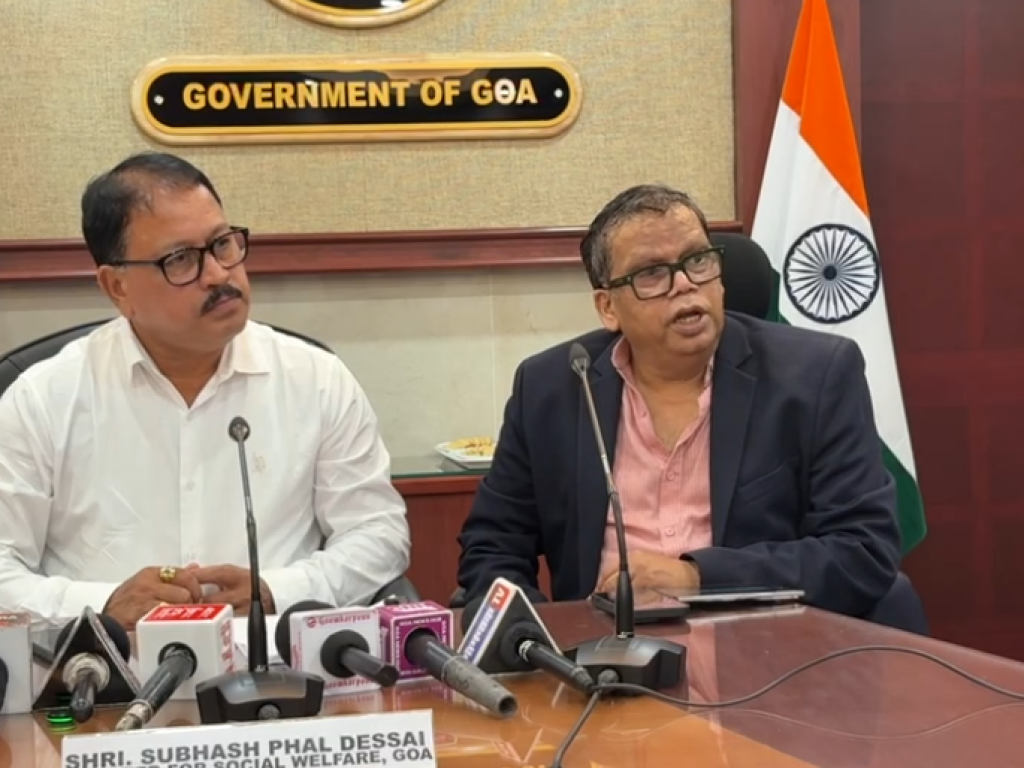
PANAJI: Drinking Water Minister Subhash Phal Dessai has urged panchayats to consult the Public Works Department (PWD) before granting licences for high-rise buildings, warning that unplanned development could strain drinking water infrastructure if future demand is not factored into approvals.
Responding to concerns over Goa's carrying capacity on Tuesday, Dessai said the government needs advance information on new developments to assess future water requirements and plan infrastructure accordingly.
"We will advise the panchayats to inform us about illegal constructions and also consult the department before issuing licences for high-rise buildings. We need to calculate and plan for the next five years to determine how many MLD water treatment plants will be required, especially to handle sudden new connections," the minister said.
He, however, maintained that Goa currently has sufficient water resources to meet the state's needs.
"At present, our water requirement is around 700 MLD, and we have the capacity to supply 700 MLD. There are some leakages which sometimes result in shortages, and we are working to fix them. Earlier, during May, water tankers were seen everywhere. This year, nearly 90 per cent of the tankers have been removed and are being used only for emergencies," Dessai said.
He added that, "In terms of water, Goa will never have a problem," while stressing that proper planning remains essential as development continues.
Providing an update on water storage, the minister said the Salaulim dam has reached 93 per cent of its capacity following the ongoing monsoon.
"Only around seven per cent remains. Once the dam overflows, it means we have reached the optimum storage level. The overflow generally continues till November. Since the reservoir will be full, we will not face any water shortage throughout the year," he said.
Dessai further noted that reservoirs across Goa are steadily reaching full capacity, which would ensure a stable water supply across the state.
The minister also said the government will be testing technology to use water stored in abandoned mining pits as an emergency source during periods of scarcity.
"We will undertake a pilot project using proven technology. If, for instance, water levels fall during April, we should be able to install the system in a mining area within three months. We will first test it at one location and keep the technology ready for deployment whenever required," he said.