PANAJI
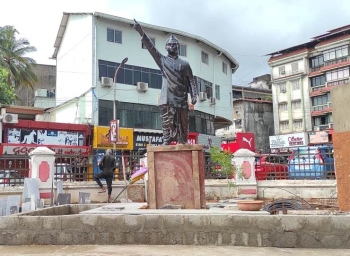
The day is also known as Kranti Din. Goa Revolution Day, celebrated every year on June 18 by the government of Goa, is in remembrance of the incidents and events that occurred on this day in 1946, a year before India got its independence. The events on June 18 triggered the movement for Goa’s liberation, gave momentum to the freedom struggle. Socialist leader Ram Manohar Lohia along with Goan anti-colonial campaigner Juliao Menezes led the campaign, and the witness to this historical moment is the Lohia Maidan in the heart of Margao. The ground where Lohia addressed publicly, and where he was arrested by the Portuguese police and taken to the police station, was later named as Lohia Maidan. Today, the ground has been renovated to some extent, but still much remains to be developed on it.
A few years later, the Goa liberation movement gained momentum, as the leaders from Goa took inspiration from the freedom fighters who collectively worked to drive the British government out of India.
Lohia had not thought of such an incident till he came to Goa on his friend Juliao Menezes’s invitation of recuperating in Goa in his home at Assolna. Lohia and Juliao were friends from their college days in Germany and Lohia met him in the then Bombay (today’s Mumbai) in April 1946 for a medical consultation. Juliao invited Lohia to Goa. Both the friends reached Assolna on June 10 in 1946. Lohia had planned to take some rest at Juliao’s home.
However, it was after Evagrio Jorge published the news of Lohia’s arrival in Goa in the June 12 edition of a local English newspaper, it triggered the public in Goa and also the local freedom fighters, including Purushottam Kakodkar who began visiting Lohia at Juliao’s house.
Then Lohia and Juliao began planning a civil disobedience movement in Goa and acted on it. They addressed the public in Panaji and Mormugao between June 15 and 17, informing people about their rights. They told the people that they would defy the ban on public meetings and address an audience of Goans on June 18 at Margao. They returned to Margao on 17 June and met other nationalists at Damodar Vidyalaya. They suspected that the police would be waiting for them in Assolna, so they stayed at the Hotel Republica in Margao.
Meanwhile the police had asked all the taxis in the Salcete taluka, surrounding Margao to bring each passenger they carry to the Margao police station. The police also surrounded the designated open space (now Lohia Maidan) where the gathering was supposed to take place. Some people waited at the place for Lohia and Juliao to arrive in a taxi.
However, both of them arrived by horse driven carriage at the venue. As they arrived, the large crowd that was already waiting there for them, greeted them and began chanting slogans. They were garlanded.
It was then that the Portuguese police chief or the taluka administrator (different reports tell a different story) threatened Lohia with a revolver. Lohia did not react harshly, and gently pushing him aside, proceeded to address the audience.
This was followed by a sudden crowd emerging around to listen to the duo. An estimated 600“700 people had gathered. Miranda again threatened Lohia with his revolver, to which Lohia spoke to him firmly, informing him that the gun did not scare him. Miranda then ordered the policemen present to physically lift the duo and escort them to the police station. The police resorted to a baton charge to disperse the crowd. However, everyone regrouped at the police station and demanded the release of the duo. Sensing that the situation was getting out of their control, the police permitted Lohia to address the people outside the police station.
Lohia’s speech was historical “ he said, “Gomantak is part of Hindustan, and Portugal rules over it as the British do in the rest of the country. This is an accident, a bad dream, and it will pass. The state of Hindustan will come. Our people are creating it... I am not asking you today to overthrow Portuguese rule. That will come in its own time... People of Gomantak, think freely, speak freely, write freely...”
The two friends were then moved to the Panaji police station. While Lohia was escorted by train to the border and let off at Castle Rock, Juliao was released the next day. The location of the gathering in Margao is today known as Lohia Maidan, and the date, June 18, is celebrated as Goa Revolution Day.