THE GOAN NETWORK
MAPUSA
Filthy surroundings, clogged drains, broken lights and fans, inadequate toilets, irregular water supply and vendors occupying passageways have long reduced the Mapusa municipal fish market into a symbol of civic neglect despite the municipality collecting market fees and garbage charges from vendors.
After years of complaints from consumers and vendors, authorities on Wednesday initiated what could become the first comprehensive effort to restore order and hygiene at Goa's largest traditional fish market.
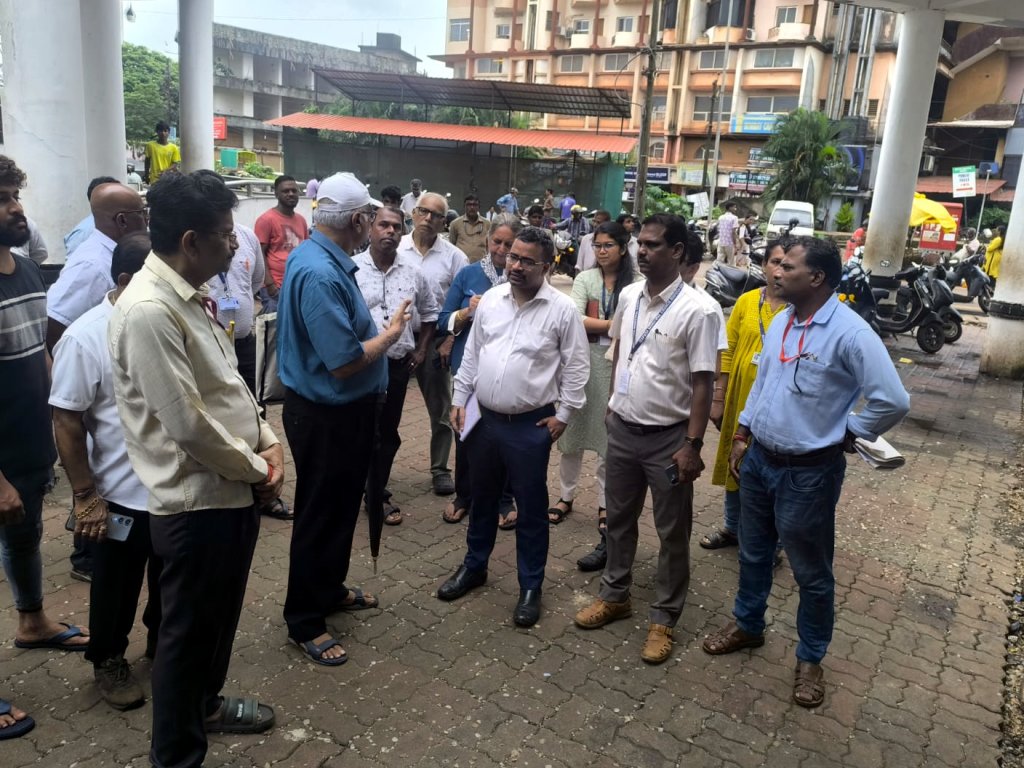
A multi-department team carried out a detailed assessment of the market building and its surroundings, identifying several deficiencies that will form the basis of a planned overhaul.
Officials from the Mapusa Municipal Council (MMC), Directorate of Health Services, Goa State Pollution Control Board (GSPCB), Goa State Urban Development Agency (GSUDA) and consumer rights group GOACAN inspected the market, focusing on sanitation, public health, infrastructure and market management.
The team found poor sanitation, clogged and poorly maintained drains, inadequate toilet facilities, non-functional lights and fans, irregular water supply and vendors encroaching on common passageways, making movement difficult for shoppers.
Each department will submit its findings before a review meeting is held to prepare a phased action plan aimed at improving cleanliness, upgrading infrastructure and making the market more consumer- and vendor-friendly.
MMC Chief Officer Kaushik Desai said that while the civic body undertakes routine cleaning, several long-pending issues require coordinated intervention from multiple government departments.
"Although the market belongs to the MMC, we need the advice and cooperation of all the departments concerned to put things in place. We will work together and introduce measures to correct the shortcomings. We want to ensure that the people of Mapusa get a better market," Desai said.
GOACAN coordinator Roland Martins said lasting improvements would require the participation of consumers, vendors and government agencies. He also stressed the need for a sustainable financial model to ensure regular maintenance.
"The focus should be on ensuring cleanliness while also improving revenue generation from the market so that the funds can be reinvested in maintaining the fish market building and its surroundings," Martins said.
He added that both vendors, who depend on the market for their livelihood, and consumers who visit it daily deserve better facilities.
The exercise has raised hopes that the long-neglected fish market could finally undergo meaningful reforms and serve as a model for the management of municipal markets across the State.