


MARGAO
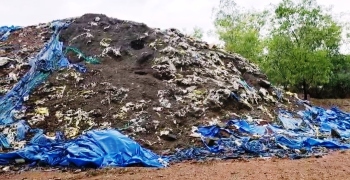
Goa State Pollution Control Board’s recent communiqué to the Director, Science & Technology has set in motion the process to transport the 50,000 tonnes of hazardous waste left behind by Ms Sunrise Zinc at the Cuncolim Industrial estate since 2007 to the Pissurlem Hazardous waste facility.
But, the findings and observations contained in the study conducted by Nagpur-based agency NEERI gives a scary picture of the hazardous dump lying at the Cuncolim IDC since the last 18 years. The findings and observations confirms the fears raised by Cuncolkars over the years that the dump is hazardous in nature impacting the lives and health of the people, besides contaminating the water bodies.
The findings also sends a grim reminder that successive governments did not move with alacrity to dispose of the hazardous waste lying at the Cuncolim IDC since 2007, exposing the people and the water bodies to the harmful effects of metals such as lead, manganese, beryllium, besides chromium, copper, nickel, cadmium and zinc.
A glance at the leachability study results shows that out of the 18 periphery samples analysed, 16 of it are hazardous in nature. Likewise, out of the 27 depth samples analysed, all the 27 samples exceeded the concentration limits and are hazardous in nature.
Metals namely lead, manganese, beryllium exceeded the concentration limits in majority of the samples. Few samples also exceeded in concentration limits of other metals namely- T-chromium, copper, nickel, cadmium and zinc.
The leachability of lead (Pb) was observed in higher concentrations, as high as 69.93 mg/L against the leachable concentration limit of 5 mg/L.
Similarly, in case of manganese (Mn) the leachable concentration was as high as 47.59 mg/L against the limit of 10 mg/L.
That’s not all. For chromium (Cr), a leachable concentration of upto 27.88 mg/L was observed against the limit of 5 mg/L. Similarly, for beryllium (Be), the leachable concentration was upto 2.08 mg/L against the limit of 0.75 mg/L.
The report was categorical in saying that about 39 of the 41 samples, (ie., 95% of the collected and analysed samples) has exceeded the leachable concentration limits thereby exhibiting qualities of hazardous waste.
In fact, NEERI study has stated that based on the leachability studies, it can be concluded and categorized that the waste material stored in the dumpsite are hazardous in nature as per the Hazardous and Other Wastes (Management and Transboundary) Rules, 2016.


