


MARGAO
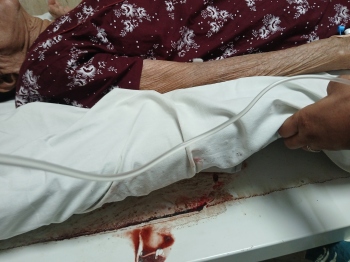
An elderly woman referred from the Balli Primary Health Centre to the Hospicio South Goa District Hospital had an unsettling welcome upon admission when her relatives discovered that she had been allotted a blood-stained and foul-smelling bed in the female medicine ward.
The incident that took place last week has once again exposed deficiencies at the government-run district hospital, including an acute shortage of support staff and essential medical supplies.
According to family members, the patient was shifted to the district hospital for further treatment and was assigned a bed that bore visible blood stains and emitted a strong, unpleasant odour. Distressed by the condition of the bed, the relatives approached paramedical staff on duty in the ward and requested that the bed linen be replaced and the bed cleaned before the patient was accommodated.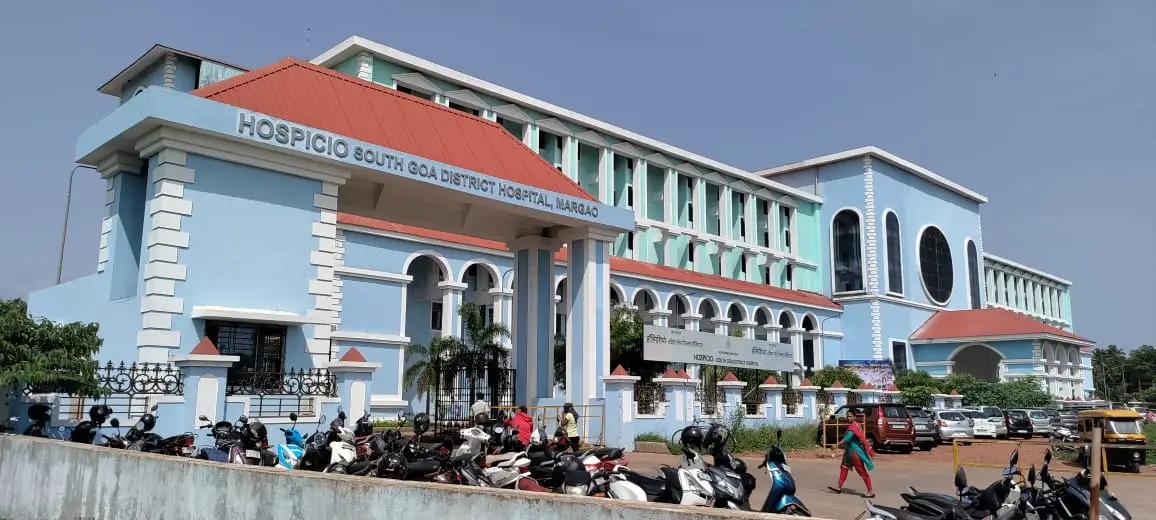 However, the family allegedly received little assistance. Matters worsened when a relative sought cotton or gauze to clean the blood stains, only to be informed that the hospital was facing a shortage of such basic consumables.
With the patient's hygiene at stake, the family members approached South Goa District Hospital Medical Superintendent Dr Rajendra Borkar. Responding promptly to the complaint, Dr Borkar directed ward staff to immediately arrange an alternative bed for the patient. Following the intervention, the patient was shifted to another bed, bringing relief to the family and ending an ordeal that caused considerable distress to the family.
While the immediate issue was resolved, the incident has highlighted larger concerns surrounding the functioning of the district hospital. Sources pointed to a severe shortage of Multi-Tasking Staff (MTS) personnel, whose responsibilities include maintaining cleanliness, assisting in ward upkeep and supporting patient care services.
The reported scarcity of essential items such as cotton and gauze has also raised questions about the availability of basic medical supplies required for day-to-day hospital operations. Sources informed that while the government has floated a tender to procure these items, the hospital is waiting for the contractor to supply the medical items. Though officials had suggested floating a short tender during the intervening period, the ground reality remains unchanged.
“We manage the situation depending on the availability of doctors, staff and MTS personnel, besides the medical items provided by the government. While there may be an odd incident, the hospital takes care of hundreds of patients on average per day,” remarked a senior doctor.
The 500-bed South Goa District Hospital caters to a large patient load from across the district and adjoining areas. Hospital records indicate that the facility handles an average of around 350 in-patients daily, translating to nearly 70 per cent occupancy on most days.
Healthcare observers say that with such a heavy patient burden, shortages of manpower and supplies can significantly impact patient care and hospital hygiene standards. They have called for urgent measures to strengthen staffing levels and ensure the uninterrupted availability of essential consumables.
The latest incident has reignited concerns over whether the district's premier government healthcare institution is adequately equipped to meet the growing medical needs of the public while maintaining acceptable standards of patient care and sanitation.
MTS shortage
Even as the long-promised establishment of a full-fledged cardiac unit at the district hospital remains a distant goal despite repeated assurances from the government, the healthcare facility is currently grappling with a severe shortage of Multi-Tasking Staff (MTS).
Sources familiar with the situation told The Goan that the hospital is facing a shortfall of nearly 100 MTS personnel, a deficiency that is increasingly affecting the smooth functioning of services, particularly during emergencies and peak workload periods.
Highlighting the gravity of the situation, a senior doctor remarked that while the hospital could manage with a reduced number of doctors, a shortage of MTS personnel has the potential to cripple day-to-day operations. A doctor noted that the situation would improve significantly if the government could immediately deploy at least 50 MTS personnel on a priority basis.
Sources further revealed that although the government recently recruited a few MTS personnel, several of them failed to report for duty. “The role of an MTS is demanding, as they are required to perform multiple responsibilities across various departments of the hospital. Many recruits do not join after being appointed, leaving the hospital in a difficult position,” sources said.
The shortage continues to place additional strain on the existing workforce and poses a challenge to the efficient delivery of healthcare services at the hospital.


