


MARGAO
Underscoring the need to save Cuncolim from pollution, the Cuncolim Industries Association has charged that certain fish processing industries do not show any respect or rather scant respect to the Goa State Pollution Control Board (GSPCB) due to political patronage.
Saying some of these industries have money to burn, Cuncolim Industries Association President Abhay Keni made a fervent plea to all political leaders to refrain from encouraging the industries to burn money, but instead ask them to comply with the strict norms laid by the Goa State Pollution Control Board (GSPCB).
Saying the industries association is ready to help the units as technical advisors to control their discharge in the surrounding, Keni said even the last drop utilised by these industries can be reused in their own premises by spending few lakhs of rupees. “If funding is needed by them, State government should come forward to give them soft loan. We have to save Cuncolim,” he said.
Referring to the uproar on the pollution in the Cuncolim Industrial Estate, Keni said the measures initiated by GSPCB are on right path. “There are five industries of fish operating in our Cuncolim industrial area, one of which is a fish meal and other four are fish processing plants. Fish meal extract oil from fish and produces dry meat wherein both the items are exported and fish processing units bring fish, clean them, freeze and export the fish. Whenever there is a bumper harvest these plants help to preserve fish and export as well as use it as food for our citizens,” he said.
Keni, however, hastened to point that this does not mean that they can play with the environment of Cuncolim. “The steps taken by the Association towards pollution regarding steel industries of Cuncolim is an example to be taken up. We don’t say that there is 100 per cent pollution control but steel industries in our Cuncolim Industrial Estate have toiled to minimise the pollution. Such measures are also required to be taken up by fish industries,” he said.
Saying the fish sector could be seen as integral to the viability of communities along the country’s coastline, Keni said it offers promising linkages to export promotion, in which Goa could become a quality brand provided measures are taken by these industries to control their effluents discharged in the environment. “Few of these fish processing units violate all the norms laid down by Pollution Control Board. First, they should have zero discharge from their units. All the fish processing plants have big weightage in political circles and there are blatant violations of the norms. They are not ready to invest and control the pollution,” he said.
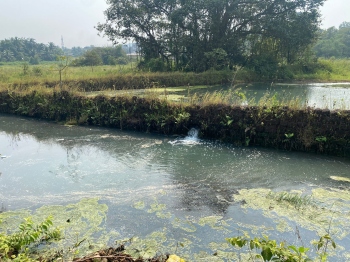
He added: “They discharge water into surrounding fields giving bad smell in the atmosphere due to high presence of BOD, COD, blood and other toxic bacteria. Contaminants such as TSS (total suspended solids), FOGs, COD, BOD, and microbes are abundant in seafood processing plants’ effluents. TSS, FOGs, and microbes are the most unpleasant and environmentally unfavourable contaminants. This water discharged by them when drunk by our animals can lead to severe colic diseases in them which may lead even to death.”
Saying these fish industries should take appropriate steps to stop discharging waste water into surrounding, Keni said these units are having effluent treatment plants but they are not appropriate and most important are not adequate to handle the water they are using, leading to free discharge of their effluents into the surrounding fields.
“The Association is of the view that even the last drop of the effluent can be treated, purified and reused back by them. Countries like Oman and Indonesia are also having fish meal and fish processing units and their pollution control are strictest and not a drop of the effluent gets discharged in the surrounding, but is re-utilised by these industries,” he said.
Pointing out that attempts were made by the Association to emphasise that they have to take measures to stop discharging water into surrounding land, Keni, however, said only two units took all the measures to control the situation. “Remaining three units have not taken any steps to control the situation and they are not even ready to submit the structured plan not to discharge their effluents into the surrounding. GSPCB is also guiding these units but due to political heavyweights they do not show any respect or rather scant respect to GSPCB. Some of these industries have money to burn,” he added.


