PANAJI
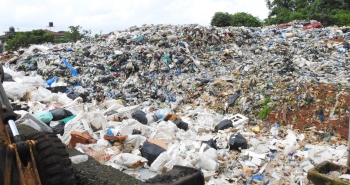
The state-of-the-art solid waste management plant at Saligao has off late been making news for all the wrong reasons.
The Saligao waste treatment plant with a capacity to treat waste of 100 tonnes per day (TPD) was initially built to treat waste from the North Goa coastal belt. But slowly other areas like Mapusa and later Panaji and other areas began to send their waste to the plant forcing the government to expand its capacity to treat 250 TPD.
Despite stiff opposition from the locals in Saligao and other surrounding villagers, the government including the then Waste Management Minister, Michale Lobo went ahead with the plans to expand the capacity of the plant.
Now, almost 30 tonnes of wet waste from Sonsodo makes its way to the Saligao waste treatment plant for treatment.
The villagers of Saligao are up in arms against the decision to transport the waste from as far as Margao which will put pressure on the plant.
Besides, leaking of the leachete while transporting the wet waste to the plant on roads and the stink coming from the plant has been affecting the residents of Calangute and Candolim.
In the recently held gram sabha in Saligao, the villagers have put their foot down and decided to protest against the decision of the government.
“We can’t take it anymore. The government has got its priorities wrong. The people of Saligao have to face the brunt of this ill-conceived decision. Earlier they sent waste from Panaji to our plant and we did not object. Now, its waste from Margao. We are planning a huge protest against the move,” said Lucas Remedios, Sarpanch of Saligao.
Saligao MLA, Kedar Naik and Calangute MLA Michael Lobo also raised the issue of the additional waste being transported to Saligao in the recently concluded Goa Legislative Assembly.
Both Naik and Lobo stressed that the Saligao treatment plant was built with the idea of treating waste from the North Goa coastal panchayats but now waste from all over Goa was making its way to the Saligao plant.
They said the local people had to bear the brunt of the stink and other problems created during the transportation of the waste.
The government had to face a lot of obstacles when it first decided to set up the waste treatment plant in 2016.
Locals along with the activists approached the High Court, NGT and even the Supreme Court in the matter.