


PANAJI
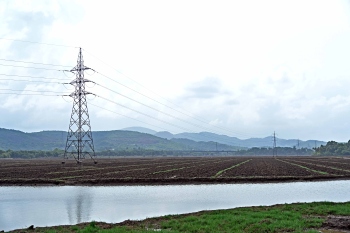
As the south-westerly monsoon looms, Goa’s agriculture department is bullish on the upcoming Kharif season’s paddy cultivation across the State, with pre-sowing activity at an advanced stage in Khazan lands and other low-lying areas.
Director Neville Alphonso was optimistic that overall paddy cultivation will increase significantly this year on the back of the success of the ‘community farming’ scheme.
“Earlier, due to the fragmentation of land holdings, it used to be uneconomical to cultivate paddy in fields. Now, farmers are increasingly getting back to their fields with the introduction of the ‘community farming’ concept,” Alphonso told The Goan.
With the division of farm landholdings between siblings, the smaller size of the field made it uneconomical. However, the community farming concept permits 10 or more farmers to join hands and collectively cultivate their land, employing mass-scale mechanical ploughing, sowing, and harvesting techniques.
Alphonso said the department provides up to 90% subsidy for fencing (to avoid destruction of crops by stray cattle) and any other infrastructure for such communities where a group of individuals owning land in adjoining areas join hands to cultivate paddy.
The scheme is attractive and several farmers who earlier had given up because the costs prohibited them from cultivating paddy have revived their fields, Alphonso said.
Ploughing complete in khazans
Meanwhile, ploughing of fields using the services of empanelled service-providers, for which the department gives 50 per cent subsidy, is completed in most khazan and other low-lying terrains across the state, he said.
“Tractors often get stuck in the muck. Therefore in Khazans, the ploughing activity has to be completed well before the rains hit,” Alphonso said.
In several areas of Bardez, Salcete, Tiswadi, and Mormugao, farmers have also taken their seed requirements from the Taluka outlets the department operates through the Goa Bagayatdar society and a few other organisations.
Farmers in Goa are increasingly opting for mechanised transplanting of rice seedlings/saplings, an activity which is otherwise labour-intensive and therefore expensive.
Farmers have to pre-book a slot for the transplanting activity at least two to three months in advance as the demand is high and constantly growing.
Alphonso said the community farming scheme coupled with the introduction of subsidy for mechanical cultivation is driving up renewed interest among farmers to till their lands which they otherwise left fallow due to prohibitive cultivation costs and poor returns.
Other crops
Alphonso said farmers also grow other crops, especially vegetables like bottle gourd, lady fingers, val, etc., especially in higher reaches where there is no flooding taking place.
Seeds for such non-paddy crops are also available at the department’s taluka-level seed outlets, he added.


