


PANAJI
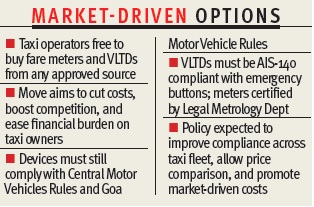
In a major relief to the taxi operators, the Directorate of Transport has withdrawn the system of vendor empanelment for digital fare meters and Vehicle Location Tracking Devices (VLTDs), opening the market for taxi operators to procure devices from any approved source. The decision is aimed at reducing costs for vehicle owners while maintaining full compliance with legal requirements.
Earlier, three companies had been empanelled for VLTDs and two vendors for fare meters, effectively limiting taxi operators to purchase only from those suppliers. With the cancellation of the empanelment lists, operators now have the freedom to procure devices directly from the open market.
The department, however, clarified that while the choice of vendors is now unrestricted, the technical and legal requirements under the Central Motor Vehicles Rules and the Goa Motor Vehicle Rules remain fully binding. The move is expected to encourage market competition, reduce the financial burden on operators, and promote wider compliance across the State’s taxi fleet.
“This reform provides taxi operators the freedom to choose certified devices while ensuring compliance with all safety and metering standards,” Director of Transport Pravimal Abhishek said.
Under Rule 125H of the Central Motor Vehicles Rules, 1989, inserted through GSR 1095(E) dated November 28, 2016 and effective from April 1, 2018, all public service vehicles are required to be equipped with VLTDs along with one or more emergency buttons. The devices must be compliant with AIS-140 standards as notified by the Bureau of Indian Standards.
Similarly, under Rule 140 of the Goa Motor Vehicle Rules, 1991, all taxis are required to install fare meters. These meters must be tested and certified by the Legal Metrology Department to ensure accuracy and functionality.
The new policy means that any AIS-140 compliant VLTD with an emergency button and any fare meter certified by the Legal Metrology Department will be valid for use, regardless of the manufacturer. This shift allows taxi owners to compare prices across suppliers, potentially lowering the cost of compliance while ensuring adherence to safety and metering regulations.


