


THE GOAN
PANAJI
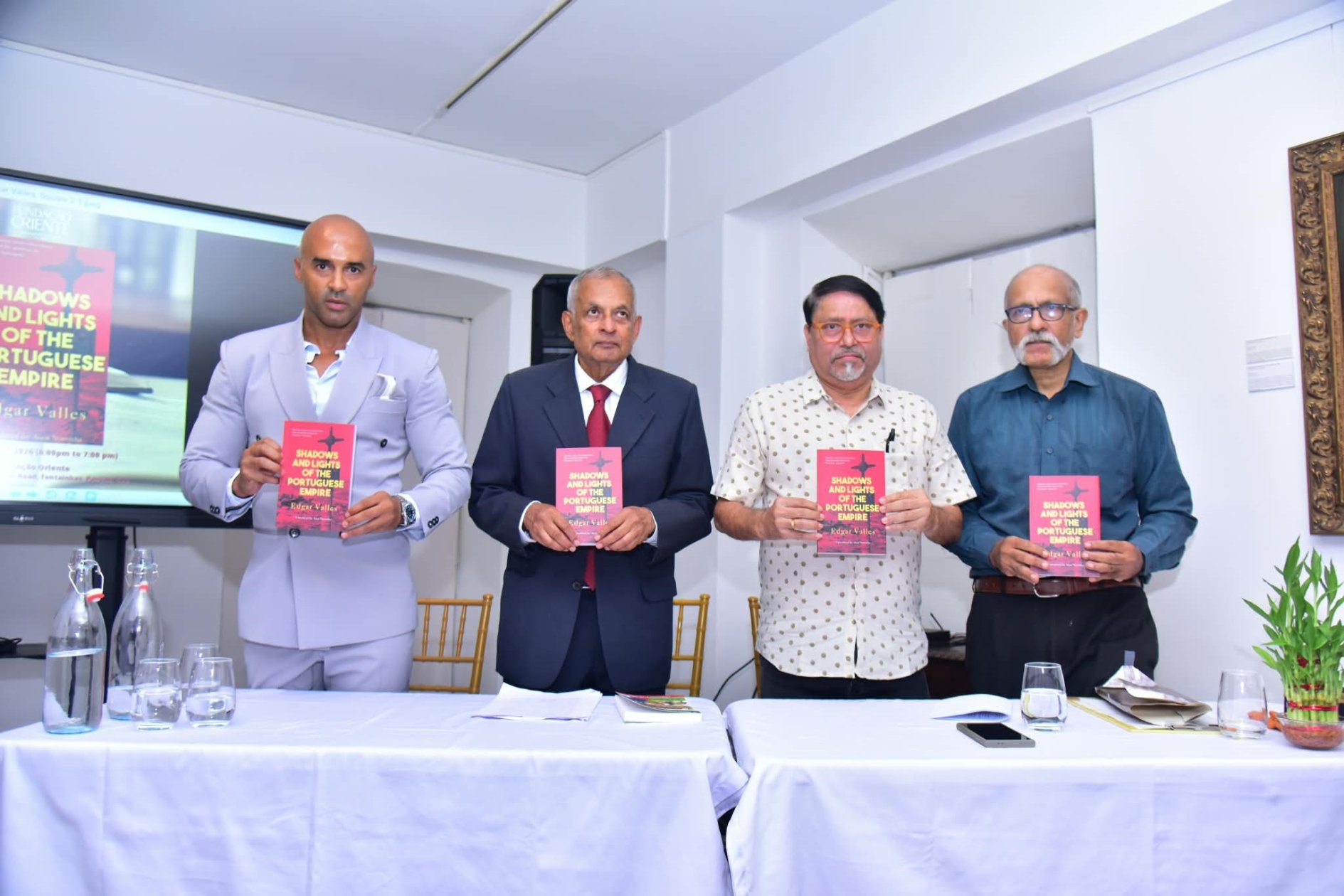
Dr Edger Valles, author of 18 books, has recently released the English translation of his book Shadows and Lights of the Portuguese Empire, a collection of short narratives set in the years leading up to Portugal’s Carnation Revolution on April 25, 1974. In a conversation with The Goan, Valles reflects on his experiences of living under dictatorship, while offering glimpses into a difficult period through the people, incidents, and moments that shaped his memories
Q. How did your writing journey begin, and what led you to write Shadows and Lights of the Portuguese Empire?
Dr Valles: I have 18 books published, of which 16 are law books written for advocates, who are my main readers. I decided to write this book about situations that happened in my life, starting from my childhood. However, it is not an autobiography. There are 34 short stories in which I am not the central person. I am simply someone who witnessed, and sometimes participated in, certain situations concerning decolonisation in Africa and the struggle against dictatorship in Portugal.
Portugal was a colonial country and remained under dictatorship until April 1974, when the dictatorship was overthrown and democracy was established. Around half of the book concerns Angola, including some stories about the Goan community there. Other stories deal with the situation of Black Africans, whose conditions were very difficult. The second part of the book is about the fight against dictatorship in Portugal, particularly the student movement.
Q. What was it like living through that period?
Dr Valles: The younger generation is not aware of how difficult it was to fight against a dictatorship because everything was illegal. Strikes were illegal, and demonstrations were illegal. People nowadays think democracy is granted, but for us to get democracy, it was necessary to fight hard. Many suffered greatly in prison. Students, workers, everybody who opposed the regime was punished. The book has stories about that period. It is also interesting to know how the Goan community behaved. It was a very small community. We had parties and gatherings, and it was very nice. The older generation had a connection with Portugal, which the new generation does not have now.
Q. Is there any particular memory from that time that has stayed with you?
Dr Valles: Yes. There were African labourers living near us who were very poorly paid. Their salary was extremely low. My sister decided to speak to her superior, saying that they were being exploited and deserved better pay. The superior told her that he would report her to the secret police if she came again because, by doing this, she was going against Portugal. Even speaking up was considered to be against the government. There are several moments like this.
Q. What inspired you to revisit these experiences and write about them? Was it difficult to revisit them?
Dr Valles: Yes, I have a good memory, and I thought it was important for young people to know what the situation was like at that time. Nowadays, extreme-right movements and far-right political parties are gaining strength. They are against immigrants and, in some cases, against democracy. It is important to tell the younger generation that dictatorship is not a solution. That was my inspiration. And yes. Some stories are sad. Telling those stories is not always an act of joy. Sometimes we suffer a little. They are about people who have already died. Two stories about my sister made me very emotional because she was only 26 years old when she was murdered. She was too young.
Q. Among the stories in the book, which is your favourite, particularly one connected to Goa?
Dr Valles: My favourite story concerning Goa is ‘Nehru on a beach in Angola ', the second story in the book. When Goa was liberated, newspapers in Angola wrote that India had stolen Goa from Portugal. There were cartoons of Nehru. We lived in Benguela, a small town in Angola, with a lovely beach. A primary school teacher named Leru Mascarenhas would go there with his family. One day, while Leru was swimming, his wife called out, “Leru, Leru, come and have lunch.” But people on the beach thought she was shouting “Nehru”. Leru also happened to look a little like Nehru, especially in those days of black-and-white newspaper photographs and no television.
Soon, people began approaching him, accusing him of stealing Goa. He kept insisting, “I am Leru!” Eventually, someone realised he could not be Nehru because he spoke Portuguese. And that was how Leru finally got to have his lunch. It sounds like a joke, but it is a true story.
Q. What can readers expect from Shadows and Lights of the Portuguese Empire?
Dr Valles: The book is not a history book. It does not teach history because I am not a professor. While it was first published in Portuguese, the English version was translated by Aren Noronha and published in August. I believe the most important takeaway for Goan readers is to understand that the Portugal the older generation knew is very different from Portugal today. Now Portugal is a democracy, like India, and what was not good in the past is over.


