PANAJI: Chief Minister Pramod Sawant on Thursday said the Koti Tirtha Corridor project at Divar will be completed within the next year, describing the initiative as a historic effort to restore Goa’s heritage and reconnect the younger generation with the state’s ancient history.
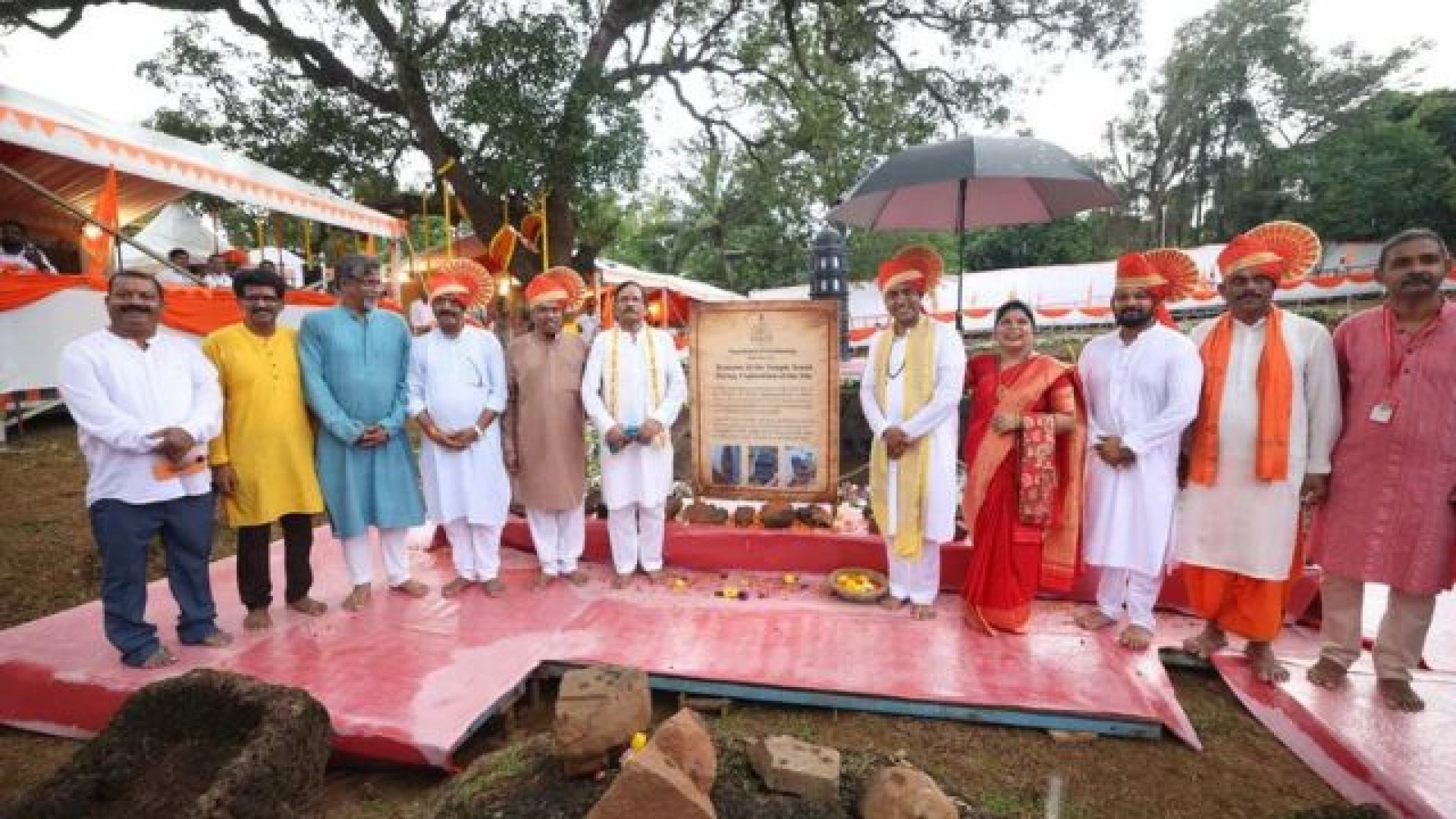
Speaking at the Udakshanti and Ganga Pujan ceremony at the sacred Shri Saptakoteshwar and Koti Tirth Sthan in Divar, Sawant said the project was the culmination of a decades-old dream of restoring the historical and spiritual significance of the site.
“If we have your blessings, I am confident we can complete this Koti Tirtha Corridor project within the next year,” Sawant said, appealing for collective support from Goans. He said the government and those involved with the project had resolved to complete the work by next Diwali.
Sawant said the initiative was aimed not only at restoring heritage structures but also at ensuring that future generations understand Goa’s history beyond the Portuguese period. The Chief Minister placed particular emphasis on the Kadamba dynasty, which he described as Goa’s “Golden Age”, spanning roughly from the 10th to the 14th century.
He said the Kadambas were responsible for the construction of numerous temples and the development of Goa as an important centre of trade and culture. “When we say that the Portuguese destroyed 1,000 temples, we must ask: who built those 1,000 temples?” Sawant said, asserting that the temples were built during the Kadamba period by the rulers and people of Goa.
Sawant also questioned the way Goa’s history has been presented over the years, calling for greater focus on the state’s pre-Portuguese past. Referring to the Adil Shah Palace, Sawant said the structure predated Portuguese rule and claimed that its foundations were laid during the Kadamba period. “Look at the Adil Shahi Palace which stands today; it was not built by the Portuguese. It existed during Adil Shah’s time, and even before Adil Shah, its foundations were laid and built during the reign of our Kadamba kings,” he said.
He said Goa’s children and future generations should be taught about all the dynasties that ruled the state, particularly the Kadamba period, so that the state’s “true, rich history” is preserved.
According to Sawant, the Koti Tirtha Corridor will help bring this history before both Goans and visitors, particularly the younger generation.
He said the project was born from a vision pursued for nearly three decades by activists and heritage enthusiasts, and members of various Devasthan committees. This was not just their dream; it was the dream of every Hindu in Goa,” Sawant said, adding that the Saptakoteshwar Temple was part of the heritage of the entire state and not merely Divar.
Sawant also highlighted recent archaeological discoveries at the project site, saying significant relics and remnants had been found just two days earlier. He said a dedicated project wing would be established to study and protect the archaeological remains. A permanent administrative office for the Koti Tirtha Corridor project has already been set up, he said.
Referring to a recently recovered fragment of an ancient sculpture depicting a Kirtimukh, Sawant said the intricate detailing of the figure’s attire demonstrated the sophistication of Goa’s decorative arts and architecture during the Kadamba period. He said the discoveries would help establish the cultural and architectural achievements of Goa between the 10th and 14th centuries.
The Chief Minister also spoke about the historical significance of Gopakapattana Port, saying the area was once connected to international maritime trade during the Kadamba period. He said agricultural and mineral products were exported from the port and that the Gopakapattana Port and its connecting route formed an important part of the historical corridor. “Gopakapattana Port is ours, and we plan to systematically develop it in the future,” Sawant said. He said remnants associated with the ancient port were still visible in the St Andre constituency and would be restored and developed in the future.
Sawant said the government was seeking to balance heritage conservation with modern development, describing the approach as “Virasat and Vikas”. Sawant recalled the role of Chhatrapati Shivaji Maharaj during the Portuguese period, saying his intervention helped halt the destruction of temples in Goa.
He said the sacred Shiva Linga from the original Saptakoteshwar site was shifted to Narve, where Shivaji Maharaj rebuilt the Saptakoteshwar Temple. The Chief Minister also referred to the Cuncolim Revolt, Pinto’s Revolt and the resistance led by Dipaji Rane, saying his government had initiated official state tributes to honour those associated with Goa’s resistance against Portuguese rule. He said the government was also undertaking conservation of forts associated with Shivaji Maharaj and had established a Chhatrapati Shivaji Maharaj Research Chair at Goa University.
Sawant said preserving historical memory was essential for maintaining Goa’s cultural identity. “We must continuously pass on the values of Dev, Dharma and Desh to our future generations,” he said.
He added that the Koti Tirtha initiative was intended to ensure that the younger generation understood Goa’s history and its civilisational legacy. "150 to 200 years from now, when the history of Koti Tirtha is recounted, it will not just carry my name as Chief Minister. Instead, the names of all of us who have contributed to this project will be eternally linked to this legacy,” Sawant said.