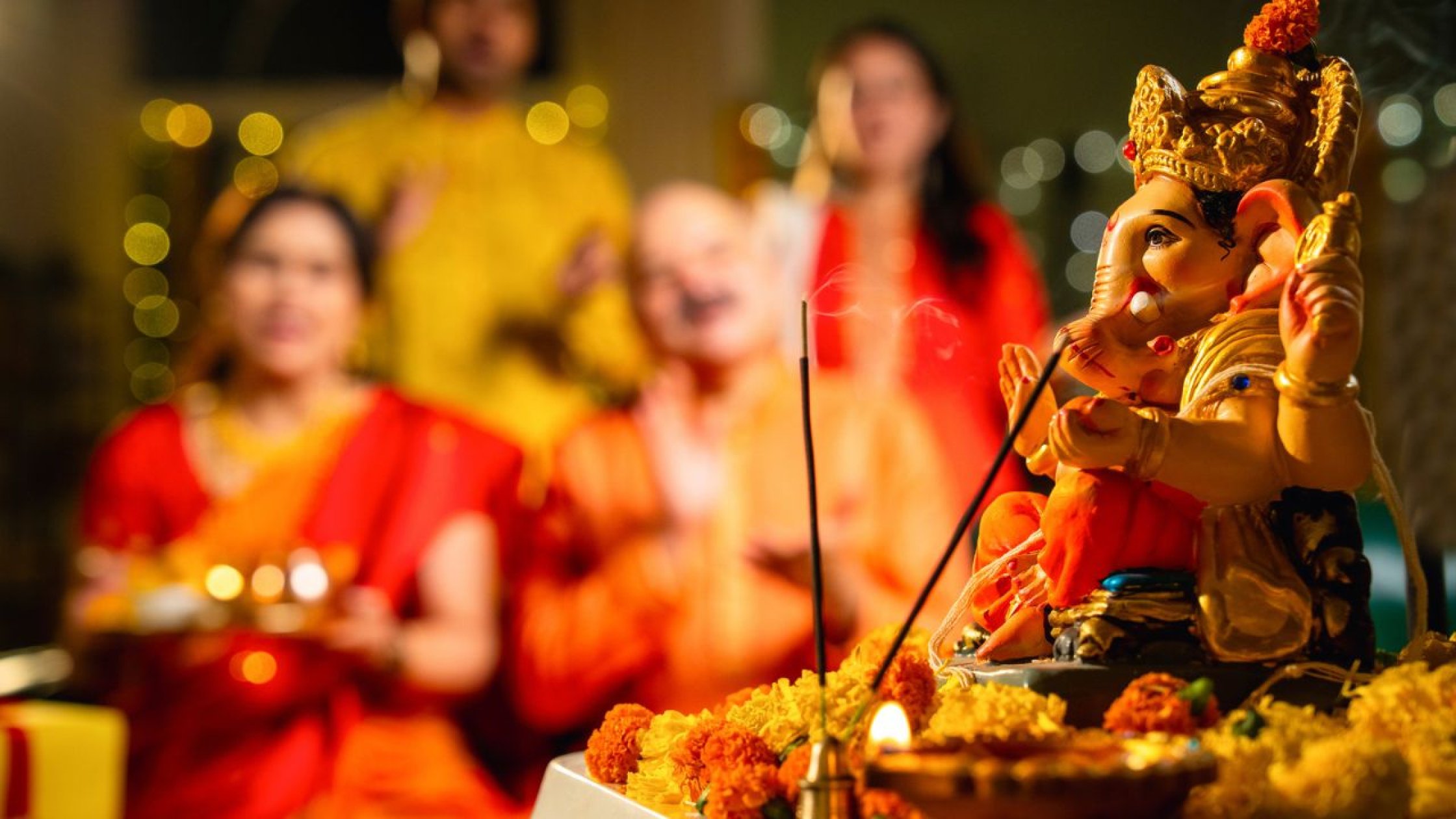
Walk through Goa’s lanes at noon or in the evenings, and you'll hear the unmistakable sounds of the ghumot, shamel and jhaanz ringing through the air. Groups of people go from house to house, offering their prayers and singing Aartis to the Ganapatis in their neighbourhood.
A homely affair
Goa’s Chavath is a homely affair, with everyone gathering around Bappa to sing, dance and pray for everyone’s well-being. As families bid goodbye to their ded dis, or 1.5-day Ganapati Bappa, with a promise of “Pudhchya varshi lavkar yaa!” (Next year, come sooner), the bustling festival house slowly grows quiet as families start going back to their daily routines. For families whose Ganapati Bappa stays for five days, however, the festival has just begun.
Village aartis
In many villages, Chaturthi isn’t limited to just the family celebrating it. Atharva Gaonkar from Quepem mentions how the prasad is one of his favourite things about Chaturthi. “We often go to all the houses in the village for aarti. In fact, today we started at around 12 noon; by the time we reached our house, it was almost 3,” he says.
Welcoming Gauri
In some homes, they also welcome the Gauri on the third day. “We bring her home, and it is believed that for those 3 days, she is a “Mahervashin, who has come to her mother's place, so when we bring her home, we also put a rangoli in the shape of her footsteps,” explains Geeta Bhate, adding that the footsteps symbolically represent the coming of the “Lakshmi of the house.”
Family rituals
When Ganapati is kept for five or more days, many families also perform a Hom as per their means. The ritual also has its own rhythm. “Usually the men of the family must chant 1000 ‘avartana,’ and then the family performs the Ganapati Purashcharan (hom) of either Modaks, Laayaa or Durva,” explain Kumudini and Kamlakar Desai. The Hom becomes another family gathering during the festival, with everyone taking part in the rituals in their own way.
Evening fugdi
While Aartis and Bhajans happen everywhere, Srushti Desai's household follows the tradition of performing a fugdi every evening in front of Bappa. “We started just after the lockdown Year, and then we had so much fun that we did not stop. So now it is a tradition that we follow,” she says, adding that the entire house, right from the eldest to the youngest, joins in to the beats of the devotional songs and bhajans.
Coming together
What makes Chavath special in Goa is perhaps this coming together. There are the Aartis that take people from one home to another, the prasad is shared, and then there are the rituals that families have continued year after year. For some, Ganapati may leave after ‘ded dis.’ For others, he stays for five days or more. But either way, the celebrations stretch beyond the walls of a single home. Because in Goa, when Bappa comes home, the whole village has a reason to celebrate.