MAPUSA
Imagine taking an evening walk where the trail winds through a living mangrove ecosystem, children have a playground at one end, birds nest overhead, crabs and mud-skippers inhabit the waters below, and information boards along the way tell you what you are looking at.
That is the idea behind Candolim’s newly developed Mangrove Walk and Children’s Park – a public space that attempts to put nature, recreation and environmental education on the same footing.
Rather than creating a conventional landscaped park and adding greenery around it, the project has been designed around the mangroves themselves.
The walking trail runs along a 1.3-km stretch from the Candolim bridge towards Our Lady of Hope Church, allowing visitors to experience the wetland ecosystem while walking through it.
The concept is being promoted as a non-commercial, environment-friendly community project and is a pet initiative of Calangute MLA Michael Lobo and the Candolim panchayat headed by Sarpanch Blaize Fernandes.
What makes the project different is the effort to retain the natural functioning of the mangroves. The walk uses interlocking pavers over loose gravel, allowing rainwater to drain naturally, while sluice gates facilitate tidal water exchange.
The panchayat has planted native fruit-bearing trees including mango, chikoo, guava, jambul and Indian gooseberry, supported by a drip-irrigation system. Mangrove channels have also been scientifically desilted to improve tidal circulation and revive the wetland ecosystem.
The walk doubles as an outdoor classroom. Around 20 information boards introduce visitors to species found in the mangroves, including fiddler crabs, giant mud crabs, shellfish, oysters, mud-skippers and birds. The mangroves also serve as important habitat for birds and nursery grounds for fish.
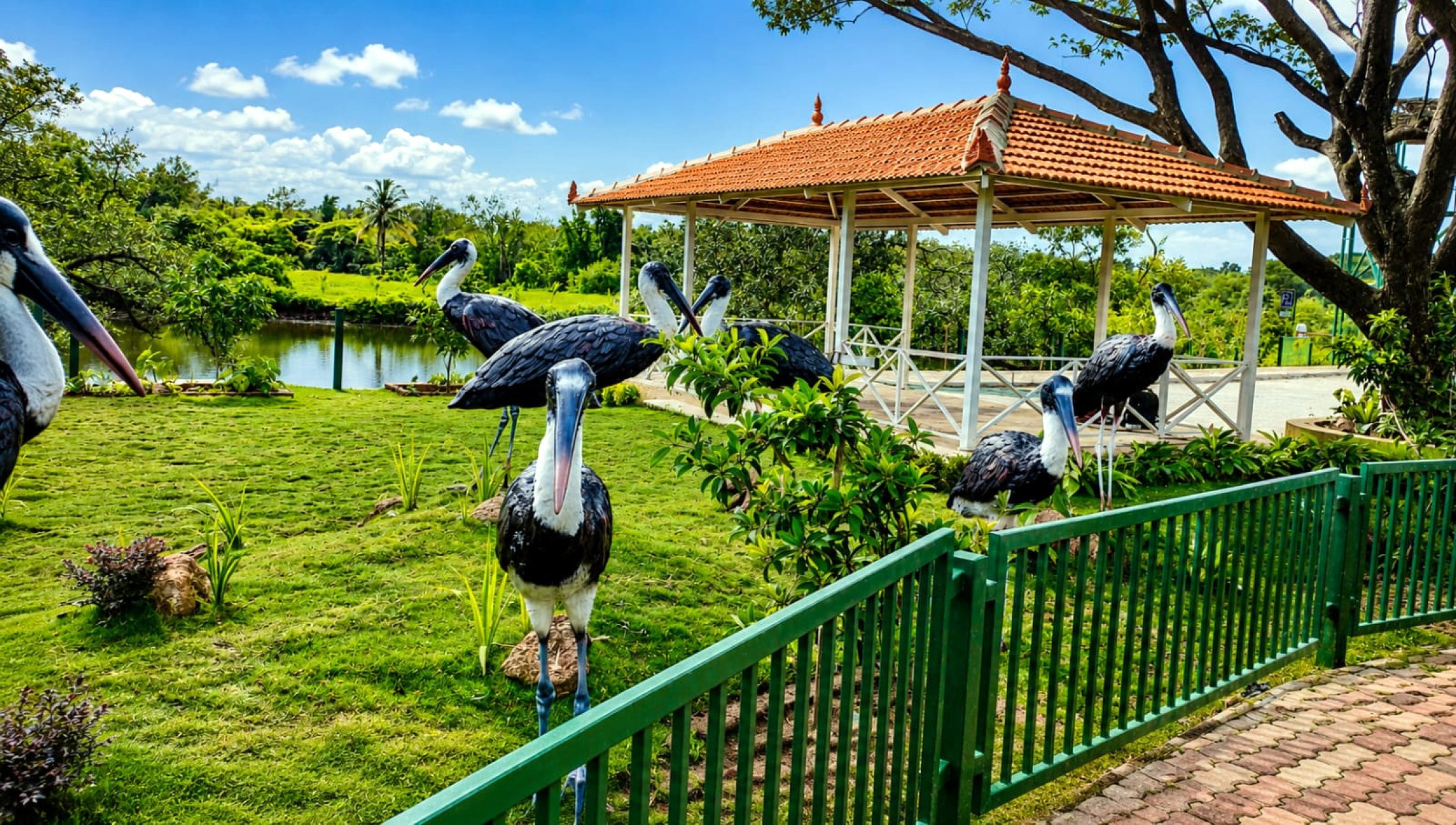
An Eagle’s Nest observation deck provides a bird’s-eye view of the mangroves and waterways, while life-sized sculptures depict migratory birds and other wildlife.
The adjoining Children’s Park has play equipment, shaded spaces, a gazebo and separate toilets. A women’s lounge provides a washroom, nursing room, diaper-changing facility, coffee station and Wi-Fi, while AI-enabled CCTV monitors the premises.
The project also retains a community component, with designated angling points for local fishermen and residents.
The panchayat has introduced a return-and-refund system for plastic drinking-water bottles, reinforcing its “Clean and Green Candolim” initiative.
The story of the project began with a problem.
After the original bund was breached, saline water entered the low-lying area and extensive mangroves developed. The WRD subsequently constructed a retaining wall, beginning work in 2021 and completing it in 2023.
In May, the Goa State Infrastructure Development Corporation, in collaboration with the panchayat and under Lobo’s initiative, took up beautification of the walk and development of the Children’s Park.
Chief Minister Pramod Sawant inaugurated the first phase on Monday and laid the foundation stone for the second phase.
The project has not been without controversy.
The Calangute Constituency Forum had earlier opposed the development, raising concerns over the impact of works on the mangrove ecosystem.
The second phase, however, is proposed to remain dedicated to nature and walking, with no additional recreational or commercial facilities planned.