THE GOAN | VASCO
The murder of fishing boat owner Manjunath Harikant has sent shockwaves through Goa's fishing community. Beyond the tragedy of a life lost, the case has also exposed a long-standing vulnerability within the traditional fishing industry ” the casual approach towards tenant and labour verification.
Harikant had allegedly been murdered by labourers on his vessel during a fishing trip, and his body dumped into the sea to erase evidence.
According to sources, the two accused, who have since been arrested, had not been subjected to labour verification.
The case has now become a wake-up call for hundreds of boat owners who depend heavily on migrant labourers but often overlook one of the most basic safeguards available to them ” labour verification.
DEPENDENCE ON MIGRANT LABOUR
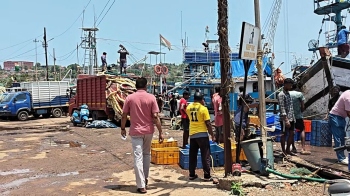
Across Goa's coastline, fishing jetties such as Kharewaddo, Malim, Betul, Cutbona and several others support a thriving fishing industry.
Kharewaddo alone has around 250 fishing vessels, and while a small fishing boat may need around 10 workers, larger vessels employ between 30-40 labourers.
Hundreds of boats translate into thousands of workers, many of whom arrive from states such as Odisha and Jharkhand to sustain Goa's fishing economy. Without them, the industry would struggle to survive.
Boat owners admit they are so dependent on migrant labour that many owners arrange buses to bring workers from their home states, while some even provide flight tickets to ensure labour shortages do not affect fishing operations. As such, the relationship between owner and worker is often built on trust and urgency rather than documentation and verification.
SKIPPING LABOUR VERIFICATION
Many stakeholders privately acknowledge that labour verification is sometimes skipped because owners fear the process may be viewed as an inconvenience by labourers. There is also concern that excessive formalities may discourage workers from returning in future seasons, creating manpower shortages and affecting business.
However, the Harikant murder case has demonstrated the danger of such assumptions.
What makes the incident particularly significant is that police were ultimately able to crack the case through technical evidence, including mobile phone records and tracking movements of suspects. The investigation progressed because crucial clues emerged during the probe.
But what if those clues had never surfaced? What if mobile phone data had not pointed investigators in the right direction?
Those questions now resonate across fishing jetties where boat owners are quietly reassessing their own practices.
Police have stressed the importance of labour verification over the years.
In Vasco and surrounding areas, awareness campaigns have been conducted regularly. Police have even visited fishing jetties, including Kharewaddo, to assist boat owners and create awareness about verification procedures. The message is clear: knowing someone employed on a vessel is not merely a bureaucratic requirement; it is a security measure.
ACCOUNTABILITY OF WORKERS
Labour verification creates a record of every worker's identity, photograph, permanent address and background details. If a crime takes place, police have access to information that can significantly reduce investigation time and improve the chances of tracing suspects.
More importantly, verification itself acts as a deterrent.
Labourers are less likely to commit crimes when they know their identities, addresses and personal details are documented with authorities.
The issue extends beyond a single murder investigation. Goa's fishing industry employs thousands of migrant workers every season. Most are individuals travelling long distances to earn a livelihood and support their families. Yet even a handful of unverified individuals can create risks for employers, fellow workers and the wider community.
The lesson emerging from the Harikant case is not about distrust. It is about accountability.
The sea has always carried risks ” rough weather, mechanical failures and uncertain catches. But modern challenges require modern safeguards. Labour verification is one such safeguard, and one that costs little compared to the consequences of neglect.
For many in Goa's fishing sector, Harikant's death may become more than a criminal case. It may finally convince an entire industry that verification is not a formality to be avoided, but a protection that cannot be ignored.
Sometimes, it takes one tragedy to expose a weakness that existed all along. The fishing community now faces a choice ” continue relying solely on trust, or ensure that every person who boards a vessel leaves behind a verified trail on shore.