


MARGAO
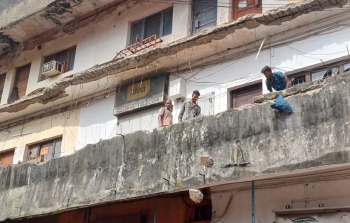
Even as authorities began the process of dismantling the floating roofs of two dilapidated buildings in Margao’s commercial heart, questions are being raised over the limited scope of the action.
Residents and civic watchers are asking why only two structures”the old Bank of Baroda building and the Comunidade building”have been targeted when several others with precarious roofs, chhajjas, balconies, and galleries continue to pose a serious risk to public safety.
The concern gains traction amid growing calls for a comprehensive review of all potentially hazardous buildings in the city.
When asked about the matter, South Goa District Collector Egna Cleetus, who also chairs the South Goa District Disaster Management Authority (DDMA), clarified that the Authority is still awaiting a report from the Margao Municipal Council (MMC) listing old and unsafe structures within city limits.
The silence surrounding the outcome of a recent joint inspection”conducted by MMC and district officials”has only added to public unease. It remains unclear whether that inspection uncovered additional structures beyond the 21 already identified by the municipal body as unsafe.
Sources within the administration suggest that a broader and more urgent approach is needed. Privately, officials acknowledge that beyond the need to demolish entire buildings, significant danger lies in structures featuring floating roofs, weakened chhajjas, and galleries that jut out over busy roads.
“What we have observed in the recent incidents of collapse is that the buildings did crumble, but only the weak concrete slabs and chhajjas. This shows that the building per se may not be unsafe, but the floating roofs and chhajjas may pose dangers to the life and property of citizens,” pointed out an official.
He added: “The MMC’s technical section employs half a dozen engineers with the expertise to assess structural risks in buildings. Each of these engineers should be assigned the task of identifying the weak chhajjas and floating roofs in their respective jurisdictions.”
The official cited Section 190 of the Goa Municipalities Act, which mandates municipal bodies to identify and take corrective action against old and dilapidated buildings under their jurisdiction.
---
What’s holding up the report? MMC misses DDMA deadline
MARGAO: Uncertainty looms over whether the Margao Municipal Council (MMC) has complied with a key directive from the South Goa District Disaster Management Authority (DDMA), which had called for a fresh report on unsafe and dilapidated buildings in the city.
At the May 27 review meeting called by the District Collector and District Disaster Management Authority Chairperson, Egna Cleetus, the Collector had directed the Chief Officer of Margao council to submit a fresh report/supplementary list on the number of cases pending at their level within a week.
The week’s deadline was served on the civic body to submit the updated list of old buildings so that the Authority could move a separate file to the government or direct the Goa College of Engineering to assess the structural stability of the remaining dilapidated buildings and recommend necessary measures.
---
Questions raised over 'selective' demolition of buildings
MARGAO: Are the floating roofs of two buildings “ the Old Bank of Baroda building and the Comunidade building “ the only structures found in a dilapidated condition and posing a serious safety hazard, being on the verge of collapse?
Based on information submitted by Deputy Collector-I, Margao, that the floating roofs of these two buildings are in a dilapidated state, the District Collector & Chairperson, DDMA has directed the Deputy Collector, South I to write to Executive Engineer, PWD (Buildings) W.D VIII, Fatorda, to execute the demolition of the said part of the buildings without delay and recover the cost from the owner of the building.
Questions are raised in city circles as to how the authorities only found the floating roofs of these two buildings in a dilapidated state when there are a host of similar buildings abutting the streets and roads posing danger to public life and property.
A citizen remarked: “After the two recent incidents of building collapse, the authorities ought to have been proactive in going round the city and identifying the floating roofs, chhajjas and galleries of dilapidated buildings and initiating action. Somewhere down the line, a proactive approach seemed missing. Hope the Disaster Management Authority will take cognisance of the ground reality.”


