


The festering wounds of the Assam agitation and theattendant violence that hijacked the movement and led to more conflicts withpeople of other communities and tribes have, over the years, transformed itselfinto a more ‘ghoulish avatar’ to quote Pronab Bora of The Telegraph.The Kokrajhar violence is perhaps a classic example. Except, the reasons forthis violence are vastly different from that of the Nellie massacre.
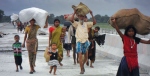
In 2012, Kokrajhar and its neighbouring districts inAssam witnessed riots that killed at least 50 and made about 378,045 peoplehomeless. This is an official figure. No one knows how many more people havetaken shelter in the safe zones.
It is also an open secret that the BodolandTerritorial Council (BTC) boys have made it clear that they don’t want theBengali Muslims back in their districts. Direct warnings have been issued:return at your own peril. Student organisations like the All Bodo StudentsUnion (ABSU) have been chanting the mantra of ‘No Bodoland, No Rest’ and‘Divide Assam, 50-50’ for a long time. It is almost with a crusader’s zeal theyhave been attacking, perhaps killing, and ensuring that the Muslims are drivenout of ‘their’ land.
When I confronted Pramod Boro, the President of ABSU,he sounded like he had rehearsed his answers many times over. “It is veryclear. A genuine Indian citizen has every right to stay where they want to. Butout of the people in the camps are also illegal migrants. They have takenadvantage of the situation, of the weakness in law,” he said.
“What about the BTC boys openly threatening,” I ask.
The reply comes immediately: “We can’t ignore the law.And the illegal migrant issue is no less than the issue of Kashmir.”
The trigger for this violence, however, is wellknown. The situation was developing from May 29. In Kokrajhar, theAll-BTAD Minority Students Union (ABMSU) had called for a shutdown after theBTC held that a part of forestland used as an idgah maidan wasan illegal encroachment.
The friction between BTC and ABMSU took an ugly turnon July 6 when a Muslim man was shot dead by unknown people in a Muslimneighbourhood of Kokrajhar. Clashes between the two communities continued and aleader of the Assam Minority Student Union (AMSU) and one from the ABMSU wereshot at on July 19. Next morning, a few kilometers away from Kokrajhar at avillage called Joypur, four former cadres of the disbanded Bodoland LiberationTigers (BLT) were hacked to death. Immediately after, counterattacks started,and rioting spread in Kokrajhar.
I meet Abdul Ali Mondal, a resident of Joypur, theso-called epicentre of the violence.
“For some days the BLT boys were circling this area ontheir bikes, harassing people. They also shot members of our studentorganisation”, Mondal tells me.
But there is a bigger back-story that captures thisviolence. In this story, land, money and power are three key elements. Alsoimportant is the hypocrisy of the state administration and New Delhi. It isnauseating.
On the road from Bongaigaon to Kokrajhar, our carcould rarely pick up speed. If it did, then within minutes, it would have toslow down again. In various fonts and mostly in red, the word ‘diversion’written on signboards stands in the way of the journey.
Bridges are being built. Most are half-built. In someinstances one could see some bridges, hanging in mid-air with the concrete andiron structure jutting out in a parallel direction. Once or twice, big Scorpioswith tinted glass windows whiz past confidently.
My colleague whispers, almost in fear, “These areowned by BTC people. They have a lot of money.” He sounds as if someone willshoot him if he is speaks loudly. In this part of the world, no one takeschances. The line between bravado and stupidity doesn’t exist here.
Initially, the movement by the Bodos was aboutdispossession of tribal land by non-Bodos, mostly Bengali and Assamesesettlers. The struggle also included recognition of their language andculture.
Yet even after the creation of the BTC the tensionbetween the Bodos and non-Bodos continue. This is not the first time thisregion has witnessed riots.
In a press conference, Hagrama’s first reaction wasthat the borders with Bangladesh should be sealed. Assam has witnessed illegalmigration and minority appeasement in its politics. Yet that is also a cardthat is put forward to hide other failures, push other agendas. Put an end toillegal migration and all troubles will be over, is a solution suggested bymany.
Far removed from the politics, I visit some reliefcamps. In a relief camp in Sokhanjhora, I come across a Bodo woman who soundspositive and dignified at a time of blames and counter-blames. “I have noclue why this is happening. I think we have been able to live in harmony andthis is something that should never happen,” she tells me.
Not everyone is that positive. The outburst of uglyviolence is in the minds of many. I met Zahida Khatun in a relief camp nearBongaigaon. Only 25, and with three kids, Zahida jumped into the river whenmiscreants set fire to her house. “I have no extra clothes, I have nothing,”she tells me. She just wants to get back to her home and peace to return.
But most of these homes have been gutted. Nothingremains. Mob frenzy is written all over. And, not surprisingly, to travel tothese villages you need the help of gatekeepers. Else, you invite the wrath ofpeople who have lost friends, near and dear ones and whose life has beencompletely thrown off track because of the violence.
There must be incentives but. Or else, what will leadone person to tie another person’s hand and shoot him and throw in the river?And then we have state heads defending policies in the name of ‘complexities’.
The people might stand resolute in their peaceefforts. But the flames of hatred are remote controlled by someone else. It isdoused and set at will.
Everywhere I went, it was the same story. For thesedisplaced people “ from one relief camp to another “ the story of shatteredlives remains the same. This corner of Assam is no stranger to violence.
The Prime Minister waved his hand in an almost roboticmanner to the crowd. It was different from the time when he came to Assam forflood relief. That time, he was airborne for 90 minutes. This time he was onthe ground.
The day after his visit, when I went to a relief camp,it had moved away from the spotlight and had gone back to its uneasy anduncertain pace of life. I found people squatting on the floor and eating rice.Just rice “ nothing else. There were no mosquito nets. No proper bathrooms, noproper beds.
Close on the heels of the PM’s visit, then HomeMinister, P Chidambaram arrived in Assam. “Learn to live together,” he said,and took the flight back to Delhi to the cooler environs of the FinanceMinistry.
All this while, the Chief Minister was shouting hislungs out that all will be okay.
The opposition leader L K Advani was not far behind.“Illegal migration is the root cause,” he shouted at a press conference inGuwahati.
“Mr Advani, there are other layers to the story.Former cadres of the BLT are still carrying arms,” I offered him.
“I know, but illegal migration ... Even Home Ministermentioned this,” was his answer.
It is time that the hypocrisy stands exposed. Howleaders communalise politics and make false promises. Probably, it is alsotime to stop the clock, look back at all the peace hypocrisy, the criminalityof these promises and ensure that these little wars and those who fight themare stopped.
(ArijitSen is the Northeast Correspondent for CNN-IBN. Views expressed in thearticle are his own. Email: [email protected]. Reproduced with permission from www.governancenow.com)


