


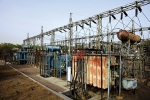
Western media has described Monday’s failure of northern grid as the world’s worst power crisis in recent years. Tuesday’s failure of northern, eastern and northeastern grids have plunged over 19 states into darkness. While in Monday’s case, the fault was identified on the Gwalior-Agra sector after many hours, Tuesday has seen no such luck as of yet. One reason cited by the officials though is that various states were overdrawing power which led the grid to trip.
While a power outage hardly bothers us or
the media now, the massive scale this time around ensured its comeback on news TVs. Power grid failing in a clean direction-wise synchronisation (northern, eastern and northeastern) is news for any country by the way.
While our philanthropist prime minister went to European Union to commit a $10 billion aid to help it fight the Eurozone financial crisis, he missed a lesson in the power sector of the continent: smart grid. Had there been a smart grid, this crisis could have been easily been avoided. A smart grid would have shared the data in real-time which would have helped to instantaneously identify the fault. Smart grid would have also initiated self-healing and would have cordoned the fault line and restricted the impact of the failure. In a real-time response, it would have also identified the states overdrawing power. Although India has begun efforts to get smart grids, the pace is typically its own.
In an exclusive interview to Governance Now last month, Dr Sam Pitroda who is also the chairman of the India Smart Grid Taskforce stated, “Smart grid will ensure power availability and reliability. It will help identify faults in power supply, for rapid redressal.”
According to him, a better demand management will allow better access to power. He said, “While it may be difficult to guarantee perfect power availability, in the current context, we can at least replace blackouts with brown-outs by providing a basic threshold of power to all households, with which to run at least a few key appliances.”
Pitroda had suggested that power quality can be improved through a combination of key technologies “ such as remote terminal units to monitor distribution grids, analytics and asset mapping, load balancing and SCADA.
The taskforce headed by Pitroda has made seven recommendations which are awaiting action from the government. A total of 14 pilot projects were also identified. However, the cabinet approval for financing these projects is still pending.


