



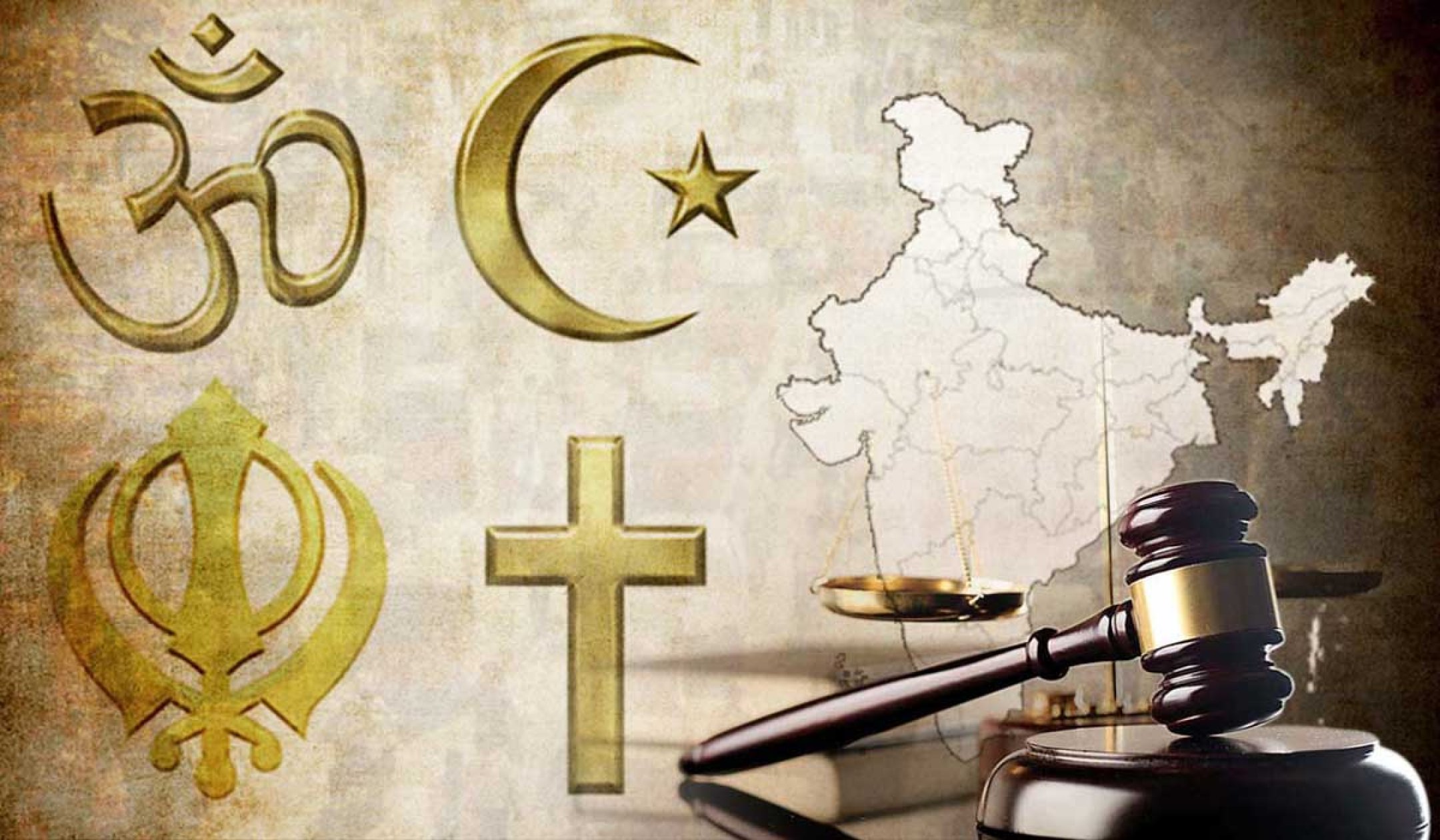
Like it or not, our focus gets continually bogged down with religious and communal issues. Once again Goa appears intent on making an issue of a non-issue---religious conversions---we are forced to turn our attention to debates of how citizens choose their own faith and beliefs.
Whatever ultimately happens to the Goa Prohibition of Unlawful Conversion of Religion Bill, it has shifted the discourse away from more important issues afflicting the State.
Three lessons could perhaps be learnt from the latest whirlwind of divisive politics sought to be unleashed over Goa:
(1) Emotive politics take everyone by storm. Even if we realise that this is just meant to distract us, the political discourse will shift there. Realms of newsprint will be devoted to such issues. Such emotive issues are impossible to ignore.
(2) In Goa, there has been a long-time and disproportionate focus on communally-tinged tensions which get played up every now and then. This shapes our politics, our beliefs, our priorities.
(3) More importantly, these push away from the limelight issues that seriously shape our future. Like intense land speculation, housing affordability, the impact of industrialisation, environmental destruction, water security, garbage management, precarious employment, tourism's and extractive industry's impact on local communities, infrastructure, corruption and the loss of agricultural land.
Our political class has the power to address issues. Or, it can choose to create needless ones. They can create weapons of mass distraction.
Keeping issues of religion and communalism continuously “on the boil” has a major agenda-setting effect.
Remembering history
One has to remember history to put things in context here. Goa has seen religious conversions in the past. That was centuries ago. It is nobody's case that changes in religion today are happening in any significant way here, let alone "Unlawful Conversions".
Much of Goa's conversions happened in the sixteenth and seventeenth centuries. Not even in the eighteenth, when the territory of Goa got expanded, due to treaties, conflict and jostling or occasionally wars between the rulers of those times.
Conversions took place due to the politics of those times. Sixteenth century rulers saw religion as closely intertwined with political authority, social order and the legitimacy of the state. A ruler who shared, or imposed, a common faith could hope to create greater ideological unity and loyalty. Rival religions could be viewed as potential sources of foreign influence or political disobedience.
History reminds us that Portugal and Spain saw the spread of Christianity as both a religious duty and an extension of imperial power. Muslim rulers and other states likewise sometimes encouraged conversion, granted privileges to co-religionists, or imposed disabilities on religious minorities. Practices varied greatly.
Hindu rulers then had less of a state-sponsored, missionary tradition. This was also because Hindu traditions had no single institution, religious leader or universally binding doctrine requiring the conversion of all humanity.
Yet, kings did strongly patronise particular religious traditions, especially Shaiva, Vaishnava or Shakta institutions. Temples were endowed, Brahmins supported and preferred sects were at times promoted. Political conquest could also involve the destruction, appropriation or replacement of rivals' religious institutions.
Rulers of the Vijayanagara Empire saw Hindu religious institutions as important to kingship and social order. This may not have resulted in religious conversions; the category “Hindu” was itself far less unified in the 16th century than the modern term suggests. Religious life consisted of numerous sects, local cults, castes and traditions. Hindu rulers also then too used religion for legitimacy and state-building.
Those whose ancestors opted to change their religion in Goa centuries ago, largely, don't have a problem with that choice. They live as peaceful and productive citizens of their land, contributing back to it, sometimes even more significantly.
Reflecting ideology
The raking up of irrelevant issues today reflects more of a political agenda, rather than a desire to tackle a ground-level reality. It is a reflection of the ideology of those pushing for the same.
From the 1960s, two decades after Independence, India has been promoting its so-called Freedom of Religion laws. It started, ironically enough, with Congress laws in Orissa and Madhya Pradesh in the late 1960s. Arunachal got its law in 1978, a decade later, under the Janata Party.
The Hindutva rise created a second wave, in Gujarat, Chattisgarh, Jharkhand, Uttarkhand, UP, MP, Karnataka and Haryana. There were exceptions: Tamil Nadu's AIADMK passed its law in 2002 and repeated it two years later. Months back was Maharashtra, and Goa has given hints of wanting to follow its neighbour's lead.
Most laws use the highly euphemistic term of 'Freedom of Religion' to describe these laws. It seeks to mask the restrictive nature of the laws behind a constitutional vocabulary. In Goa's case, it has been openly presented as a Prohibition of Unlawful Conversion of Religion Bill.
Language of law
There is need for debate over how much freedom a citizen has to choose his or her own religious beliefs, and, more importantly, what amounts to 'force' in this context.
This covers some assumptions made by the law. It blocks conversion by "allurement", "undue influence" and cases of religious conversions which happen due to marriage.
These terms can be defined in very loose ways. Education, employment, charitable assistance, medical help, or attempts at improving living standards (which are part and parcel of some religious approaches) could be easily interpreted as this.
"Undue influence" could refer to the moral or spiritual influence a religious leader naturally has over his or her followers. The marriage provision can be weaponised, and interfaith couples cold be policed. Complaints by persons other than those affected could complicate the situation intensely. There may be even provisions for action against "attempts". Obviously, the bias of the sixteenth century which we are critical of, could well be replicated in the twenty-first.


