THE GOAN | PANAJI
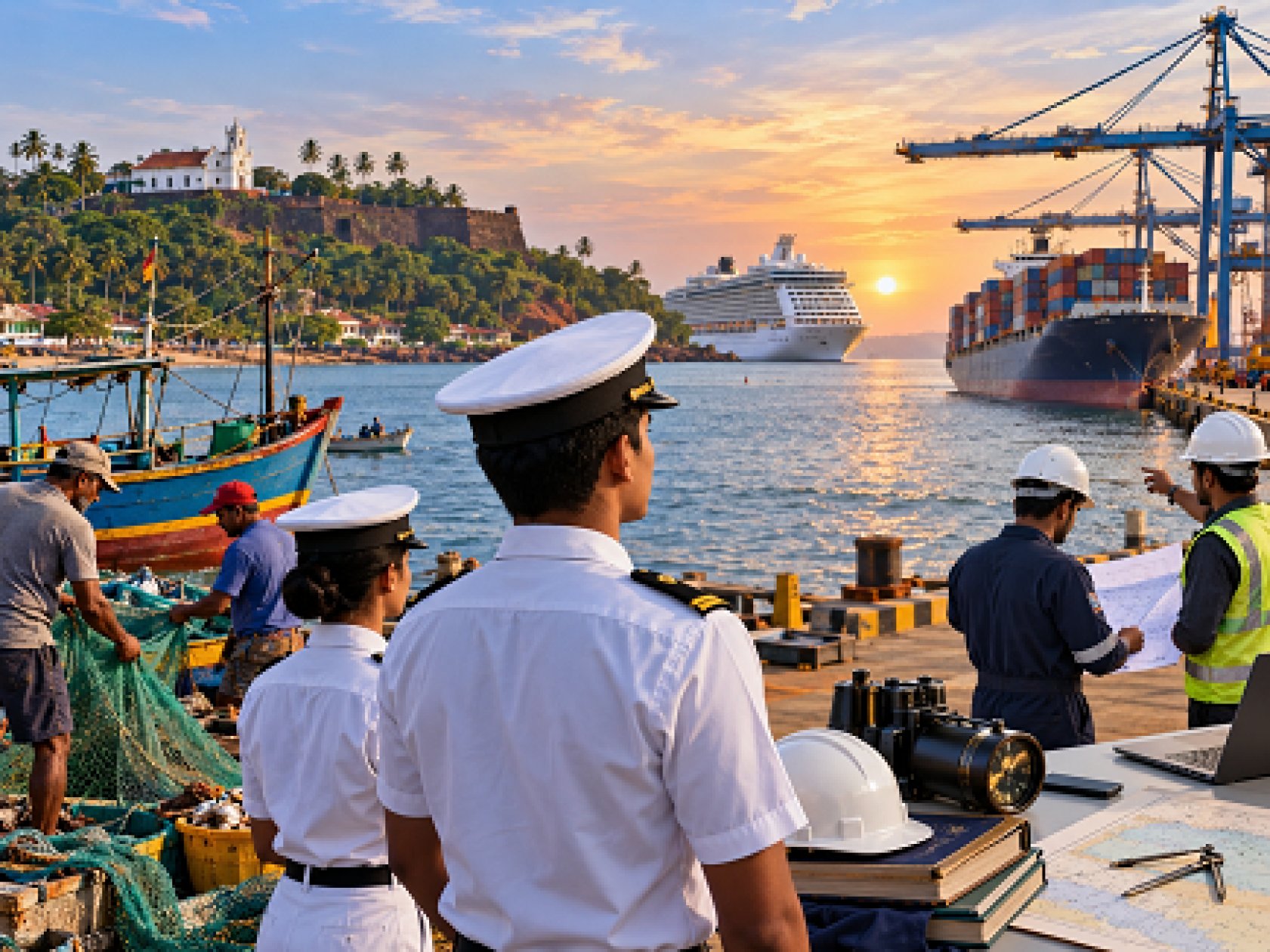
Goa’s relationship with the sea extends beyond its coastline. From fishing and traditional boatbuilding to shipping and seafaring, the maritime sector has long been linked to the State’s communities. For a State whose history, economy, and everyday life have long been connected to the sea, the maritime sector offers more than just jobs on ships, with opportunities for Goans both at sea and on shore.
Beyond traditional careers
Yet as the global maritime industry continues to create opportunities across shipping, seafaring, maritime education and allied fields, how much of this sector are young Goans actually tapping into? From the Merchant Navy and cruise sector to ports, shipbuilding and other shore-based roles, the options extend beyond traditional careers at sea. With World Maritime Day celebrated on September 24 this year, the focus is not just on whether these opportunities exist, but on how accessible they are to young Goans, what challenges they hold, and whether more are exploring them.
“For students from Goa, the maritime sector offers scope beyond just the Merchant Navy,” explains Shivram Kamat, Director of the Institute of Maritime Studies, Goa. He lists out the various opportunities at sea as marine engineers, deck officers and GP ratings, including deck and engine room ratings, as well as roles in maritime catering. Beyond seafaring, he says there are opportunities in inland and coastal maritime operations, shipbuilding, port-related work and other shore-based roles.
Growing interest
Manoj Pandey, Principal of Kamaxi Maritime Academy, adds that the scope extends to the cruise and port sectors as well. “While cruise lines and merchant vessels remain highly attractive due to the preference for working abroad, onshore and port activities also hold immense potential,” he says, encouraging more Goan youth to explore these opportunities. While maritime institutes in Goa offer various courses and certifications, Kamat says there has been a shift in the way young people view maritime careers, with more students now showing interest in the sector. “Our institute has been in operation since 1997 and has trained almost 2,500 engineers to date, with almost 50% of them being from Goa. Despite this, many Goans who aspire to join the Merchant Navy are not aware of our institute,” he says.
Training demands
However, increased interest also comes with the need to understand what a career at sea entails. For those looking at careers at sea, the training itself can be demanding. According to Kamat, it goes beyond academics: “It is not just about studies and the technical knowledge, but it is more about helping the students prepare for life at sea,” he states. While some may find it difficult initially, he says they eventually get used to the demands of the profession.
Cost considerations
Along with the demands of training, the cost of entering the sector is also a consideration for aspiring seafarers. “One major challenge faced by most candidates is the training costs, as most of these trainings are residential and the cost is all-inclusive,” Kamat says. However, the challenges do not end with completing the training. As Pandey points out, candidates also need sponsorship to gain the practical experience required to progress. “One of the most important considerations is sponsorship and availability of a training berth. Completing a pre-sea course is only the beginning of a seafarer’s career,” he mentions, explaining that practical sea time is essential for progressing towards higher certifications and ultimately obtaining the required competency qualifications. According to Pandey, students should examine arrangements for sponsorship and onboard training before joining a maritime training institute, as completing shore-based training without securing a training berth can become a serious bottleneck in career progression. “Students also need to be cautious about placement promises and verify the credentials and placement arrangements of organisations before committing to a programme,” he advises.
Life at sea
Beyond training and employment, the nature of the job itself is another factor young people need to consider. A career at sea is very different from a conventional shore-based job. A seafarer may spend several months away from home, family and friends. “There can be long periods of isolation, demanding working conditions, unfamiliar environments and the need to live and work closely with the same group of people for extended periods,” Kamat says. Apart from academic and technical ability, Pandey emphasises that a successful seafarer needs resilience, emotional maturity, discipline and adaptability. “Young people considering this career should therefore ask themselves not only, ‘Can I get a maritime qualification?’ but also, ‘Am I prepared for the lifestyle that comes with working at sea?’”
Wider opportunities
For young Goans, the maritime sector therefore offers opportunities beyond the traditional image of working aboard a ship. From seafaring and cruise to ports, shipbuilding and other shore-based roles, the sector offers several avenues, but awareness, access to training and the realities of the profession remain important factors in deciding whether more Goans enter it.