


THE GOAN
PANAJI
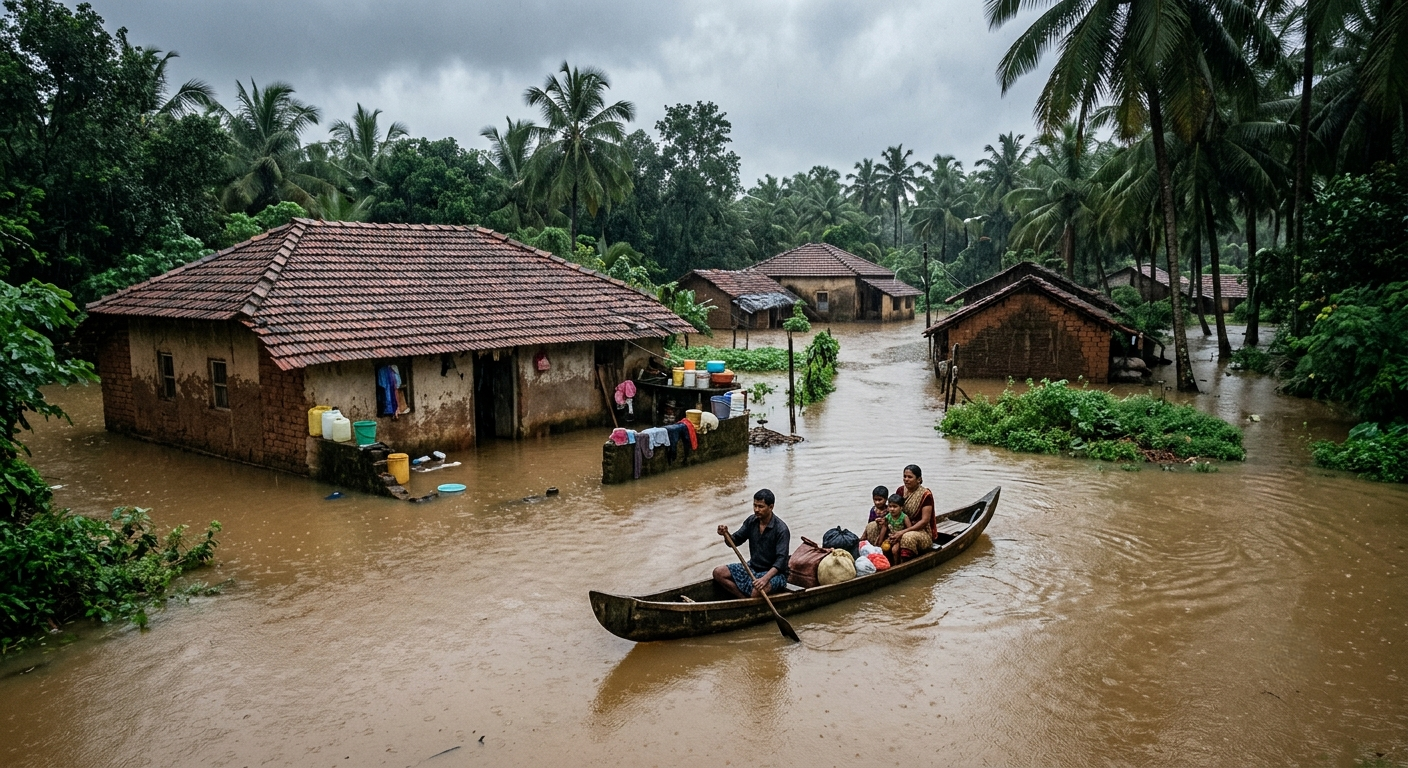
As people begin preparing a hot cup of chai and crispy onion bhajiyas to enjoy the rains, the preparations in some houses for the monsoons look slightly different. The families living in houses situated in low-lying areas often have to scramble for buckets, shift furniture, move mattresses to higher ground, and pray that the water stops at the doorstep. While many times it does. Sometimes, it does not.
Preparing early
As dark clouds gather over Goa and thousands look forward to the rains, the farmers welcome the water that nourishes their fields, and nature comes alive. Yet, for residents living in flood-prone areas, the season often brings with it a familiar sense of worry. The rain may last a few hours, but the impact often lingers for days.
While Goa does not see widespread flood-related fatalities annually, sometimes severe flash floods in places like Sattari and Bicholim cause large property damage and even drowning in a few cases. “Our house is situated a little lower than most of the other houses. While water doesn’t come inside our house every year, when it does, we have to make sure everyone and everything is safe,” mentions Mithilesh Naik Kumbharjuvekar, whose house is located near the Tonca ferry point. The first task is always the same and the most crucial. Important documents are packed into plastic bags. Electrical appliances are unplugged to avoid damage. As soon as the water level starts rising, they know that they have to start preparing. “We shift our vehicles as they are the most prone to be affected by the water; we also secure all the daily essentials and other food provisions are shifted to higher grounds as they can get spoiled easily,” he mentions.
Water rises
Additionally, even the larger furniture in the house has to be tied down so as to avoid being swept away by the water. “The last time the water came into our house, I had to wait back. I remember seeing the water coming up; first it reached near the steps and then inside the house. We had to eventually relocate as it continued to rise,” he adds. For families like his, the increase in water levels brings with it an anxiety-inducing guessing game of which room will flood first based on previous experience.
Annual submergence
“Padde buddlem” is a phrase familiar to most residents of Paroda, as the Avedem Bridge gets submerged almost every year. While discussions continue on finding a permanent solution, locals have learnt to adapt to the recurring floods. “It floods almost every year. In fact, my father recalls that the bridge used to get flooded even when he was in school,” says Eshika Rocha, a resident of Amona near Paroda. “When the bridge is submerged, we have no option but to take the longer route via Chandor to cross over,” she adds.
Aftermath remains
“People often think the problem is over after the water recedes. But that is not the case. The floods generally leave behind a trail of mud and debris; the cleaning process becomes more exhausting,” Kumbharjuvekar remarks. During such times, community support often becomes the biggest source of relief. Neighbours help each other move belongings and provide comfort during difficult times.
Nature's surprise
Yet, amid the annual flooding, villagers have also found ways to adapt and make the best use of nature’s fury; the sight to see on the Avedem Bridge is interesting indeed: “Many times you will find villagers gathering to collect the coconuts that come with the water. What is even more interesting is that despite annual flooding, the bridge has never had to be rebuilt,” Rocha states.
Living with floods
Their experiences are not unique. Across Goa, many families have learnt to adapt to seasonal flooding and the disruptions it brings. While some prepare for floodwaters entering their homes, others have grown accustomed to entire roads and bridges disappearing under water every monsoon. Thus, while the authorities try to solve the flooding issues every year, the villagers have accepted it as a part of life. Yet, every spell of heavy rain brings back the same question: will the water stop at the doorstep this time? While experience has taught them resilience, it has not taken away the uncertainty that arrives with every dark cloud.


