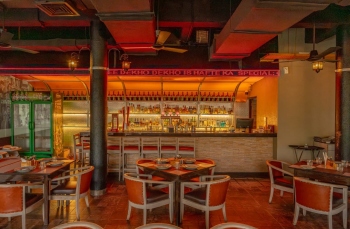
In Goa, food has always been more than sustenance; it is memory, culture, and community on a plate. Few families have embodied this spirit as consistently as the Desais. From the smoky tandoors of NH17 in Porvorim to the homely thalis of Kokni Kanteen, the catering backbone of Catpro, and now with a bold experiment in affordable sushi under the Miso brand, the family has been shaping the State's dining landscape across decades.
The story begins in the early 2000s, when Girish Desai opened NH17, a restaurant nestled by what was then the old National Highway 17 in Porvorim. Goa was different then, quieter, still driven more by mining than mass tourism. Dining options were few, especially for quality North Indian food outside Panaji. Apart from stalwarts like Sher-e-Punjab and Delhi Darbar, choices were limited.
NH17 brought something new, a dhaba-style eatery with a slightly posh twist, where chilled beers flowed, plastic chairs offered easy comfort, and the aroma of spice-kissed kebabs pulled travellers off the highway.
“So back in the day, there were very few eateries which served really good North Indian food,” recalls Sanat. “When my father started NH17, the idea was really simple: to provide quality North Indian food. We have always believed in providing the right amount of value for the price you pay, which is why even today our places are priced reasonably.”
The restaurant quickly became a landmark, attracting everyone from college kids to politicians. Among its regulars was the late Chief Minister Manohar Parrikar, who often dropped by for casual post-work meetings. Diners fondly remember signature dishes like roti pe boti, mutton or chicken rolled into rich tandoor-baked breads, and chicken ghee roast, both of which have returned to the menu in NH17's present-day avatar.
The Porvorim outlet eventually shut down, but the brand lived on in memory. In 2023, the Desais revived NH17 inside Clube Tennis de Gaspar Dias in Miramar. “When we restarted, people immediately asked if it was the same NH17 from the Porvorim highway,” Sanat says. “That brand recall was still alive, and it was a happy moment for us.”
While NH17 celebrated North Indian comfort food, Kokni Kanteen in Panaji became the Desais' ode to Goan home-style cooking. Established as a space to preserve the flavours of authentic Konkani cuisine, it earned a loyal following for its fish thalis and traditional recipes like kismoor. Crucially, it was Sanat’s mother, Shilpa, who funded the capital requirements for Kokni Kanteen from her savings and who managed, and still manages, all the back-end work that goes into running the business side of the company.
Kokni Kanteen tapped into nostalgia, the kind of food Goans grew up eating at home. By championing local ingredients and age-old recipes, Girish, Shilpa and Sanat kept alive a culinary heritage that might otherwise have been overshadowed by more tourist-driven fare.
The restaurant's role has extended beyond its own kitchen. Today, it even supports the family's other ventures. For instance, the kismoor that flavours a Goan-inspired sushi roll at Miso is sourced fresh daily from Kokni Kanteen.
If NH17 was about highway nostalgia and Kokni Kanteen about cultural preservation, Miso is where the Desais embraced experimentation.
The cloud kitchen brand began in Taleigao, run by an extended family member, before relocating to Panaji. When it was about to shut shop in 2024, the Desais decided to step in. “We had eaten the food before and knew a lot of people in Panaji were familiar with Miso,” says Sanat. “There was a decent recall. We thought, hey, this is too good to disappear.”
By November that year, they relaunched Miso, first on Swiggy and later with a takeaway counter. But the new vision was clear: make sushi fun, fresh, and most importantly, affordable.
“Every time I went out for sushi, the bill felt humongous. Honestly, it felt more important than the fish in the sushi itself,” Sanat says. “We thought, why not make sushi under Rs 400? It should not just be for birthdays or anniversaries, it should be for a random Tuesday too.”
The biggest hurdle was changing mindsets. “Convincing people that sushi does not always need to cost Rs 800 was tough,” he admits. “People thought that if it is cheaper, it must be compromised. We had to do a lot of sampling, giving out free sushi with orders. But once they tried our rolls, the taste did the talking.”
Two months later, sales data validated their gamble; four of Miso's top ten bestsellers were sushi rolls. “Nothing beats numbers backing your gut,” says Sanat.
Miso's menu blends Japanese classics like prawn tempura and California rolls with playful Goan-inspired versions. The Uni rolls, named after the Konkani word for “bite,” fuse traditional sushi structure with local favourites like kismoor, spiced dried fish salad, and recheado masala, a fiery Goan spice mix.
“The idea was simple, to make sushi feel Goan at heart while keeping the Japanese roots intact,” Sanat explains. “We paired it with things like kismoor and kandyacha ross. Or with grilled prawn and chonak topped with recheado masala. It is playful and approachable.”
The response has been encouraging. “Recently, our prawn recheado sushi started picking up after we sent out samples,” Sanat says. “Goa has its own quirks, so why not our sushis too?”
Sourcing for these experiments comes from within the family network. Kismoor is supplied by Kokni Kanteen, while the recheado masala comes from NH17. “It is basically like our brands are feeding each other,” Sanat laughs.
Beyond their restaurant brands, the Desais have built Catpro, a professional catering arm that handles everything from corporate events to private celebrations. It is the silent backbone that keeps the family’s food ecosystem running at scale, supplying consistent quality beyond the restaurant table.
Behind the Desais ventures is a central philosophy: affordability without compromise. A central kitchen now ties together production for all their outlets, ensuring consistency and scale. “We cut costs, but we do not cut corners,” Sanat emphasises. “We source smartly, directly from suppliers, and the relationships built over two decades help us keep prices low while maintaining freshness.”
It is why every sushi roll at Miso stays under Rs 350, without feeling like a diluted version of its upscale counterparts.
For the Desais, the journey is far from over. Plans are already on the table to expand Miso's presence, particularly in South Goa, where Japanese food options are scarce. But the focus remains steady, approachable, high-quality, affordable dining that feels personal.
“Food is personal,” says Sanat. “We did not want to reinvent sushi completely. We respect tradition. But we also wanted to make it playful, to give it a Goan personality. At the end of the day, it is about balance, in flavour and in philosophy.”
From the smoky naans of NH17 to the spicy thalis of Kokni Kanteen, the quiet reach of Catpro, and the quirky Goan Japanese rolls of Miso, the Desais have shown that Goa's food story does not stand still. It evolves, just like the state itself, with roots firmly in tradition, but branches reaching toward the new.