 Mestre André Magalhães
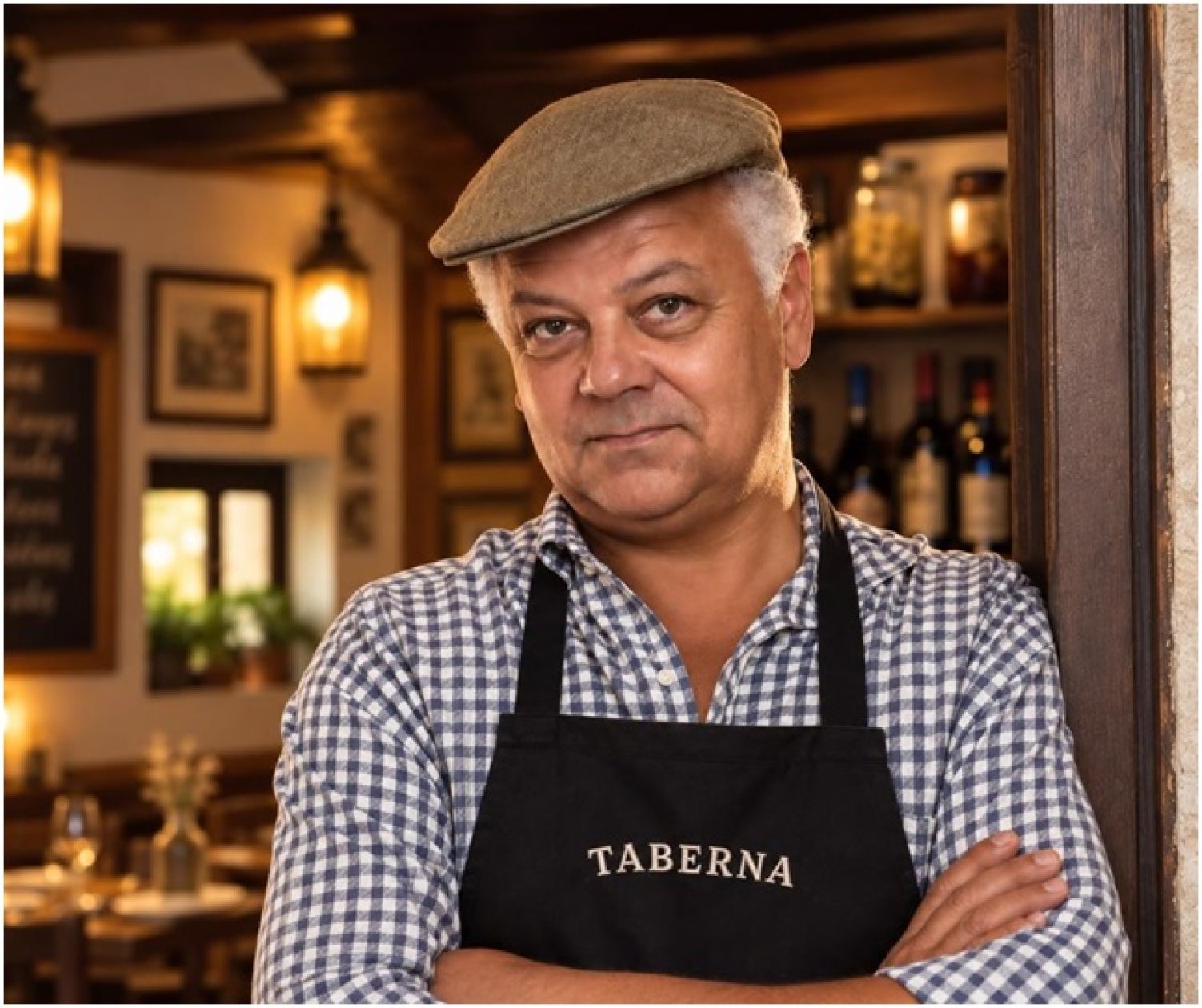
Flavours tell the human story of culture, bridging journeys across continents, reflecting identity and taking generations back home in a whiff. Dr Manuela Franco, Consul General of Portugal in Goa, says, “When I sit at a Goan table and taste caldin or vindalho, I feel as if I am at home, only with a beautiful backdrop of colour and greenery. For me, this shared culinary heritage, enriched by Goan spices, coconut and ingenuity, is the most tender bridge between our peoples, and I am deeply grateful to those who keep it alive and share it with new generations.” Along with Fundação Oriente, she invited Chef André Magalhães to Cidade de Goa “to share his vast knowledge of cooking and how ingredients have travelled the world, particularly between Goa and Portugal, along centuries-old routes shaped by spices, flavours and people”. A chef, gastronomic researcher and founder of Lisbon’s celebrated Taberna da Rua das Flores, Mestre André Magalhães is an eminent voice in Portuguese contemporary culinary arts and culture. In my conversation with him, we trace the stories and connections that have influenced him.
ConfluencesMy relationship with food began long before gastronomy became my profession. I was born in Angola and grew up on a farm, surrounded by Portuguese and African cultures. My father was an agronomist and my mother managed the farm, so agriculture and food were part of life. Fascinated by the goings-on in our kitchen, I helped prepare family meals. Those early experiences taught me that food is never simply nourishment; it carries memories, traditions and the stories of the people who make it. I went on to study film in France, working for twenty years in television. Yet gastronomy remained a constant presence, as I cooked for friends and took up kitchen jobs to finance my film education. Eventually, food became a focal point of my life.
Beyond labels
Food is a powerful way of understanding cultures. I consider Chinese, Indian and Mexican cuisines to be the great mother cuisines, rooted in ancient civilisations with centuries of accumulated knowledge. We often reduce entire culinary traditions to a few familiar dishes: Spain becomes synonymous with paella, Italy with pasta. Such shorthand overlooks the complexity and diversity within each cuisine.
My work in the Caribbean taught me to improvise with local tropical produce while catering to different tastes. It also made me appreciate how food changes as people move and the resourcefulness of what is available at that moment.
Travelling has reinforced my belief that the best way to understand a place is to eat what locals eat. Street food is often my first choice because it offers an immediate connection with everyday life. In Goa, I enjoy the simple pleasures of roadside bread and chorizo or a hearty ros omelette.
The many lives of a dish
Goan cuisine offers fascinating examples. Connected to the Portuguese vinho d'alhos, vindaloo travelled and transformed distinctly in Goa. Goans migrated to Mozambique around 1961–62, and many later moved to Portugal following African independence. They carried their food traditions across continents, adapting them while retaining elements of their heritage. The resulting culinary exchanges connect India, Africa and Europe in ways that cannot be understood by looking at individual dishes in isolation. To understand a dish, we must look beyond its name and explore its origins, migration and transformation.
Honouring heritage, embracing change
Tourism can bolster a food culture, but it can also dilute it. When restaurants try to satisfy every visitor, dishes may become simplified to meet familiar expectations. Goa, like Portugal's Algarve, has a well-established tourism industry, and this creates pressure to offer accessible versions of local food. Yet, authentic home-style Goan cooking continues to exist. The challenge is to tell its stories rather than flatten its identity.
Food reflects how communities negotiate cultural and religious differences. As people migrate, they adapt their food practices to new surroundings, finding ways to accommodate different beliefs and restrictions. We see that in Lisbon too, where people from India or Nepal come to work. These exchanges are part of the wider story of how societies live together.
Savouring traditional flavours
Ultimately, culinary traditions survive through practice. Parents have an important role in introducing children to different foods and helping them develop an appreciation of taste. Cultural continuity begins at home, around the table. If we want children to appreciate local food, we must cook and gather around our table.
When Goa calls back
My current interest in Goa is centred on feni and the cultural histories of the palm and cashew trees. I am developing a book concept that will explore the people, landscapes and traditions connected to them. I don’t approach feni as a subject for bartenders and mixologists, but rather as something rooted in agriculture, local knowledge and community. I hope to explore this through conversations with local friends and visits to tavernas, palm fields and bhattis.
For me, the real allure of food lies beyond the plate. It is about understanding how people live, remember and adapt. Every dish tells a story, and listening to those stories can reveal the remarkable ways in which cultures meet and evolve.
With four PG degrees and a career spanning education and global HR leadership, Atika has followed one enduring question through Oxford lecture halls, global boardrooms and her Goan homestead – what helps people and societies grow, flourish and find meaning?