


DR UBALDINA NORONHA
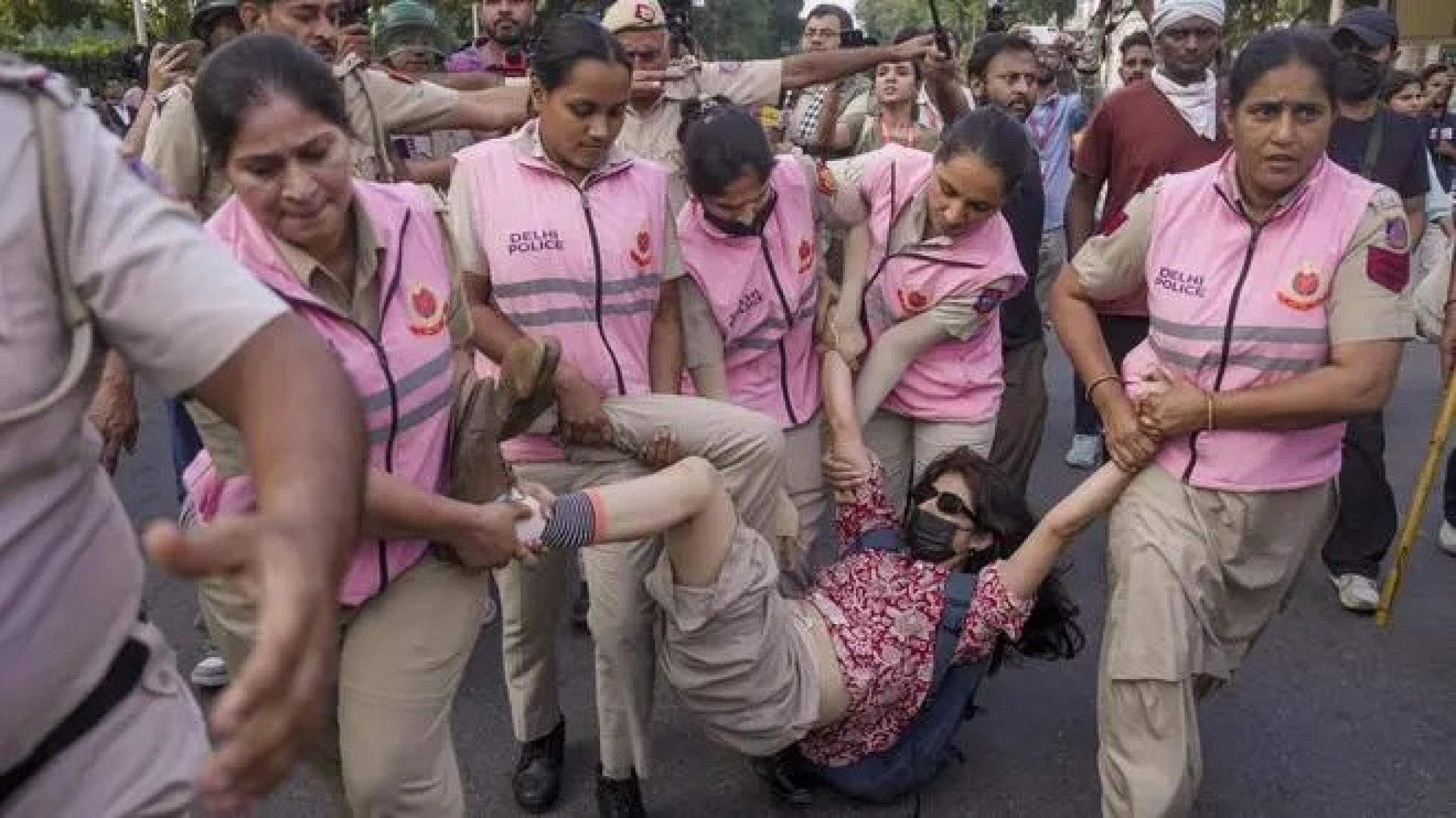
Across the country, young people and opposition groups have been protesting against the Special Intensive Revision of electoral rolls, demanding the resignation of the Chief Election Commissioner. The government’s response has included massive police deployment, detentions, barricades, suspension of internet services, cancellation of trains and restrictions on assembly.
It is tempting to see such responses only as political calculation. But there is also a psychology to power. When people in authority feel threatened, they often do not respond with their most thoughtful self. They respond with the older, faster parts of the mind: Protect, control, deny, blame, divide and survive.
Psychologists call this a threat to social identity. Leaders may experience protests as attacks on the party they represent, the nation and the ‘people’ they claim to embody. Criticism of policy becomes criticism of the self.
There is also the fear of uncertainty. Power likes predictability. Large protests introduce uncertainty: How far will this spread? Will the media amplify it? Will allies withdraw support? Uncertainty is uncomfortable, and human beings often respond to it by tightening control.
Reflexes of those
in power
The first reflex is denial. Denial protects the leader’s self-image: The system is fine; the people are misled. But denial rarely dissolves public anger. It often confirms the protesters’ belief that they are not being heard.
The second is control. This includes police presence, detentions, internet shutdowns, barricades and restrictions on movement. Control offers an immediate sense of safety to those in power.
The third reflex is blame and labelling. Protesters become anti-nationals, paid agents or troublemakers. Labelling simplifies a complex moral demand into a security problem. It allows the government to avoid answering the substance of the protest.
The fourth is silence. Sometimes leaders do not respond at all, hoping the protest will exhaust itself. Silence may look dignified, but to citizens it can feel like contempt. When a leader does not publicly address a nationwide wave of dissent, many people hear not calmness but avoidance.
Psychological perspectives
Terror management theory suggests that when people are reminded of threat, loss of control, they cling more strongly to their cultural worldview, leaders and institutions. In public life, this helps explain why governments under pressure may become more nationalistic, more punitive and more insistent on loyalty.
There is also psychological reactance. When people feel that their freedom is being restricted, they often push back harder. A banned protest can become more attractive. Control may reduce a gathering in one square, but it can multiply the moral energy of a movement.
Finally, power can produce threat-rigidity. Under perceived danger, individuals and institutions tend to rely on familiar routines, hierarchical commands and forceful measures rather than creative problem-solving. This is why governments under pressure often reach for the police before they reach for dialogue.
Not every response to protest is wrong. Governments have a legitimate duty to maintain public safety, prevent violence and protect citizens. The question is whether the response preserves rights while addressing the grievance or whether it treats dissent itself as the enemy.
The best way forward is neither surrender nor suppression. The government should publicly acknowledge the depth of public concern, allow peaceful protest without punitive obstruction and initiate an independent, credible review of the electoral revision process. It should engage with its citizens having a legitimate stake in the nation’s future.
Protesters, too, have a responsibility. Non-violence, clarity of demands, refusal to dehumanise opponents and commitment to democratic methods give a movement moral force. Anger can mobilise people, but only disciplined hope can sustain a democratic movement.
A government that listens does not lose authority; it earns it. A state that fears questions may control the streets for a while, but it cannot control the conscience of a generation.
(The writer is Associate Professor, Department of Psychology, St Xavier’s College, Mapusa)


