


THE GOAN | PANAJI
As the monsoon sweeps across Goa, the usually calm sea turns rough and dangerous. Known for its peaceful waters, Goa’s coastline becomes unpredictable as dark clouds gather and heavy rains set in. While locals are aware of the risks posed by the sea during this season, many tourists often underestimate its power. A recent video showing a young man climbing a cliff and being swept away by waves is a stark reminder that nature should never be taken for granted.
Although warning flags and safety advisories are put in place to protect beachgoers, they are effective only if people pay attention to them. Goa’s image as a relaxed and welcoming destination sometimes leads visitors to believe they can ignore the rules. However, the sea does not follow human assumptions.
“The sea can appear calm one moment and become dangerous the next during the monsoon. Strong currents, high waves and changing weather conditions make even shallow waters unsafe,” says Navin Awasthi, CEO of Drishti Marine.
Social media trends and alcohol often tempt visitors to venture into risky areas. Tourists are urged to respect warning signs, stay away from dangerous spots and follow the instructions of lifesavers. “No photograph or reel is worth risking a life,” says Shashikant Jadhav, Operations Manager at Drishti Marine.
Drishti Marine conducts regular awareness programmes on beach safety through public campaigns and interactive activities. These initiatives help people understand rip currents, flag systems and basic water survival skills. “These measures work best when visitors follow the safety instructions given by lifesavers,” Jadhav adds.
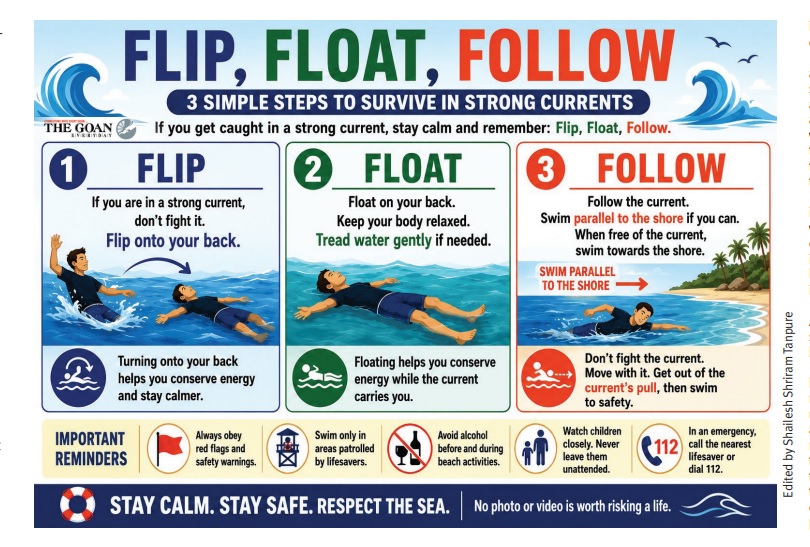
Experts say that surviving a drowning situation largely depends on staying calm and conserving energy. Panic and struggling can quickly lead to exhaustion, reducing the chances of survival. People caught in trouble are advised to float on their backs if possible, tread water and signal for help by raising one arm and waving repeatedly.
If caught in a strong current, people should avoid fighting against it. Instead, they should move with the current and try to swim parallel to the shore when possible. Rescue experts recommend the simple rule: “Flip, Float, Follow” — flip onto your back, float to save energy and follow the safest path back to shore.
Anyone who sees a person in distress should immediately alert the nearest lifesaver instead of attempting a rescue, as untrained efforts can endanger both people.
With rough seas and unpredictable weather during the monsoon, swimming, water sports and fishing activities remain prohibited. Red flags along beaches warn that entering the water is unsafe. Visitors are advised to stay at least 10 metres away from the waterline and obey the instructions of lifesavers.
“During the monsoon, many tourists continue to visit beaches marked with red flags and enter the water despite repeated warnings. Some intoxicated visitors even argue with lifesavers instead of following safety instructions,” Jadhav points out.
To ensure public safety, more than 450 trained lifesavers and beach marshals have been deployed across 54 beaches in Goa.
Parents and guardians are urged to keep a close watch on children and never allow them to enter the water unattended, no matter how shallow it appears. Beachgoers are also advised not to enter the sea alone or under the influence of alcohol. Authorities warn that even standing near the shoreline can be risky, as strong currents and sudden waves can pull people into deeper waters.
Goa’s beaches remain a major attraction during the monsoon, but experts stress that safety depends as much on public cooperation as on rescue efforts. Warning flags, advisories and lifesavers can only do so much. Understanding that the sea can turn dangerous within moments and respecting its power may be the difference between an enjoyable holiday and a tragedy.


