


-Atika Modassir (Oxon)
With four PG degrees and a career spanning education and global HR leadership, Atika has followed one enduring question through Oxford lecture halls, global boardrooms and her Goan homestead- what helps people and societies grow, flourish and find meaning?
The hot glare of the Konkan sun bears down on planks of mango and jackfruit wood, stripping them of any traces of moisture. A deft pair of hands work tirelessly- sawing them into shape, smoothening it with sandpaper. A cloud of sawdust settles, revealing the face of Vinod Prabhakar Mardolkar. Bent over, he paints a vibrant pair of parrots in red, yellow, green and white. The organic dyes are mixed with dink, an edible gum derived from the sap of the Acacia tree. Once the sea breeze bakes it dry, he applies a layer of lacquer to fix the pigments, for times to come. The old Goan woodcraft of Chitari is an ancestral art form that has been passed down the last seven generations of his family. Predominant motifs comprise parrots and flowers- rooted in the fauna and flora of the Goan landscape and the beliefs of its people. The twin parrots that make the art instantly recognisable, are also symbols of love and companionship, representing Radha and Krishna. Across South Asia, they depict Kamadeva– the god of love.
Integral part of Goan traditions
Chitari objects create a unique visual language of Goan households in their various forms. They serve as rituals objects in the pooja rooms; like the ‘paat’ – a low wooden stool, chaurang– seat for the idol, ‘makhars’ – altars and Ganesh Chaturthi ‘matolis’ –wooden canopies above the altars. In marriages, Chitari fruits are carried by the bride as part of her bridal trousseau– ‘varjem’, chopping boards– ‘advolis’ and during births, decorative Chitari cradles– ‘palna’, and toys– ‘khelnis’ are predominant. The indoor game of ‘Tabul Fale’ is played on a Chitari board and folk dances such as the ‘Talgadi’ rely on the painted ‘tonyo’ – wooden sticks for performing.
Lineage
A descendant of Chitaris established in Demani, Cuncolim in South Goa; Vinod has over 19 years of experience as a craftsman and carpenter at the Goa College of Architecture. Having learnt the craft from his father who was an art teacher in a government school, he remembers sitting with him roadside, practicing and displaying their craft– quiet and unassuming. Now, he has built a workshop along the road dedicated to his wooden creations.
Dispersal and propagation
Several of Vinod’s ancestors had left the state during the Portuguese rule and migrated to neighbouring Maharashtra and Karnataka. One branch settled down in Maharashtra, near the Goa border at Sawantwadi, Sindhudurg district. This branch of the family is known for the ornamental ‘Ganjifa’ cards that are hand painted in Chitari style. Ganjifa takes its name from the Persian word ‘Ganj’, that means treasure. The Mughal emperor Akbar is known to have introduced the game and Shah Jahan carried on its patronage as a game of royal device and administration. As it propagated across the country, indigenous versions of the painted cards developed with local influences from mythology, religion and kingships. The current versions that are popular depict the Vishnu Dashavatars- the ten incarnations, and the zodiac. Under the patronage of the Sawant Bhonsle royals of Sawantwadi, the Chitaris flourished at the Chitari Ali and became known for their Ganjifa cards and wooden toys. The royal family was instrumental in securing a Geographical Indication tag in 2024, establishing due recognition for a centuries old craft. In neighbouring Karnataka, the Wodeyars promoted a brand of Mysore Ganjifa.
Challenges
I asked Vinod about changes that he has witnessed in the artform, with the passage of time: “Wood has become harder to source, colours and brushes increasingly risk becoming synthetic, varnish threatens to overtake natural resins and machine-work’s impinging carpentry in general”. A further concern Vinod shared is about the continuity of his craft. While passed down through generations, youngsters may follow other pursuits.
Moreover, ritual objects and festival décor, are now bought and discarded frequently, due to the market being flooded with synthetic factory-made goods. Socially, playing with naturally produced toys competes with battery operated toys in children’s tox-boxes. There is also the question of how much time parents allow for free play that exercises children’s imagination and agency.
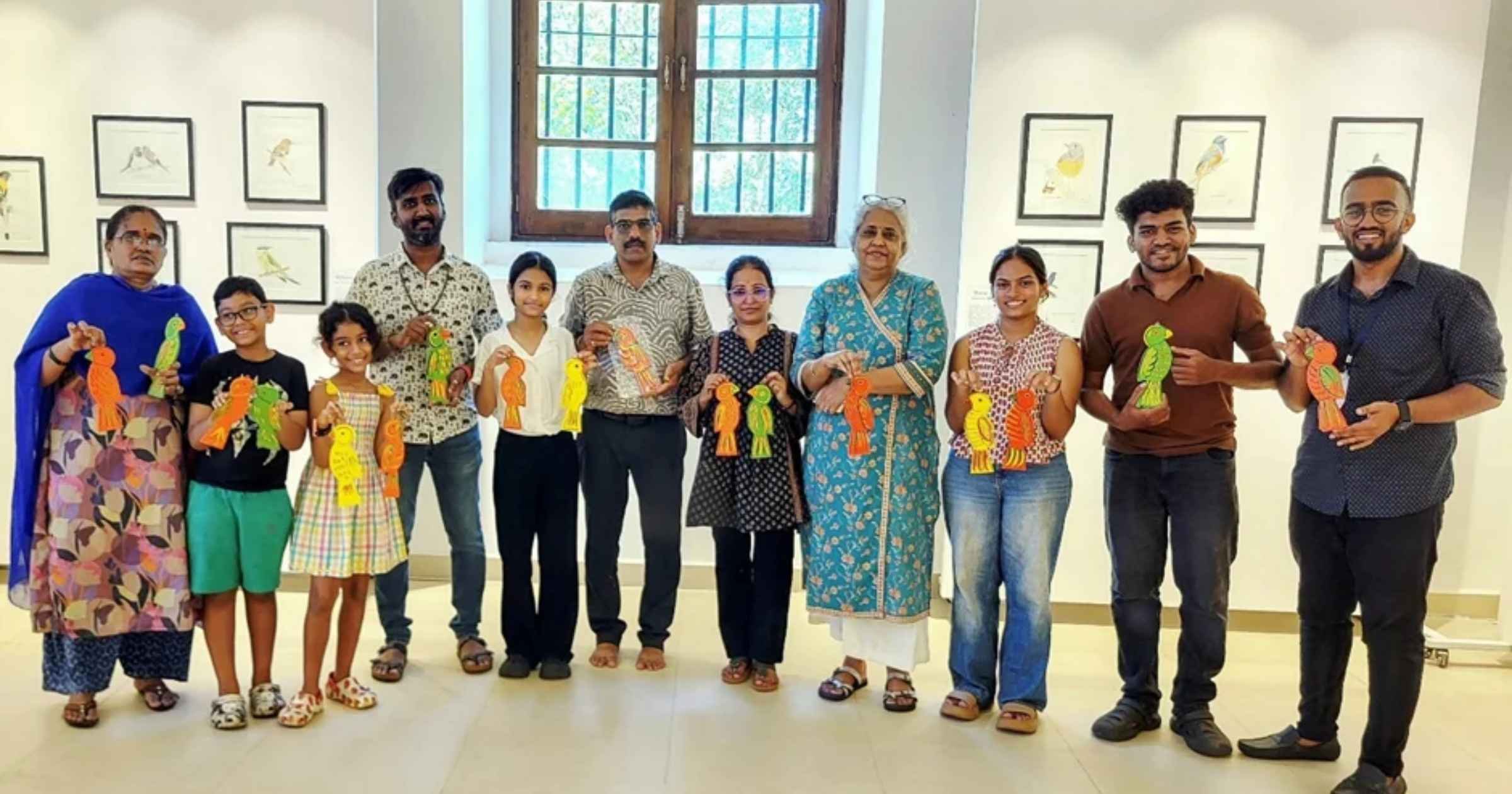
On his part, Vinod tries to nurture interest in the skill by conducting workshops, such as the Chitari series at Museum of Christian Art (MoCA). Benjamin Monserrate, Curatorial Associate and Educator at MoCA shared “Birds have long inspired artists and craftspeople. Bringing Chitari Art into our ‘Once More, With Wonder’ exhibition allows us to go beyond the museum walls, into living craft tradition, preserving heritage, experiencing, and carrying these traditions forward. Through this initiative, participants engage hands-on with Goa’s artistic heritage while discovering how the familiar parrot is a source of creativity, memory and wonder.”
Vinod Mardolkar with participants at a Chitari Workshop series at the Museum of Christian Art, Old Goa
Across cultures and scriptures, we have found consensus in the idea that man finds himself in the act of communing with God and child- wouldn’t it be fitting if we chose a handmade work of a living art? Afterall, the hand that makes instruments of play and prayer deserves to be strengthened; for in it lies not just the future of an art but also of our humanity.


