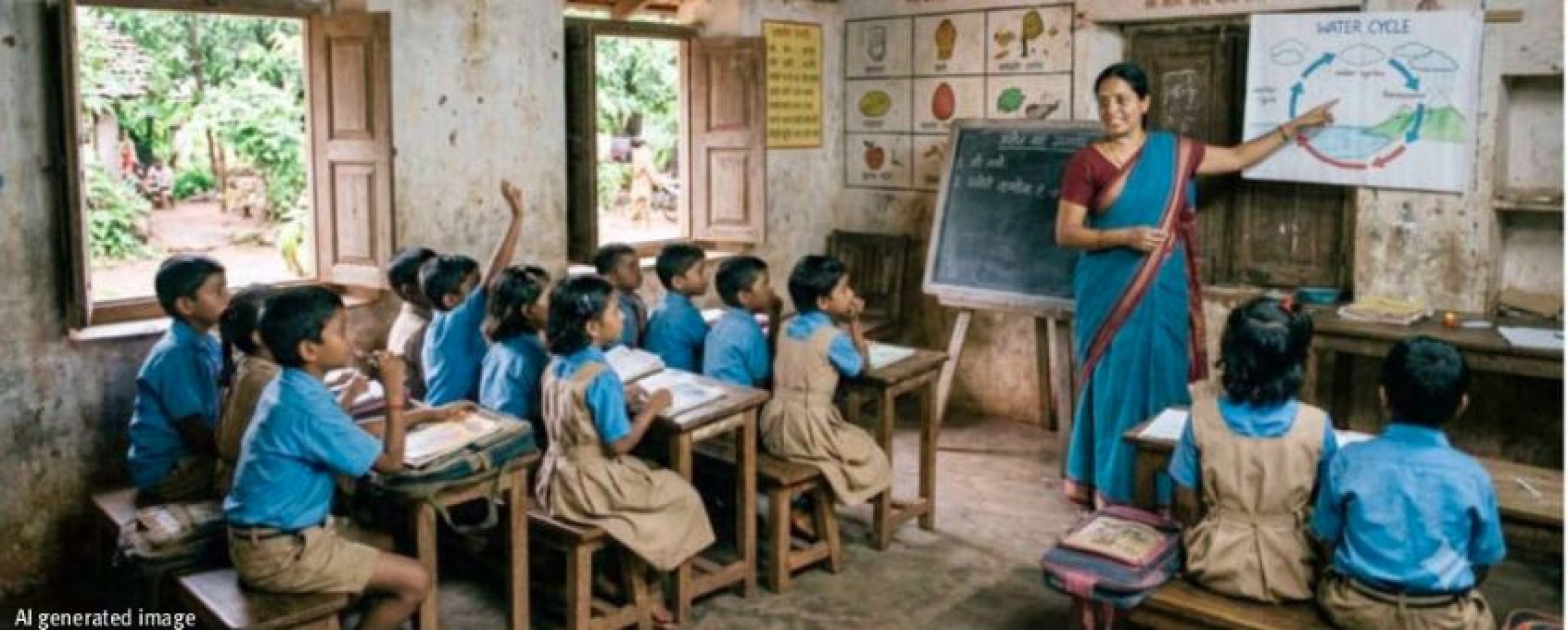
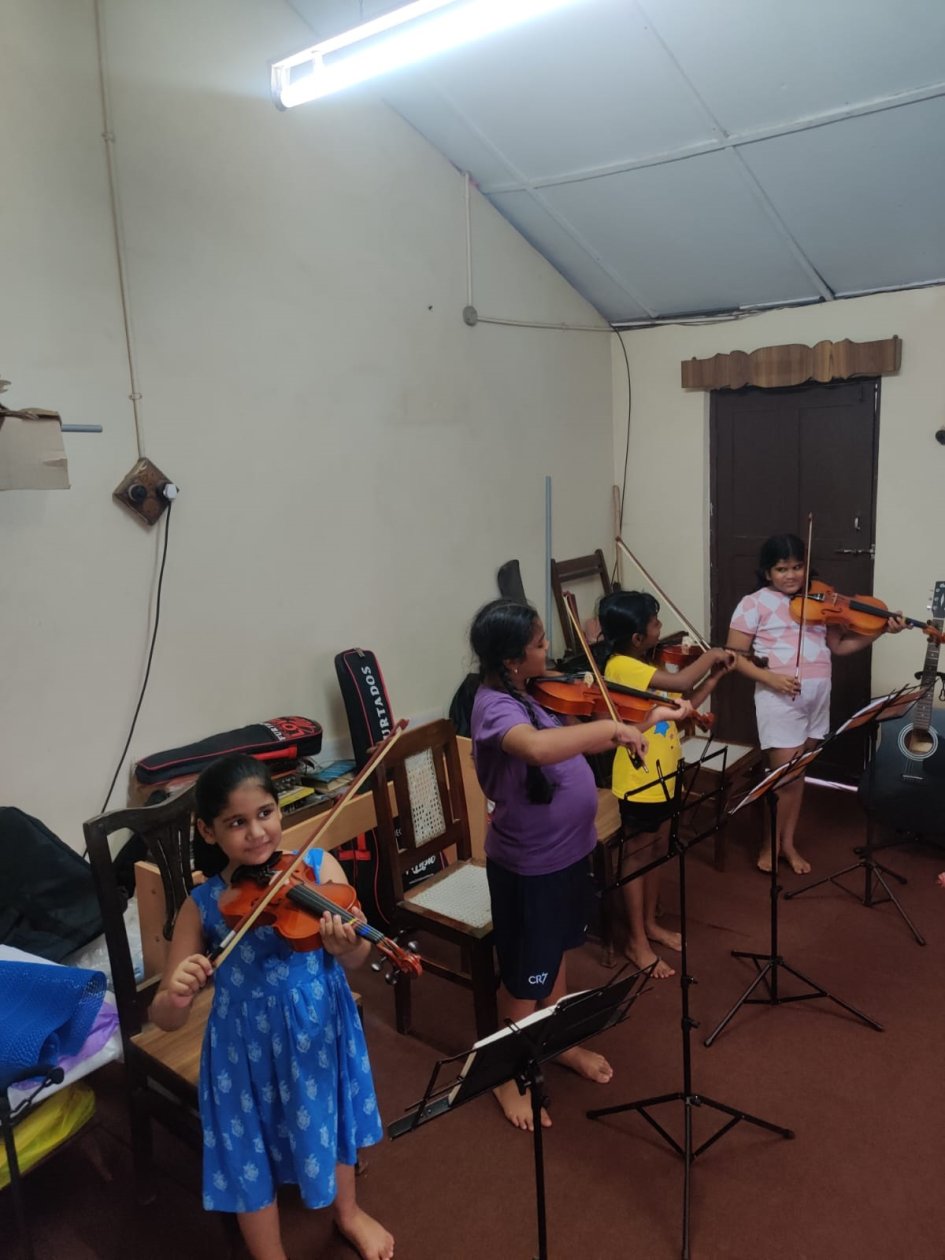
Not every classroom has a smart board, a projector, or even enough space. Yet across Goa, teachers continue to find ways to ensure learning does not stop at the classroom door. “A teacher is like a candle; it consumes itself to light the way for others.” A quote attributed to Mustafa Kemal Atatürk captures this quiet dedication well. From preparing lesson plans and ensuring that every child learns, to spending long hours shaping young minds, teaching is a demanding and thankless job. Behind almost every success story is someone who offered guidance, shared a few words of encouragement, taught a lesson, or simply believed in a student. While that person may not always be a conventional school teacher, teachers often play one of the most important roles in a child’s formative years.
Beyond the classroom
But for many teachers, ensuring that learning continues also means working around challenges that go beyond the classroom. While schools in cities and urban areas often have access to better facilities and technology, those in remote villages are not always as fortunate. Access to the same technological resources available to their urban counterparts remains a distant reality for many. On this Teachers’ Day, we spoke to teachers from a few remote villages in South Goa to understand what it takes to keep their classrooms going, and the challenges they face while trying to ensure their students are not left behind.
For students in city schools, smart boards, projectors, computers, and easy access to the internet have increasingly become part of the learning experience. In remote schools, however, even something as basic as a stable network connection can be a challenge, making these resources difficult to access. While students elsewhere can watch educational videos or quickly turn to Google or AI tools to clear their doubts, children in many of these villages do not even have access to a phone at home. This puts an added responsibility on teachers, many of whom are already working with limited staff and resources, to find ways to improvise and make lessons engaging with whatever is available. “There (in cities) it is easy; there is easy internet access, smart labs, computers and phones at home. Here it is not the same; in fact, even now I could pick up the call only because I was connected to the WIFI,” one teacher says.
Limited technology
The lack of technology can also make it difficult for teachers to use videos and other visual aids to make lessons more engaging and easier to understand. “We often have to take them out and show some things practically rather than relying on gadgets and machines,” remarks a teacher from a village in South Goa. Another teacher says the school recently received its first smart board. “We got it recently. NEP and all that are good on paper, but if there is no infrastructure and facilities to implement it, then it is quite challenging indeed,” he says. Technology, however, is only one part of the problem. The shortage of teaching staff places an equally heavy burden on those who remain. While education policies may call for separate teachers, either subject-wise or at least standard-wise, this is often not practical for smaller remote schools. “I am the sole teacher here, teaching both primary and pre-primary. There are around 10 students, and it is just one room, so when I teach the one section, the rest get disturbed,” he says.
Space and staff
The challenges extend beyond classrooms and teaching staff. Some schools continue to function from rented buildings, with limited space and little or no room for children to play. “This is a rented place. The children do not even have a playground. It is just like taking them all in one room and trying to teach, which is a tough task,” they say.
For teachers, the solution is simple: more staff and better facilities. In schools where just a few teachers handle nearly 15 to 16 subjects across primary and pre-primary sections, the workload can be immense. With limited resources, teachers often have to take on several roles at once, finding ways to make the best of what is available. They download videos whenever connectivity allows, rely on written notes and traditional explanations, and use practical demonstrations to make up for the technology their schools lack. It is an effort to ensure that their students are not left too far behind as education continues to change around them. “In fact, you can say that the way things were 10-15 years ago, not much has changed, at least in these parts,” they say.
Keeping learning alive
And perhaps that is the biggest challenge of all. At a time when classrooms are increasingly shaped by smart boards, artificial intelligence, and instant access to information, these teachers continue to make do with what they have. Limited resources may shape what they can offer, but they have not stopped them from finding ways to teach, adapt, and keep their students learning. In these classrooms, education continues not because the facilities are always adequate, but because the teachers refuse to let the lack of them become a barrier.