


Lt Col (Dr) Ratnesh Sinha, Retd
A teacher stands before thirty children. One is bright, articulate, and effortlessly likeable. Another is slow, awkward, and often overlooked. A teacher of ordinary capacity will, without even noticing, give more warmth to the first. A teacher of rare capacity gives the same attention, the same patience, the same belief — to both. No one applauds this. It is rarely written about. But it may be one of the purest expressions of human excellence there is.
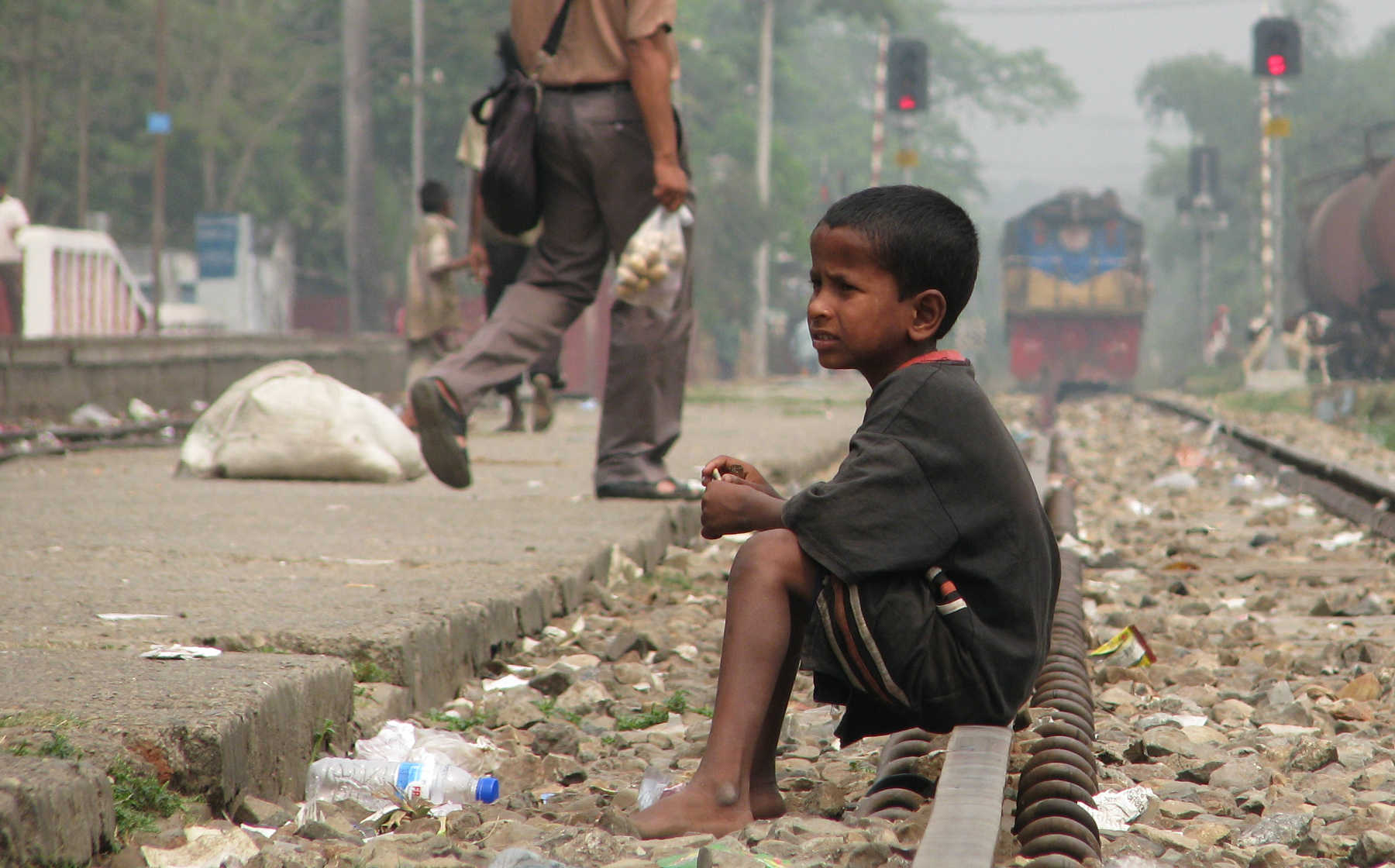
Consider a street child — unwashed, unseen, often invisible to passers-by absorbed in their own concerns. Most walk past without a glance. A rare few stop — not out of pity, but out of a genuine recognition that this child deserves the same chance at life as any other. They do not simply feel sympathy. They act — finding a school, a sponsor, a path forward.
Or consider an injured dog on the roadside. Most vehicles drive past — there are places to be, schedules to keep. A few stop anyway, lift the animal carefully, and take it to a veterinarian, asking for nothing in return, not even acknowledgment.
What connects the teacher, the stranger, and the passer-by who stops? In each case, personal comfort, self-interest, or even self-image was set aside — not for any reward, not for recognition, but simply because something within them placed another's wellbeing on par with their own.
This is Love Quotient (LvQ) — and it may be the least understood, least discussed, and most urgently needed dimension of the Human Quotients Framework.
Why LvQ is misunderstood
The word love carries heavy cultural baggage. It is associated with romance, with sentimentality, with something soft and almost unprofessional to discuss in the context of human development or leadership. This is precisely why LvQ remains so poorly understood — and so dangerously underdeveloped.
Love Quotient, in this framework, has nothing to do with romantic love. It refers to the capacity for selfless, unconditional positive regard — the ability to value another human being's (or living being's) worth and wellbeing without expecting anything in return. The ancient Indian tradition called this Prema — a love that asks nothing and gives freely. The Greeks distinguished it from romantic love (Eros) and friendship (Philia) by calling it Agape — love as a deliberate act of will, not merely a feeling.
LvQ is distinct from the quotients already established in this framework. EQ helps us recognise and regulate emotion — our own and others'. SoQ helps us build and sustain meaningful human bonds. But LvQ goes further than both: it is the active, chosen orientation of the self toward others — even strangers, even those who can offer nothing back, even those society has rendered invisible.
Deficit we rarely name
We live, increasingly, in a transactional world. Relationships are often measured by utility. Kindness is frequently extended only where there is some return — social, professional, or emotional. People can be highly intelligent, emotionally articulate, socially skilled, even outwardly moral — and yet remain fundamentally transactional in how they treat others.
This is the deficit LvQ addresses. A person can possess every other quotient in this framework and still walk past the injured dog, still overlook the unremarkable child in the classroom, still value people more for how they look or what they offer than for who they are.
And the cost of this deficit is not abstract. It shows up in workplaces where talented people feel unseen. In classrooms where some children quietly conclude they are less worthy of attention. In families where comfort consistently takes precedence over the needs of the collective. In a society that, for all its progress, struggles increasingly with loneliness and disconnection.
LvQ expresses itself in small, often unnoticed moments rather than grand gestures:
A leader who gives equal attention to the most junior and the most senior member of a team.
A person who looks past surface appearance and recognises the inner worth of another.
Someone who notices the overlooked — the quiet child, the struggling colleague, the forgotten elder — and chooses to act.
A willingness to place collective wellbeing above personal convenience, even when no one is watching.
Compassion extended to those who cannot reciprocate — children, animals, strangers, the vulnerable.
None of these require wealth, position, or extraordinary ability. They require only the will to see another's worth as equal to one's own — and to act on that recognition.
Can LvQ be developed?
Like every quotient in this framework, LvQ is not a fixed trait reserved for the naturally compassionate. It can be consciously cultivated — through the deliberate practice of noticing those who are usually overlooked, through teaching children to value people for character rather than appearance, through small consistent acts of selfless attention rather than occasional grand gestures, and through the simple discipline of pausing — for the street child, the injured animal, the unremarkable colleague — when every instinct says to keep walking.
Each pause is a small rebellion against a transactional world. Each one strengthens the capacity for the next.
A framework for human excellence that ignores this dimension is incomplete. Intelligence without love can be cold. Leadership without love can be hollow. Even wisdom, without love, risks becoming detached. LvQ is what ensures that every other quotient in this framework is ultimately placed in service of others, not merely the self.
In the next article, we will turn to a quieter but equally essential quotient — Humility Quotient (HuQ) — and explore why the discipline of the ego may be the single most underrated determinant of lasting human greatness.
(The writer is a counselling psychologist, educator and leadership mentor whose research focuses on developing stronger minds through the study and application of Human Quotients and character-building initiatives)


