World Day against Trafficking in Persons
THE GOAN
PANAJI
Human trafficking is no longer confined to hotels or isolated locations. It is quietly finding its way into residential neighbourhoods, rented apartments and even social media platforms, making it harder to detect and easier to overlook.
A growing shift
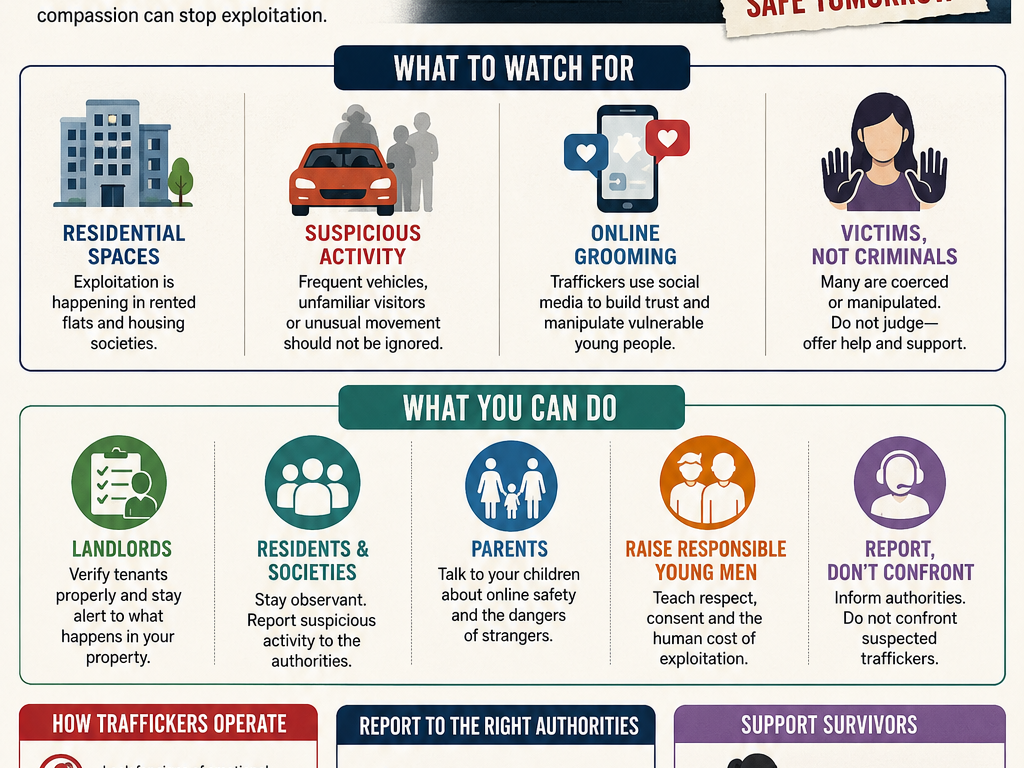
This growing shift has prompted a call for greater public vigilance from ARZ Director Arun Pandey, who believes that the fight against human trafficking cannot be won by the police alone. It requires alert landlords, responsible housing societies, informed families and a community that understands the difference between a victim and a trafficker.
Changing tactics
Speaking to The Goan, Pandey said traffickers are constantly adapting their methods.
"As police stepped up action against hotels and guesthouses, many trafficking networks simply changed locations. We are increasingly finding commercial sexual exploitation taking place in rented flats within residential societies," he said.
According to Pandey, many landlords unknowingly rent out their properties without realising they are being used for illegal activities. While property owners may not always be aware initially, he said they cannot afford to remain indifferent.
"Landlords should properly verify tenants and remain attentive to what is happening in their properties. Vigilance at that level can prevent exploitation from taking root," he said.
Community vigilance
He also urged residents' welfare associations and housing society management committees to take ownership of what happens within their communities.
"Security guards and society office-bearers are often the first to notice unusual movement. Frequent visits by different vehicles, a constant flow of unfamiliar people or suspicious activity should not simply be ignored. Reporting concerns early can make a significant difference," he said.
Victims not criminals
However, Pandey believes that one of the biggest barriers to tackling human trafficking is society's tendency to judge the wrong people.
"Many fail to distinguish between victims and offenders. Women found in massage parlours or exploitative situations are often treated as criminals when, in reality, many of them have been coerced, manipulated or trafficked," he said.
He stressed that enforcement and public complaints should focus on those organising, profiting from and facilitating exploitation rather than the individuals trapped in it.
"If we continue to blame victims, they will never feel safe enough to seek help or cooperate with authorities. That only strengthens the traffickers," he said.
Online grooming
Pandey also warned that trafficking is increasingly moving into the digital space, where predators use social media to identify vulnerable young people. "The profile of victims has changed. It is no longer only poor or uneducated girls from villages. Educated young women are also being targeted," he said.
According to him, traffickers monitor social media for signs of emotional vulnerability, looking for posts about loneliness, family conflicts or personal struggles. They gradually build trust before manipulating victims into exploitative situations.
"We have handled cases where young girls were persuaded through social media to leave home, sometimes carrying money and jewellery. This is not unique to Goa. It is a pattern emerging across the country," Pandey said.
He urged parents to have regular conversations with their children about online safety and the dangers of sharing personal information with strangers.
Addressing demand
Equally important, he said, is addressing the demand that sustains human trafficking.
"Trafficking exists because there is demand. It is not only outsiders who purchase sexual services. Local men are also part of this reality. Families must raise boys to understand respect, consent and the human cost of exploitation," he said.
Reporting cases
For members of the public who suspect trafficking or exploitation in their neighbourhood, Pandey advised against confronting suspected traffickers directly. Instead, they should promptly inform the Goa Police's Anti-Human Trafficking Unit, a specialised unit established under the Ministry of Home Affairs guidelines. ARZ has also been appointed by Goa Police as the nodal NGO to support rescue, rehabilitation and victim assistance, and information can also be shared with the organisation.
Supporting survivors
Beyond rescue operations, Pandey said rehabilitation remains equally important. ARZ currently provides livelihood opportunities to around 50 women through its livelihood centres in Goa, where survivors are engaged in making paper bags, handmade paper products, tissue paper, toilet rolls, laundry bags and stitched items.
"People often ask how they can help. Supporting survivors doesn't always mean making a rescue. Buying products made by these women or placing institutional orders helps them rebuild their lives with dignity and financial independence," he said.
Shared responsibility
For Pandey, the fight against human trafficking begins long before a police raid. It starts when a landlord asks the right questions, when a neighbour reports suspicious activity, when parents teach children to stay safe online, and when society chooses compassion over judgement.