SNEHA UMARYE
During the Goan monsoon, dining table conversations often begin with a familiar question: “What’s cooking today?” The answer is usually a seasonal vegetable from the market, summer-preserved ingredients, or a monsoon-special fish, brought together through family recipes returning to the table only during the rain.
Season of Wild Greens and Fresh Flavours
For vegetarian households, the monsoon is nature’s invitation to cook fresh flavours.
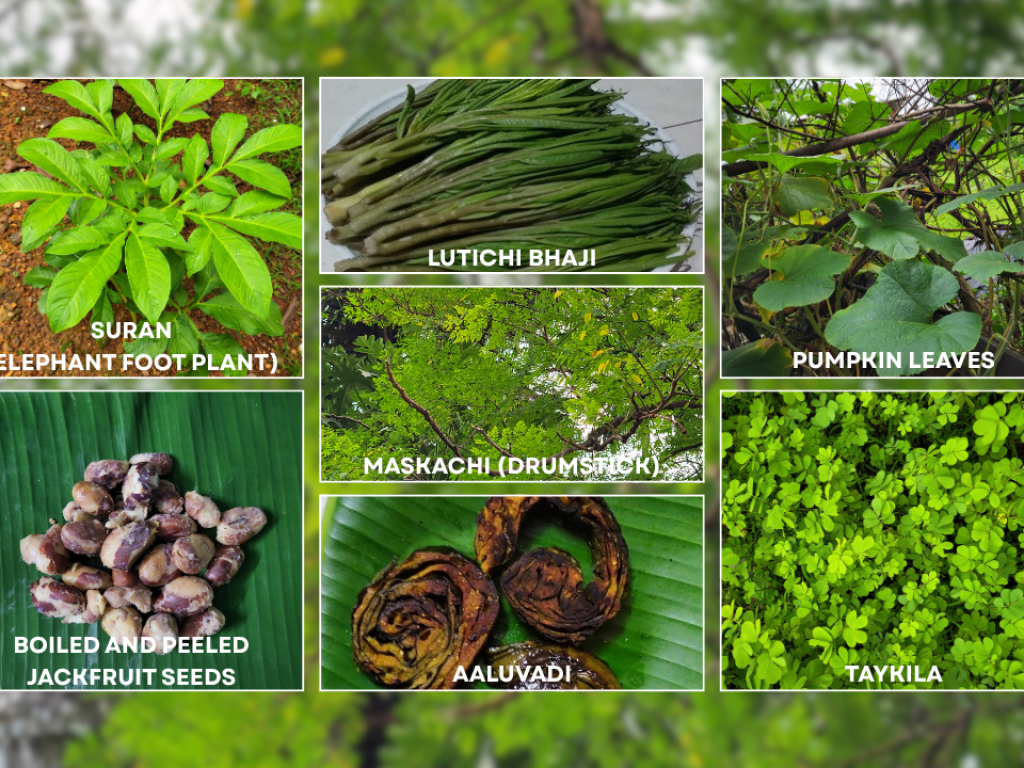
“All types of raan bhaji (wild leafy vegetables) are served,” says Varsha Bhat, listing Taykila, Kuddukechi, Maskachi (drumstick), Pumpkin leaves and Lutichi. These make a brief but cherished appearance in Goan kitchens.
Killa (bamboo shoots), used for curry, dry bhaji and pickles, is a seasonal favourite in many homes. Varsha’s favourites are Killache Dangar (bamboo shoot cutlets) and Aaluvadi, made from colocasia leaves. Another much-awaited produce is Fagla (spiny gourd or kantola), typically coated in rava and shallow-fried or cooked as gravy. Available briefly every year, these ingredients revive an entire seasonal knowledge system.
The season also brings culinary practices tied to festive customs. Among Saraswat families, Gauri Tritiya, observed during the Chaturthi season, includes the preparation of Paach Palyachi Bhaji, a dish made using five varieties of wild leafy vegetables as an offering.
Aasha Umarye recalls how Goan households preserve summer flavours for the rains. Sweet ripe jackfruit pulp is stored for Kheer and Sanna (jackfruit idlis), while Ukad Amba (mangoes preserved in salted water) becomes a sweet-and-sour preparation with grated coconut, dried chillies, curd and tempering. Saala, raw jackfruit bulbs preserved in salt water, is soaked overnight and mixed with grated coconut and green chillies. Sun-dried jackfruit seeds are also boiled and peeled and enjoyed simply with salt or tossed with masala and coconut oil.
Aasha points to several lesser-known seasonal favourites unique to Goan kitchens, including Goychi Bhaji, Kudduki, Tere, and Shirmandali, which make a brief appearance during the rains before disappearing.
Tastes of Monsoon’s Catch
While the rain brings an abundance of greens to the land, it also brings its own bounty to ponds, streams, and marshy lands.
With the fishing ban limiting fresh marine catch, households rely on preserved seafood or ingredients available during the rain.
Rucha Kare notes that dried Talle (sardines), Bangdulyo (baby mackerel), Vellyo Suke (dried silver fish), Sugtache Lonche (prawn pickle) and Sugtacho Balchao become staples. Monsoon is also the season for freshwater crabs, caught in marshy lands and rocky patches. They are cooked into comforting dishes like Crab Tonak, Crab Shekshek, a semi-thick coconut-based gravy, and simply fried crabs.
For Shweta Kumbhar, the highlight is the excitement before the meal itself. “People go looking for freshwater crabs at night near ponds and streams. My favourite, though, is Galmyache Dangar,” she says, referring to cutlets made from dried baby prawns. She also mentions Conge, freshwater snails found in paddy fields, and Kismur, prepared using dried Galmyo, as seasonal favourites.
These recipes return to Goan kitchens, carrying flavours, family traditions and memories passed down across generations.
What the Sellers Are Seeing
Before reaching kitchens, this seasonal produce begins its journey in small farms, backyard patches and water bodies.
For Laxmi Gawade from Pissurle, this journey has been a part of everyday life for decades. She grows seasonal vegetables on her own patch of land, once selling them in large quantities at the weekly markets in Sankhali and Valpoi. Today, she carries her produce house-to-house in nearby areas.
What worries her, however, is the changing relationship people have with these seasonal greens. “Ata kon ranbhaji khayna ani karina” (Now, hardly anyone eats or cooks wild leafy vegetables), she says. Many people don’t know what grows during the season, how to identify it, or how to prepare it. She often introduces customers to vegetables they have never cooked before.
“Hi amchi mati ani amchi bhaji. Amich lavpachi ani khavpachi,” she says with quiet conviction. (This is our soil, and these are our vegetables. We should be the ones growing and eating them.)
If Laxmi follows the season on land, Anand Naik from Amona follows it through water. A small-scale fisherman, he remembers accompanying elders on overnight trips during the rains to catch freshwater crabs. “It was never just about business,” he says. “Going out in the rain to catch crabs was something we looked forward to every year.”
Those years taught him where each seasonal catch is found. Streams, marshy patches, ponds and flooded fields have their own offerings. “Once you start going regularly, you know which place gives you what,” he says. “These are seasonal finds available only for a short time, so people wait for them.” Today, Anand sources whatever the season offers, bringing these short-lived monsoon favourites to local kitchens.
The monsoon leaves Goa with an abundance stretching far beyond the markets and plates. From forests and farms to rivers and streams, every landscape offers something of its own. These seasonal finds are reminders of the soil and waters that sustain us, thriving traditions, and flavours that make a Goan monsoon feel like home.