


THE GOAN PANAJI
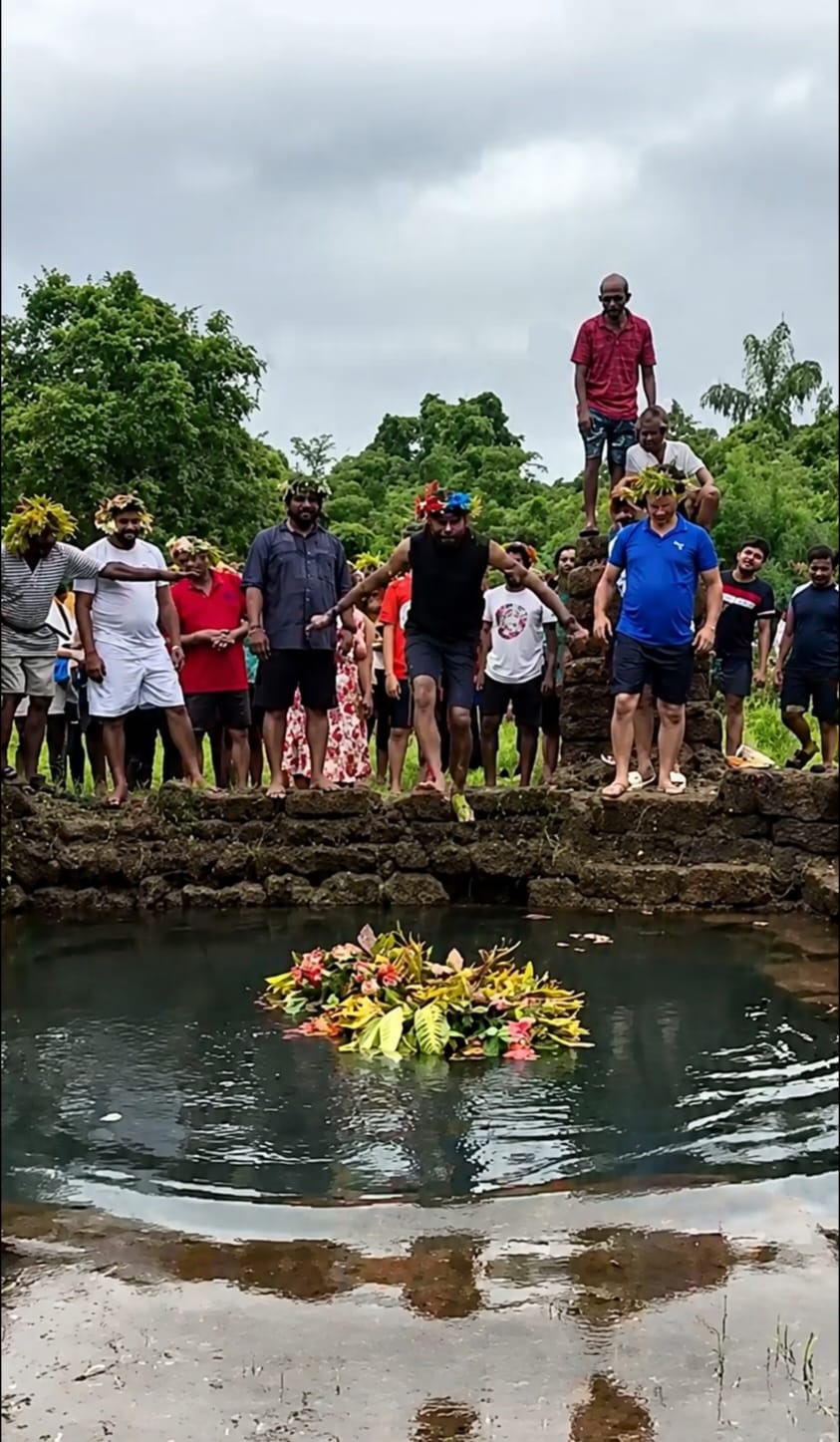
‘If all your friends jump into a well, will you jump too?’ In Goa, the answer is yes, at least once a year. Villagers gather flowers and fruits to weave their kopels, and the vaddo comes alive to traditional music. Amid the familiar tune of “Sao Joao, Sao Joao gunvta mure vatt amkam dissonam, Aicho dis urbecho konn konnak hansonam,” they take the much-awaited leap into the well.
São João, or San Juav as it is known in Goa, is a deep-rooted community celebration, bringing entire villages together regardless of faith or religion. Making kopels, sharing fruits, feasting on traditional Goan fare, and celebrating through song and dance are all part of the festivities, with feni remaining a favourite among revellers. The jumping into the well is symbolic because, according to the Gospel of Luke (1:44), the infant John “leapt for joy” in his mother Elizabeth’s womb when she met the pregnant Mary. Thus, Goans re-enact that leap of joy quite literally by jumping into water-filled wells.
This year, however, the rains arrived much later than usual, raising concerns as jumping into brimming wells is the highlight of the festival. “The rains have played spoilsport this year with the delay,” remarks Alexyz, who played a pivotal role in reviving the old Siolim Sao Joao traditional Boat Festival in the 1980s. While the sparse rainfall has been disappointing, the festive spirit remains strong. “With the rains being delayed, the wells do not have the same fullness that usually adds to the spirit of São João. Thankfully, it has been raining since Sunday, so there is hope that the wells will begin filling up again just in time for the festival,” says Natasha Fernandes from Naica Vaddo in Aldona.
Reflecting on the delayed monsoon, Kevin Pinto says the situation serves as a reminder of the environmental challenges in Goa. “It’s sad to see the monsoons arrive late, but we knew this was coming because of the ecological imbalance that has been created,” he says. Yet, all hope is not lost. With the rains returning since Sunday, Goa and its people have found some relief. “Now that it has started raining properly, there is a ray of hope. At the same time, this should remind us how important it is to protect our environment, our hills and our trees, because the consequences eventually come back to affect us,” he remarks.
As a child, Pinto recalls his Mai (Grandmother) humming the SãoJoao song while the prep was being done. “We used to then rush to the first well of the Vaddo and jump in, while the uncles waited in the well to pull you out if you couldn’t swim,” he recalls. “Villagers are usually soaked in the rain, as they scream Viva Sao Joao joyously as they jump, while holding the bottle of Feni,” mentions Alexyz. He recalls the role elders played in the well jumping tradition, while commenting further, “A watchful elder usually accompanied the youngsters jumping in the well.”
Like most festivals, São João has evolved over the years. While the shared connection among the villagers has remained the same, commercialisation, a focus on themed outfits, and a lack of time have sometimes led people to buy readymade kopels. “I see people focusing on having the best Kopel, and buying readymade ones, often missing out the fact that the real joy lies in making the Kopel from whatever wild creepers and flowers found in the garden,” Pinto remarks. For Fernandes, Sao Joao brings back fond memories she shared with her father, who would make kopels for her and her friends, in addition to the big kopel that is carried around. “Earlier, the festival was more about the village, the wells, the rain, the newly married couples, new houses, new children in the family, and the tradition of going house to house to collect the dhali, which then concluded by people jumping in the field well, and in the evening, a thanksgiving Litany at the Vaddo cross or chapel. It was simple, local, and full of meaning,” she notes.
As the cries of “Viva Sao Joao” fade into the evening, the celebrations draw to a close, and revellers return home drenched in rain, laughter, and memories. For many, the festival is a journey back to childhood days spent splashing in wells, singing songs, and sharing meals with neighbours and friends. While traditions may evolve with time, Sao Joao continues to hold a special place in the hearts of Goans. It is still a festival of joy, friendship, and belonging, one that continues to unite people across villages and faiths, making many wonder, as the song goes, “Oslim festam vorsak kiteak don pautti yenam?” (Why doesn’t this feast come twice a year?).


