December-end is that time of the Goan calendar when Daizporeans from across the globe tend to return "home". But they are now largely considered as prodigal sons and daughters, if anything.
In fact, it would not be wrong to say that the Goan Daizpora has conquered the whole world.... but lost their own backyard here. This is not only because of tenancy and mundkarial laws of the 1960s and 1970s, which went about dispossessing quite a number of them. It can also refer to unhelpful 'domicile' clauses (which make them strangers in their own land, which they have been absent from, due to understandable economic reasons and desires).
Speaking for myself, I've long considered myself a "early returned Daizporean". Our parents returned home when our generation were still infants. Sometimes, I half-jokingly say we returned to Goa as "hand-luggage", carried in their arms by our returning parents.
In fact, the 1960s were times of much hope and optimism, and also uncertainty and fears. But jobs were opening up. Those who had some fluency in the English language suddenly found themselves having a headstart, as compared to the earlier Portuguese-speaking elite. Thus, it was possible to see the story from both sides of the lens.
On the one hand, expat Goans, visiting and returning Daizporeans were seen as show-offs, affected, and cut-off from their own language and culture. Yet, at the same time, from their perspective, they had to cope with a reality they were not used to (piggy-toilets, a lack of electricity and fridges, poor transport and communication, a sudden language shift). It was said they were "ashamed" to speak Konkani, though due to language loss, most simply couldn't.
Till today, I could recognise an ex-Africander (as a Goan in East Africa was called), merely by their attitudes. They return with skills and enthusiasm (depending on their age). But since they are not unduly worried (often) about migrating once more abroad, they are able to contribute quite a lot to Goan life while here.
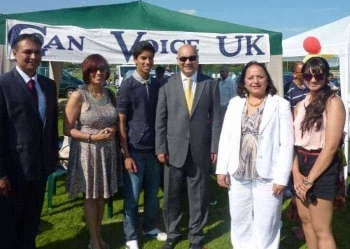
Some have even contributed while in the Daizpora itself. Goan music and tiatr was largely "made in Bombay", till very recently. Our Konkani presses were set up in places like Poona, Bombay (again), and even Karachi ('Dor Mhoinneachea Rotti' started there). East Africa had its own publications like The Goan Voice, now remembered in an online e-news board run by retired librarian Eddie Fernandes in the UK, goanvoice.org.uk.
Goans who flocked to the Indian Army came from daizporean backgrounds. Goan Jesuits from one part of the subcontinent, who influenced the world of religion, impacted life in places like Karachi and Gujarat. About the Goan musicians and sports-persons in the Daizpora, the list is quite long. J. Clement Vaz has put together a book on Goan achievers worldwide ('Profiles of Eminent Goans: Past and Present'); no prize for guessing that the majority come from the Daizpora.
This all lead me to deliberately "misspell" the word Diaspora (a reference to the scattering of the Jewish population away from their ancestral homeland). One prefers to use the term Daizpora, as 'daiz' refers to the word 'tradition' in Konkani. This section has played the role of maintainers of our traditions.
This section has, often from a distance, been holding on, creating and even promoting Goan traditions. Of course, it varies depending on which part of the wider world they are based in. Canadian Goans don't expect to return to Goa one day, unlike the Gulf Goans. The Bombay Goans have seen their situation change vastly since the 1990s due to offers on their homes there, and growing communal violence in the city.
In Karachi, a community which migrated for purely economic reasons to what was just "another Indian city" find themselves largely marooned due to politicial development and the boorish approaches of New Delhi and Islamabad over visas and cross-border connections.
This being the situation, what has been the attitude of Goa to its Daizpora? Mostly, it has ranged from luke warm, to unhelpful, and sometimes even hostile.
Everyone seems happy with the sorry state of affairs. Daizporeans are kept mostly clueless about the state of affairs in Goa. They return home once in a way, and focussing their trips merely to spend money here that would "help the local economy".
They are treated largely as an unwanted lot. Even an attempt to track down their village history is mostly interpreted as an attempt to reclaim their share of ancestral property. The inability to protect the homes and properties is even more serious.
NRI Commission after NRI Commission in Goa have proven to be a spectacular failure, achieving little to nothing, and mostly seemingly set up to accommodate ruling party politicians who themselves failed to get elected.
There was a time when Goa was said to be dependent on the "Money Order" economy. Even today, the remittances play a big role, though seldom spoken about discussions on the Goa economy.
That the Goan Daizporean is largely politically un-influential only makes the situation worse. Politicians of many constituencies in Goa still don't know what large-scale migration is all about. It is only rare politicians like Radharao Gracias, ex-MLA, who have been tracking which Goan has achieved what, where.
So far, few to no attempts have been made to even survey the issues, challenges and problems faced in different parts of the world by the Daizpora. Forget about attempting to find solutions for the same, or think long-term.
We could pretend that this significant section of the Goan world simply doesn't exist. But that is adopting an ostrich head-burying-in-the-sand attitude. It neither helps those who left for very understandable reasons, nor Goa itself to gain legitimately from their skills, talents and huge potential.