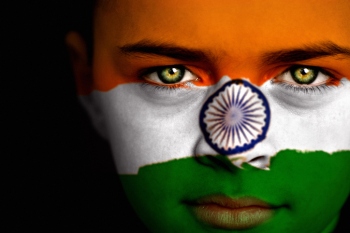
With the recent strategic move of the Modi Government during the G20 Summit to introduce our country as the Republic of Bharat in the official documents being presented to world leaders who were attending the Summit, the boldness of governmental swiftness deserves a realignment with the moral compass of patriotism.
Of course there are times when autonomy in leadership is a commendable and appreciable trait to be found in the independence of the Union.
However, International Political History has also demonstrated that unsolicited governmental interference in prescriptively independent administrative tasks usually does more harm than good.
Take for example the inciteful speech made by former US President Donald J Trump on the eve of the Capitol Hill riots on the 5th and 6th of January, 2021. It was the disbelief of the outgoing President that he had conceded the elections to the President-Elect Joe Biden that had induced hysteria in the mind of Trump’s supporters to storm the Capitol on the 6th of January, 2021.
Inquisitively, and without the intention of offering any insinuation to the reader could it also be perceived that the Prime Minister of India in the present term is also prone to believe that his electoral victory in the upcoming 18th Lok Sabha elections could be guaranteed by inducing theatrics in the minds of the electorate that are calculated to invoke a narrow creed of hindu nationalism that could threaten the secular fabric imbibed in our Country’s Constitution.
From a Constitutional Perspective, the Preamble in our Constitution begins with the words: “WE, THE PEOPLE OF INDIA, having solemnly resolved to constitute India into a SOVEREIGN SOCIALIST SECULAR DEMOCRATIC REPUBLIC and to secure to all its citizens”
Hence, when the term “Secular” is well documented in the Preamble of our Constitution, it becomes a far fetched tale of idealism that the leader from one political party who brazenly supports the agenda of promoting Nationalism through the propagation of the Hindutva morals could intend to gain anything greater from the rebranding of an entire country using a sanskrit term that was only previously used during the medieval occupation of South East Asia when predominantly Hindu civilizations populated the lands.
It would appear as though the multiple Colonisations of India since the onset of the bronze age does not find historical relevance in the rationale of the present Union Government.
To afford clearer perspective, the word “Bharat” is a sanskrit term which has been described by Roshen Dalal in the 2010 Book titled: “The Religions of India: A Concise Guide to Nine Major Faiths” : “Bharat”, the name for India in several Indian languages, is mainly derived from the name of the Vedic tribe of Bharatas who are mentioned in the Rigveda as one of the principal kingdoms of the Aryavarta. It is also variously said to be derived from the name of either Dushyanta’s son Bharata of Mahabharata.
Moreover, from an etymological perspective:
The Sanskrit word Bharata describes Agni. This term has Sanskrit root bhr means “to bear/ to carry” i.e. “to be maintained” (of fire). It also means “One who is engaged in search of Knowledge”.
The etymological considerations behind the deliberate naming of the country could also be perceived through the socio-cultural origins of the Sanskrit language.
According to Michael C. Howard in his 2010 Book titled, ‘Transnationalism in Ancient and Medieval Societies: The Role of Cross-Border Trade and Travel’:
“Sanskrit is the sacred language of Hinduism, the language of classical Hindu philosophy, and of historical texts of Buddhism and Jainism. It was a link language in ancient and medieval South Asia, and upon transmission of Hindu and Buddhist culture to Southeast Asia, East Asia and Central Asia in the early medieval era, it became a language of religion and high culture, and of the political elites in some of these regions.”
A rather more compelling hypothesis behind the replacement of the term “India” with the sanskrit terminology: “Bharat” could in fact be detected in the ongoing rivalry between the two behemoth olitical factions in the country.
Interestingly, the newly formed I.N.D.I.A. Alliance which has the helm of its alliance, the goodwill and initiative betrothed by the Indian National Congress (INC), the acronym BJP abbreviates as the Bharatiya Janata Party with the word “Bharat” being encapsulated in the nomenclature of the political party that currently enjoys the majority support of the electoral representatives in the country.
While paying due respect to the historical background of the origins of the Indian Freedom struggle that began with Mohandas Karamchand Gandhi (fondly known as Bapu) and his miniscule army of 79 volunteers who set out on foot from the Sabarmati Ashram to the shores of Dandi on the 12th of March, 1930 in order to persuade the British Colonists to abolish the Salt Tax.
The Dandi March represented the culmination of the Indian Swadeshi Movement and the Civil Disobedience Movement in India against the British Raj. Now to perceive the same ‘Salt March’, also known as the ‘Salt Satyagraha’, ‘Dandi March’ and the ‘Dandi Satyagraha’, which was historically known as act of nonviolent ‘civil disobedience in India’, and to rebrand all of Bapu’s efforts into this novel terminology such as the ‘Salt March of Bharat’, the ‘Bharatiya Dandi March’, and even the ‘Civil Disobedience Movement of Bharat’ would amount to acts of historical misappropriation.