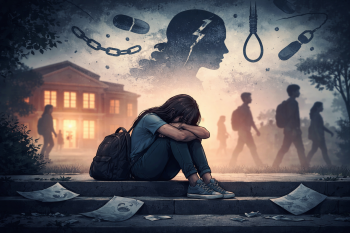
Whenever a student dies by suicide, public discourse immediately turns to a familiar and seemingly reassuring question: were the Supreme Court’s guidelines followed? The question sounds legal, technical and orderly, because it suggests that if rules exist, safety must logically follow. But this is precisely where we get it wrong. The Supreme Court’s mental health guidelines were never meant to be reduced to a checklist. They were meant to compel States and institutions to confront their preparedness for a rapidly changing and deeply complex crisis affecting young people. The recent death of yet another student at the BITS Pilani Goa campus”among multiple deaths in just over a year”forces us to move beyond symbolic compliance and ask a far more uncomfortable question: are we actually prepared to protect students today?
In July 2025, in Sukdeb Saha vs State of Andhra Pradesh, the Supreme Court issued binding, nationwide directions on student mental health and suicide prevention. These guidelines apply to all educational institutions”schools, colleges, universities, coaching centres and hostels, public and private alike. Crucially, the Court recognised that institutions cannot be left to regulate themselves. That is why it mandated the creation of District-Level Monitoring Committees, chaired by the District Magistrate or District Collector, with representation from education, health, child protection systems and civil society. The intent was clear: mental health oversight had to be external, multidisciplinary and preventive, not reactive and institution-controlled.
To be clear and fair, South Goa has constituted its District-Level Monitoring Committee. The committee is chaired by the South Goa District Collector, Egna Cleetus, IAS, and includes senior representation from the district administration, the Directorate of Higher Education, the Directorate of Health Services through the Chief Medical Officer, and the police. It also includes representatives from Social Welfare, Women and Child Development, Technical Education and the Law Department. From a narrow administrative lens, this satisfies the Supreme Court’s directive. The issue before us, therefore, is not non-compliance. The issue is whether this structure is actually equipped to deal with the crisis unfolding on campuses.
The Supreme Court did not mandate committees so that States could say they had formed one. It mandated them so that student deaths would reduce, not repeat. Yet repeated tragedies compel us to confront a hard truth: compliance without capacity is hollow. Several departments represented on the committee do not possess the technical expertise, field presence or clinical authority required to respond meaningfully to campus mental health crises among adolescents and young adults. Mental health emergencies are not resolved through inter-departmental file circulation or post facto reviews. They require clinical insight, early intervention and sustained engagement.
If preparedness is the real objective, then representation from specialised mental health systems cannot remain peripheral. It must be central. Any serious district-level mechanism must actively involve the District Mental Health Programme and trained professionals from institutions such as the Institute of Psychiatry and Human Behaviour. Psychiatrists, psychologists and psychiatric social workers who understand adolescent and young adult distress cannot be brought in only after a tragedy; they must be embedded in planning, monitoring, campus reviews and prevention strategies. Without this, committees risk becoming administrative bodies overseeing a clinical emergency they are not equipped to understand.
Equally critical is the presence of credible civil society experts. This was not an afterthought in the Supreme Court’s guidelines; it was intentional. Civil society organisations working directly with young people, campuses, substance use, digital safety and psychosocial care bring ground-level realities that institutions often miss. They identify early warning signs, understand emerging patterns and are able to question institutional narratives without fear or conflict of interest. Without independent voices, monitoring becomes self-referential and accountability weakens, no matter how well-intentioned the administration may be.
What makes the current response particularly fragile is that student vulnerability today is no longer linear or single-cause. We are dealing with a convergence of crises: mental health distress, substance abuse and digital violence. Treating these as separate silos is not merely outdated; it is dangerous. Substance abuse has repeatedly surfaced in campus narratives and media reports, yet it remains largely absent from structured mental health planning. It falls into an administrative no-man’s-land, where health treats it as a clinical issue, police treat it as crime, education treats it as discipline and social welfare treats it as peripheral. The result is collective abdication.
A district monitoring mechanism that does not explicitly integrate substance-use prevention, early detection, harm reduction and referral protocols into campus safety planning is not prepared, regardless of how often it meets or how senior its members are. Substance use among students is not a moral failure or an isolated deviation; it is a public health reality shaped by stress, access, peer dynamics and vulnerability. Denial, silence or purely punitive approaches only deepen risk.
Even more neglected is digital violence and abuse. Cyberbullying, image-based abuse, sextortion and online harassment have become central triggers of distress among young people. For many students, trauma begins online and spills into offline life, following them into hostels, classrooms and peer spaces. Yet institutional mental health frameworks continue to behave as though distress originates only within campus boundaries. Preparedness today demands digital safety expertise, coordination with cybercrime mechanisms and trauma-informed responses to online abuse. Without this, institutions are responding to only half the problem while pretending the other half does not exist.
The Supreme Court’s guidelines were never about creating more committees or generating more paperwork. They were about ecosystem strengthening. Preparedness would mean functional student-to-counsellor ratios that actually work, campus-based mental health professionals rather than outsourced helplines alone, trained faculty and wardens who can identify warning signs early, and integrated responses to substance abuse and digital violence. It would also mean real-time monitoring of risk patterns across institutions and accountability mechanisms that act before tragedy, not after it.
This moment, therefore, demands more than another review meeting. District-level monitoring cannot remain an administrative exercise; it must become a mental health-led mechanism. Representation from the District Mental Health Programme and institutions such as the Institute of Psychiatry and Human Behaviour has to be central, not occasional. Clinical expertise must inform monitoring, audits and campus interventions, while credible civil society experts working on adolescent mental health, substance use and digital safety must be formally integrated into the system. Without this, oversight remains procedural rather than protective.
Goa must also urgently move towards a State-wide preparedness audit of all higher education institutions, not just those already in crisis. This audit should go beyond documents and assurances to assess real student-to-counsellor ratios, availability of campus-based mental health professionals, staff training coverage, referral pathways and crisis response timelines. Institutions that are unable to demonstrate functional readiness must be given time-bound corrective directions. Preparedness cannot be inferred; it has to be demonstrated.
Finally, the State has to confront the realities shaping student distress today. Substance abuse and digital violence are no longer peripheral concerns but central drivers of harm, yet our responses remain fragmented and weak. These risks demand integrated, health-led and trauma-informed strategies, not disciplinary or denial-based approaches. Until Goa strengthens its mental health ecosystem with clinical leadership, civil society engagement and coordinated responses to emerging harms, compliance with Supreme Court guidelines will remain a comfort rather than a safeguard.
At present, Goa has structures without depth, representation without expertise and compliance without confidence. The real question, therefore, is not whether South Goa has followed the Supreme Court’s directions. It has. The real question is whether we are prepared for the realities young people are facing today, or whether we are administratively rehearsing solutions for a past that no longer exists. Preparedness is difficult. It demands investment, coordination and the courage to admit that existing systems are insufficient. But without it, compliance becomes comfort, comfort becomes complacency, and young lives continue to be lost.
(The writer is an Assistant Professor of Social Work, Goa University, and Founder, Human Touch Foundation, and former Chairperson of the Goa State Commission for Protection of Child Rights)