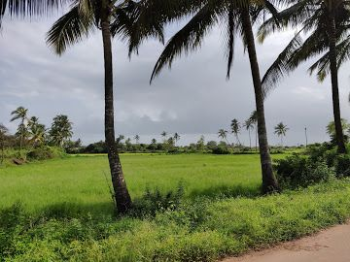
Post liberation of Goa, when the Portuguese colonists finally left Goa, the politics of redistribution of hereditary wealth began a new era of deprivation wherein the resounding need of the landless labourers in the erstwhile newly liberated Union Territory of Goa were now placed in the palms of the people’s representative who viewed the immense opportunism in promoting their respective political careers by redistributing the hereditary land parcels owned by the bhatkars and vesting those rights in the hands of the mundkars and agricultural tenants.
And thus was born the idea of enacting socially beneficial legislation in the form of Welfare Legislations such as the Goa, Daman and Diu Mundkars (Protection from Eviction) Act, 1975 and the Goa, Daman & Diu Agricultural Tenancy Act, 1964.
These were statutes which at the time created much consternation for the bhatkars by empowering many a false claim of mundkari and even enabling fraudulent claims of agricultural tenancy upon the fields of the bhatkar by agricultural helpers by claiming verbal contracts of agricultural tenancy even though the Portuguese Land Revenue system did not recognise verbal contracts of agricultural tenancy as it adhered strictly to formal documentation and registration of land transactions.
And it goes without saying that the so-called mundkars have been more than coercive in their demeanour towards the bhatkars while feeling empowered by the enactment of the Goa, Daman and Diu Mundkars (Protection from Eviction) Act, 1975.
The vast number of pending Mundkarial Declaration Applications which are presently pending before the various mamlatdars in the State of Goa are a direct testament to the empowering nature of the welfare legislation which has enabled the coercive tendencies of the mundkar to continue unabated in the dominant heritage of the bhatkar when the entitlement of the mundkar to the servient tenement is pending adjudication.
In fact the reality of the Goan hereditary custom of Bhatkar-ponn now faces endangerment to the point of complete obliteration.
And this impending extinction of the customary bhatkar has been greatly influenced by the negative wording of the rights of the bhatkar in both the Welfare Acts that related to Mundkarship and Agricultural Tenancy.
But Goan politicians need to introspect and ask themselves, was it worth dropping the special protection which had been accorded to Goa as a Union Territory and accepting statehood for Goa.
Has the trade-off been commensurate with the ideal of heritage conservation that now resounds in the heart of every Goan, even though the takeover of nationalistic values is inevitable to the point where the term ‘Goan’ shall in a couple of decades be substituted with the term ‘Indian’ and our distinct Colonial heritage would no longer matter while our 450-year-old way of life which is intertwined with Indo-Portuguese influences would percolate into just be a few chapters in the NCERT textbooks on history and the lifestyle would be extinct.
What is extremely disconcerting to the serenity of Goa is the fact that the governments have systematically ensured a deprivation of Goans from enjoying their hereditary endowments.
First the State Government enacted the twin welfare legislations which took away the land rights from the dominion of the bhatkar and thereafter vested those rights in the hands of the mundkar and the agricultural tenants.
Thereafter, the Union Government sweeps in with its constitutional talons and declares multiple high value infrastructure projects in the State of Goa that are designed to acquire large tracts of land for the: construction of bypass roads along the National Highways, construction of multi-lane bridges on stilts spanning multiple villages, construction of bridges on the banks of eco-sensitive rivers, construction of a second airport solely to benefit Maharastrians.
Subsequently, the land for these infrastructure developments projects had to be invariably acquired by the Union Government from the very same mundkars and agricultural tenants upon whom the State Government had so graciously conferred rights under the garb of welfare legislation.
Ultimately, the control over the infrastructure development projects vest in the Union Government and Goa just like every other Indian State has now become subservient to the nationalistic interests of the leaders heading the Central Government. In other words, the proverbial puppet.
To cite an example that was personally witnessed and is evident even to this date, would be the construction of the newly constructed Zuari Bridge which is part of the National Highway 66 (NH-66), and which connects the northern and southern regions of the state. This eight-lane cable-stayed bridge spans the Zuari River, linking the villages of Agassaim and Cortalim.
Back in the year 2016, when the construction on the New Zuari Bridge began, the paddy fields of numerous traditional paddy farmers were acquired for the purpose of constructing the new Zuari bridge and just a few years prior to the announcement the bridge, these traditional paddy farmers could be seen threshing their freshly harvested grain along the side of the road between Cortalim and Agassaim.
Today those very same paddy fields lie inundated by the construction effluent that was left behind during the construction of the bridge and which ultimately ruined the quality of the fertile soil which rendered it unfit for cultivation purposes.
It remains unclear if these infrastructure projects were envisaged to drive up the land rates in the State of Goa especially along the coastal belt while the cultivable land in the villages which stood in the way of road connectivity were enslaved for the purposes of forwarding infrastructural developmental activities.
The resulting consequence would always be the endangerment of the Goan customary values that are presently being held hostage and the ransom has to be paid in the current of cultural dilution while acquiescing to rapid nationalisation at a pace that is alarming.