Somewhere during Ramzan last month, there was a WhatsApp message doing the rounds which purported to be a summation of Islam’s key messages. As I scrolled through them, the second last caught my attention. It said: Do not make fun of false Gods.
This was much before the movie, The Kerala Story, began to make the headlines after its debut on May 5. As I write, the movie has crossed the Rs 200 crore mark in box office earnings, has been praised for telling the truth as it is, and received accolades from the country’s highest office. Most recently, the Supreme court has stayed the decision of the West Bengal state government to ban the film with a few provisos, thus enabling many more to see this film that is thought-provoking at one level, controversial at another.
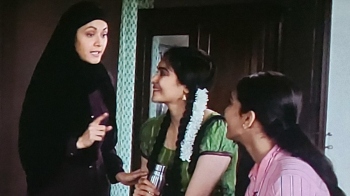
The Kerala story movie is about the indoctrination of aspiring nurses, two Hindu and one Christian, and is based on events that occurred in a north Kerala district. Soon after the film’s release, a reference to the numbers of those who may have been “indoctrinated” was deleted without a clear explanation. How much of data authenticity supports the narrative was thus the film’s first casualty.
I watched the movie in its first week and came away shocked by several episodes: the summation of the Islamic faith to a handful of diktats, one that suggested that Muslim women should not use lipstick, for example, another that children born of a union between a Muslim and non-Muslim were termed as 'illegitimate' unless the latter converted. But perhaps what seemed really incredible was the fact that the trio of those being brainwashed didn’t take on what the “agent” of the indoctrination said.
Then in another scene, the Christian girl goes to church, apparently leaving the Hindu girls to fend for themselves, and she, in addition, makes no attempt to take on the indoctrinator on an issue that is mentioned in passing and that concerns her own faith.
The script, verily, did not include any debate, let alone an attempt at one as it progresses to its denouement with the rescue of the movie’s main protagonist. Without a debate in the narrative, and a monochromatic portrayal of a community, the movie’s script veers heavily in favour of being anti-Islamic even as it appears paints its fellow Abrahamic faith in a poor light.
So in the movie, which lasts for about an hour and a half, the agent of indoctrination, virtually has a free hold over her target audience, ably supported by men becoming doctors, whom one would have expected to be more rational in their outlook.
Therefore, there is credible evidence, pointed out by many a commentator, that the script lacks the balance that it should have had. However, India’s Censor Board saw no reason to question the film’s script, safe in the knowledge that the disclaimer at the end of the film, saying that it is just based on true events sufficed. And with the SC staying the ban in West Bengal with the proviso that the producer incorporates the words, “fictionalised version” and specifically mentions that there is no data back-up for the alleged numbers of those recruited to ISIS, means all is well.
In fact, it is probably not. The agent of indoctrination may have been a woman, so perhaps easier access to the target group, but the film reeks of the patriarchy, the idea that men are superior to women, and this has time and again caused and perpetuated so many of India’s societal ills. Patriarchy also dominates religious establishments from temples and mosques to churches too, where what men decide is the accepted path. This movie’s sub-text seems to support this.
Another lens through which this movie can be viewed is the very idea of indoctrination. Indoctrination is not the preserve of the media. Arguably, the media and the viral thing means that many can access half-baked truths, where instant opinions are created, and sustained. However, indoctrination can also emerge in many other settings, in families, sustained by factors that may not enter the public domain. These concern issues such as who you should marry, perceptions of other non-monotheistic faiths, the numbers of children that certain families should have down to music and yoga. It may also be subtly spread via religious and quasi-religious institutions too.
So should the movie be banned? Has it already caused harm? For one, it is considered a fact that a ban serves no purpose but to make more people want to see the film (which is not yet released on OTT). At the same time, given the illiteracy of the masses, many may well believe that what the movie purports to depict is co-terminus with a particular religion. About causing harm, we can only suggest that this can be countered in many ways by civil and religious institutions such as parish councils, women’s groups, school authorities, PTAs who should watch this film, and deliberate among themselves various aspects that go beyond religious brainwashing and the ISIS recruitment narrative. This can hopefully engender a fruitful and worthwhile debate.
It should not be left to media vehicles including the all-pervasive social media to have agency in determining what people think and understand about other faiths. At the end of the day, it would be too a high a price to pay to preserve India’s multi-faith and ethnic fabric, now under great strain. At a time like this, it pays to recall the words of the Ali Ibn Abi Talib, the first Shia Imam in the seventh century who was murdered during Fajr, or morning prayers, who said: "People are of two types: they are either your brothers in faith or your equals in humanity."