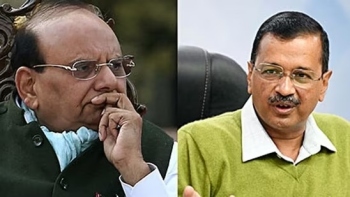
The Centre’s recent ordinance attempting to regain control of the “services” in NCT Delhi is an act of breath-taking brazenness and has sparked intense debates surrounding its constitutional implications. It grants extensive powers to the Lieutenant Governor (LG), raising concerns about the potential violations of established constitutional principles and the need to ensure a balanced governance structure. It is crucial therefore to carefully examine the law in light of constitutional provisions to ensure the preservation of democratic values and the integrity of our constitutional framework.
Constitutional concerns
The ordinance has brought to the forefront several constitutional concerns that demand our attention. First, it is essential to evaluate whether this move aligns with the framework governing the distribution of powers between the Centre and the States. Our federal structure safeguards the autonomy of State Governments while granting appropriate authority to the Central authorities. Any potential deviation from this principle should be examined to safeguard the integrity of our constitutional framework and the spirit of federalism.
The Constitution of India, in Article 239AA, provides for a special status for the National Capital Territory of Delhi. The article states that the “powers and functions of the Government of the Union in relation to the National Capital Territory of Delhi shall be exercised by the President through the Lieutenant Governor.” However, the article also states that “the Legislature of the National Capital Territory of Delhi shall have power to make laws with respect to matters in the Union List and the Concurrent List, except the matters with respect to which the Parliament has made laws which expressly declare that Parliament has assumed exclusive power to legislate.”
This constitutional provision clearly establishes that the Delhi government has significant powers to legislate and govern the city. The Centre’s ordinance, however, seeks to undermine these powers by granting sweeping powers to the LG. The ordinance states that the LG will have “power to make rules for the recruitment, appointment, posting, promotion, transfer, deputation, leave, discipline and punishment of persons serving in connection with the affairs of the National Capital Territory of Delhi.” This gives the LG control over the entire civil service in Delhi, which is a significant power that is traditionally vested in the elected government.
Another crucial aspect requiring careful examination is the ordinance's compatibility with the Constitution. Our Constitution empowers the elected government of NCT Delhi with the authority to govern the city. Any measure that challenges or undermines this constitutional provision must be critically evaluated. Furthermore, the Supreme Court's ruling in the Kejriwal vs. LG case established a clear understanding of the LG's role, emphasising that independent decision-making powers do not rest with the LG. The ordinance's alignment with this judicial precedent must be assessed to ensure constitutional consistency and uphold the principles of justice and accountability.
Implications for democratic values
The implications of the ordinance on democratic values cannot be ignored. It is crucial to uphold the spirit of democratic governance and protect the rights of the citizens. Any action that jeopardises the self-governance of the people of Delhi must be scrutinised to preserve the essence of democracy. The ordinance’s potential impact on democratic processes, citizen participation, and accountable governance should be thoroughly evaluated to ensure the preservation of democratic values and principles.
The ordinance has the potential to undermine the democratic process in Delhi in several ways. First, it gives the LG the power to veto the appointment of any officer by the Delhi government. This gives the LG the power to control the entire civil service in Delhi, which is a significant power that is traditionally vested in the elected government. This could lead to a situation where the LG is able to appoint officers who are loyal to him or her and who will not challenge his or her decisions. This could have a chilling effect on dissent and could make it difficult for the Delhi government to implement its policies.
Second, the ordinance gives the LG the power to make rules for the recruitment, appointment, posting, promotion, transfer, deputation, leave, discipline and punishment of persons serving in connection with the affairs of the National Capital Territory of Delhi. This gives the LG control over the entire civil service in Delhi, which is a significant power that is traditionally vested in the elected government. This could lead to a situation where the LG is able to control the civil service in Delhi and to use it to further his or her own agenda. This could make it difficult for the Delhi government to function effectively and could lead to a decline in the quality of governance in Delhi.
Third, the ordinance gives the LG the power to recommend to the President the names of persons to be appointed as Chief Secretary, Principal Secretary and other officers of the National Capital Territory of Delhi. This gives the LG the power to veto the appointment of any officer by the Delhi government. This is a clear violation of the principle of separation of powers, which is a fundamental principle of our constitutional democracy.
The ordinance has raised legitimate concerns about constitutional inconsistencies. A thorough evaluation is necessary to strike a constitutional balance, safeguard the rights of the people, and promote accountable governance.
As we strive for a more equitable and just governance structure, the adherence to constitutional principles should remain the guiding light for all stakeholders involved, ensuring the continued vitality of our democracy. The situation presents a crucial test for the system of checks and balances, as it exposes the potential imbalance caused by an overpowering Central Government, the Executive, and the Legislature.