Infrastructure development is often seen as a sign of progress, but when executed without adequate safety measures, it becomes a threat rather than an improvement. The ongoing construction work along the Porvorim stretch of the highway presents numerous hazards that require urgent attention. With the monsoon season approaching, the risks posed by this poorly managed site could result in severe consequences for commuters and nearby residents.
One of the most concerning aspects of the project is the presence of a live wire electric cable hanging loosely along the length of the road. Instead of being securely fixed, it has been supported precariously by temporary barriers placed by the contractor. This presents a serious electrocution hazard, particularly in adverse weather conditions or in the event of strong winds dislodging the cable from its current position. The safety of road users has not been accounted for, as the live wire remains an imminent threat with no visible protection or warning mechanisms in place.
Electrical poles in the vicinity have also been observed tilting dangerously towards the carriageway. These poles, which should have been reinforced as part of the construction plan, now pose the risk of collapse. Should any of these structures give way, the consequences could be disastrous, resulting in damage to vehicles, injuries to pedestrians, and potential loss of life. The lack of maintenance and structural support for these poles indicates a failure in project oversight and regulatory enforcement.
The road itself has become increasingly unsafe due to the unchecked deposition of loose soil along its edges. Large heaps of soil removed during excavation work have been left unattended near the Neo Majestic Hotel. With the arrival of the monsoon, these loose deposits are likely to be washed onto the main road, leading to dangerous driving conditions, reduced traction for vehicles, and a heightened risk of accidents.
A similar issue is evident near the Dev Khapreshwar temple, where deep trenches have been left unprotected on either side of the road. These trenches, dug as part of the construction process, pose a serious risk to pedestrians and motorists alike. Without proper barricading or warning signs, a single misstep or vehicular skid could lead to an accident. During heavy rains, these trenches could also fill with water, creating additional hazards such as erosion, waterlogging, and structural instability.
The presence of precast links extending over the public carriageway adds another layer of risk. These large concrete segments, used in the construction of the elevated corridor, are currently being lifted and installed with minimal safety precautions. The risk of falling debris during the lifting and positioning of these structures cannot be ignored, especially since the road remains open to regular traffic. The lack of temporary road closures or protective netting leaves commuters exposed to the dangers of accidental detachment or misalignment during installation.
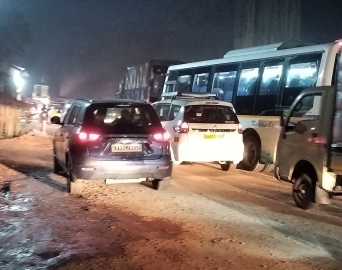
An additional concern is the inconsistent placement of temporary barricades throughout the construction zone. In many areas, these barriers have either collapsed onto the road or have been set up in a manner that results in unpredictable road widths. This irregularity has created confusion for road users, particularly in sections where the lane narrows abruptly without warning. Motorists are forced to make sudden adjustments, increasing the likelihood of collisions. Moreover, construction tools and materials have been left strewn across the roadway, adding to the disorder and making it even more difficult for commuters to navigate safely.
Another alarming issue is the significant obstruction caused by construction debris and fallen structures. In some sections, parts of the construction equipment have collapsed onto the road, blocking lanes and causing further traffic congestion. The failure to clear such debris in a timely manner raises serious questions about the contractor’s commitment to maintaining a safe worksite. The visible lack of monitoring and site management has contributed to the worsening conditions, with little intervention from the authorities to enforce basic safety standards.
The upcoming monsoon season presents an urgent need for remedial measures. Heavy rains will exacerbate the risks posed by the current state of the site, leading to further erosion, road deterioration, and an increased likelihood of structural failures. Given the volume of soil deposits left along the roadside, water accumulation could lead to unstable driving conditions, endangering both motorists and pedestrians. Additionally, the weakened electrical poles may not withstand the impact of seasonal storms, increasing the risk of power failures or pole collapses onto the main road.
Immediate action is required to ensure that safety measures are put in place before the monsoon arrives. Proper barricading must be installed to secure hazardous areas, and all loose soil deposits must be removed or stabilized to prevent waterlogging and road obstructions. Electrical infrastructure, including tilting poles and exposed wires, must be urgently reinforced to prevent avoidable accidents. The construction site must also be subjected to regular inspections by relevant authorities to ensure compliance with safety standards and prevent further negligence.
The contractor responsible for this project has failed to maintain a secure and organised worksite, leaving road users to navigate through unsafe conditions. The absence of clear safety protocols and the failure to enforce protective measures demonstrate a lack of accountability in the project’s execution. It is imperative that authorities intervene promptly, not only to rectify the existing hazards but also to implement stricter oversight for similar infrastructure projects in the future.
A construction project of this scale should not proceed at the cost of public safety. The lack of foresight in addressing these hazards has already created unnecessary risks, and the failure to take preventive action ahead of the monsoon could lead to severe consequences. Without immediate intervention, the consequences of this mismanagement could prove to be far-reaching.