With all the conflict in the West Bank and the Gaza Strip, a comparison comes to mind. Elston Soares, a journalist discussing the issue on the Goajourno WhatsApp group, put it bluntly.
He wrote, in an informal discussion: "The solution to the Israel problem is to follow the Goa Model. If someone covets your land badly... the response is not violence. Think like a Goan....sell your land to the highest bidder and get a new passport..."
That was the advice suggested via WhatsApp. It was, I guess, meant to be tongue-in-cheek, but it's also quite close to reality.
So many disputes in today's world are over land. You just need to check the Wikipedia page titled "List of territorial disputes" and you'll find so many names you even never heard of, being disputed by various nations. Places like Abyei (Sudan-South Sudan) and Banc du Geyser (Indian Ocean), to Vilnius in Lithuania-Poland.
Between Pakistan and India, there are disputes over 'Azad' Kashmir and Gilgit-Baltistan. The territories of Jammu and Kashmir and Ladakh are also considered as disputed, on the Pakistani side. One might have not heard of places like Junagadh and Manavadar (former princely states), but these too figure in this list.
Worldwide, there are literally dozens of such disputes listed, the most bitter of which is the West Bank and Gaza Strip, and the uprooting of the Palestinians from what was their land.
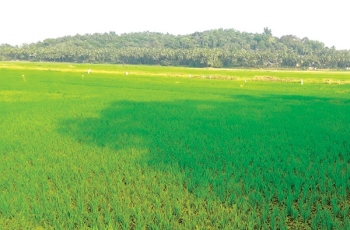
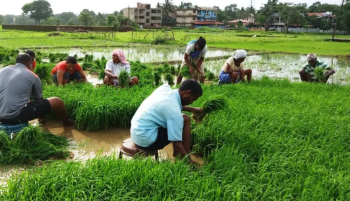
In the case of Goa, a different type of a quest-for-land is underway. It is more "peaceful" and rupee (often black money) driven. Often, it is also less dramatically visible, except when the new owners start decimating the local greenery and replacing it with grey (or gaudily-coloured) concrete. Most of the times, the victims are blamed for "selling out" their own properties.
Tourism has had its own impact; everyone who comes on a holiday here would like their own home, if they can afford it. From cricketers to top journalists, everyone has one in Goa today.
Tens of thousands of newly built homes are lying shut and unutilised. This speculation pushes up real estate prices to levels that most people who spend a lifetime working in Goa will not be able to afford their own homes here anymore. At the same time, our government seems unable to think of something like a "speculation and vacancy" tax on homes bought for speculative purposes.
(In British Columbia, the speculation and vacancy tax was designed to turn vacant homes into housing for people. It ensures owners from outside contribute fairly to the local tax system. Property owners need to declare how their property has been used; if they don't, the speculation and vacancy tax at up to two percent of the property's assessed value is charged.)
But, our politicians have had a strange, bizarre and under-studied equation with land.
Right from the 1980s or 1990s onward, when everyone and their dog started to become real estate brokers in Goa, our politicians joined in too. Of course, they could not be exempt from the wider trends that afflicted society. Many politicians, from the panchayats upwards, got involved in land deals, brokerage and manipulation to ensure the highest prices for the land they sold.
A few pages torn out from a crucial register here, changing in planning laws, and a few zoning amendments could make all the difference. Some State-level politicians were known to later even threaten to acquire a property at throw-away government compensation rates, unless it was sold to them.
In the early-to-mid and even late 1990s, quite a few of the topplings of Goa governments happened with the involvement of the land lobbies. Some politicians went on to become enormously powerful due to their connections with the same.
Dr Wilfred de Souza FRCS's cynical comments against his political rival-turned-ally Ravi Naik (who later sought to oust him with the help of the then ousted Governor Bhanu Prakash Singh) will be remembered by some. Souza said Naik had undertaken more 'conversions' in his then-short political stint in office than sixteenth century missionaries, but this time involving land.
Citizens stood up to some of this manipulation. The GBA (Goa Bachao Abhiyan) was largely a group focussed on land-related scams. But political infiltration brought about internal infighting.
Families are divided and made to fight one another. It's not tough to get one or the other to sell out. The high-profile allegations over the ancestral property of Suella Fernandes Braverman, the UK Home Secretary no less, in Assagao, brought this out dramatically.
The pressure on land in Goa is intense. It is one of the few places in the world which carry "Property NOT for sale" signs outside local homes.
To return to where we started. Soares' comment is prescient and would have been funny, if it was not so true and tragic. Many Goans are in the process of selling out. The pressures on land-owners who are not politically connected (and there are many, given the political dynamics) has been intense. Those who are connected, manage to heighten the value of their own property by getting government projects and state-funded infrastructure to its backyard.
But, at the end of the day, everyone pays the price. Selling out comes at a price. The returns might seem to come in fast, but these are only temporary. Villagers in Pernem believed the airport would bring quality infrastructure to their backyard, but we have already begun seeing the impact of land speculation there, in very naked political ways.
Nielsen, Bedi and Silva write in 'The Great Goa Land Grab' (2022): "While much land grabbing involves large-scale land acquisitions for mega-projects, there are also conglomerate or smaller acquisitions involving actors big and small. Free, prior, and informed consent for impacted communities are rarely part of such land deals, and there are few examples of meaningful community engagement in decision making processes." Beyond this, the takeover of local land due to uncontrolled speculation is another reality.
One day, when our descendants are disinherited from their own land, they will wonder how our generation allowed this to happen.