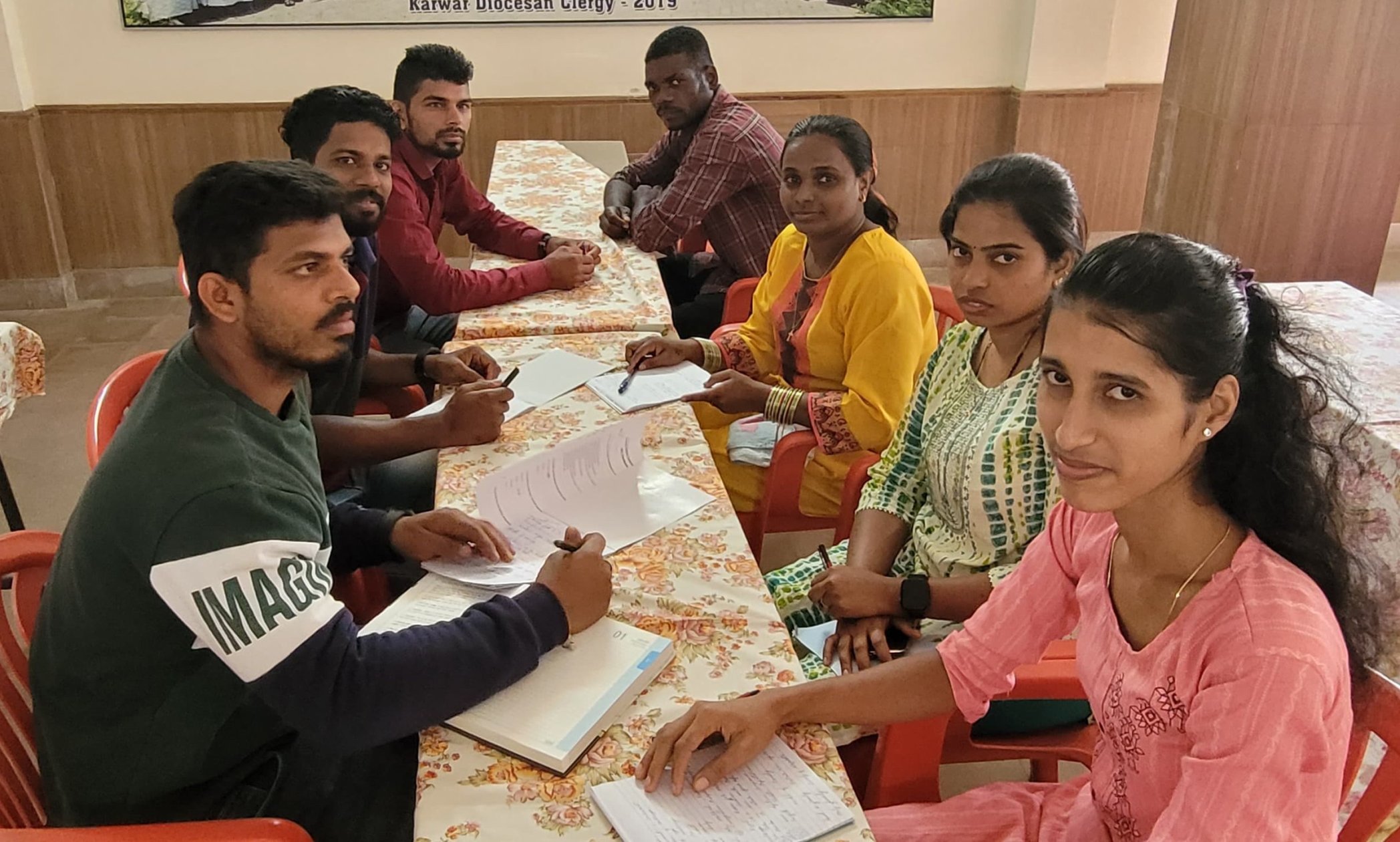
One of the unexpected developments on the educational front in Goa is a Marriage Readiness certificate course, to be held at the Goa College of Home Science this December. Depending on your point of view, you could either see it as unusual, even somewhat eyebrow-raising, or simply interprete it as something we actually badly need in our times.
In an online discussion, one young man commented: "Of all the courses I thought I would see in life, this one caught me by surprise." Another retired professor however said: "The course is a good initiative."
First to start with what we already know from information in the public domain. This course, as announced, is subtitled "preparing for healthy and lasting relationships". Spread over 15 days and ten programmes, it starts with dating, exploring masculinity and feminity, contrasting a wedding vs a marriage, understanding communication in a marriage, mate selection, what it takes for a 'happily ever after' scenario, understanding 'intimacy and love', moving on to the concept of 'when two become one yet remain two and one simultaneously', and finally making marriages work.
There are other concerns: Late marriages, or even inabilities to find suitable partners. From overpopulation fears in the 1980s (which we studied in college Economics), we shifted to the promises of the Demographic Divident (from a growing and productive, young and talented population). Now, Goa, and the rest of South India, are hit by declining birth rates. These areas are below-replacement birth rates. Meaning, we are aging and shrinking in numbers, not adding to our population.
Why delayed marriages? Is it just a trend, or the result of economic and other pressures? Young people pursue higher education, careers, financial independence or opportunities overseas. It has become costly to impossible to set up home, afford a house, and pay for costlier education for the children.
Finding a suitable partner can be difficult. This is aggravated due to shrinking village communities, migration, changing expectations, caste and religious boundaries, and the desire to find someone we see 'fit' in education, lifestyle, values and aspirations. Youngsters can be choosy and have heightened expectations from a marriage.
Some remain unmarried not by choice but because the right match never materialises. Even after marriage, couples face being physically separated. This comes from employment abroad, demanding work schedules, financial pressures, parenting responsibilities and changing gender roles.
Others experience emotional distance, loss of intimacy, mismatched sexual expectations or prolonged periods of sexlessness, sometimes lasting years. Social stigma, family expectations and reluctance to discuss intimate problems openly can make matters worse.
These issues have been raised earlier too, and how. Former Goa Governor (2014-2019) Mridula Sinha, publicly praised the Catholic Church's premarital counselling programme and wanted the practice extended to other communities.
In December 2014, soon after becoming Governor, Sinha advocated pre-marital counselling at Goa University. She argued that educated young men and women were failing in their roles as husbands, wives and parents, and called for "value-based education". She met women to discuss Goa's "Uniform Civil Code". Premarital counselling was among the suggestions discussed.
In May 2017, it was reported that Sinha had undertaken a study titled The Practice and Effects of the Civil Code in Goa. During her consultations with different religious communities, she was reportedly impressed by premarital counselling. She also argued that schoolchildren should be taught mutual respect between boys and girls. Sounds good in intent, but is the issue so simple?
In December 2017, the Goa University (of which Sinha was Chancellor, as the Governor) formally launched a pre-marital counselling programme through its Department of Women's Studies and the State Resource Centre for Women, with Sinha presiding. In November 2018, the University also launched relationship-wellbeing workshops. These were described as broader than preparation for marriage: They covered gender sensitivity, self-esteem, legal rights, sexual and reproductive health, conflict resolution and abusive relationships.
Sinha's public statements repeatedly emphasised the preservation of family values, the responsibilities of husbands and wives, the stability of marriage and the duty of children towards ageing parents. In 2018, she even asked graduating Goa University students to pledge not to break up marriages over trivial issues. In June 2021, Law Minister Nilesh Cabral too mentioned plans for premarital counselling for couples registering marriages.
Marriage preparation, counselling and education about relationships can be extremely useful. But there is a difference between helping people build healthy relationships and promoting a particular conservative conception of marriage and family.
One of the fundamental limitations of Catholic pre-marital preparation in Goa is that it can prepare couples for the institution of marriage not adequately for the lived experience of married life. Marriage is, in religious terms, a sacrament, a religious commitment, a legal arrangement or a framework for raising children. But it is also an intimate relationship involving sexuality, desire, physical affection, sexual compatibility, changing libido, reproductive choices, emotional vulnerability and mutual satisfaction. Such subjects that can be difficult to discuss openly in a socially conservative environment.
Marriage as an institution is under strain in Goa for other reasons. Society has changed faster than the expectations and structures over marriage. Greater financial independence, especially among women, has made it less necessary to remain in relationships which don't match expectations.
There are changing aspirations and a sharp rise in nuclear households. Add to this, interference from in-laws, inadequate communication and differing expectations about domestic responsibilities have also placed pressure on couples.
Earlier generations often remained together because of economic dependence, social stigma and family pressure. Fewer divorces happened, or break-ups occurred, but this did not necessarily mean happier marriages. Today, the issue is not simply one of young people lacking maturity or awareness or commitment, but that marriage itself is undergoing a profound social transformation. It obviously runs deeper.