Of late, the state administration is pushing for a major overhaul in public accountability and bureaucratic efficiency, as is evident by the slew of strict directives aimed at streamlining operations and enforcing disciplined public service.
Furthermore, the Pramod Sawant regime never misses an opportunity to project its concern for Goa through a grand show of public welfare.
From expanding financial assistance programmes to streamlining healthcare access for marginalized communities, the administration has consistently put the common Goan at the centre of its policy framework. These targeted welfare programmes have not only bridged economic disparities but also reinforced public trust in the state's commitment to inclusive development.
Hence, one cannot help but feel that the way the government is rolling out a deluge of citizen-centric welfare measures every second day reflects a major push by the ruling dispensation to consolidate its voter base, build political capital, and secure an advantage against anti-incumbency ahead of upcoming elections.
Surprisingly, despite the widely touted economic progress of recent decades, ‘welfare populism’ remains a determining variable in Indian electoral politics. Rather than fading away as the economy expands, welfare programmes have become the primary battleground for political survival.
Modern elections have shifted from big ideas and long-term promises to a system where political parties win by handing out immediate, tangible rewards. Tired of waiting years for abstract promises like economic reforms to change their lives, voters now demand immediate visible proof.
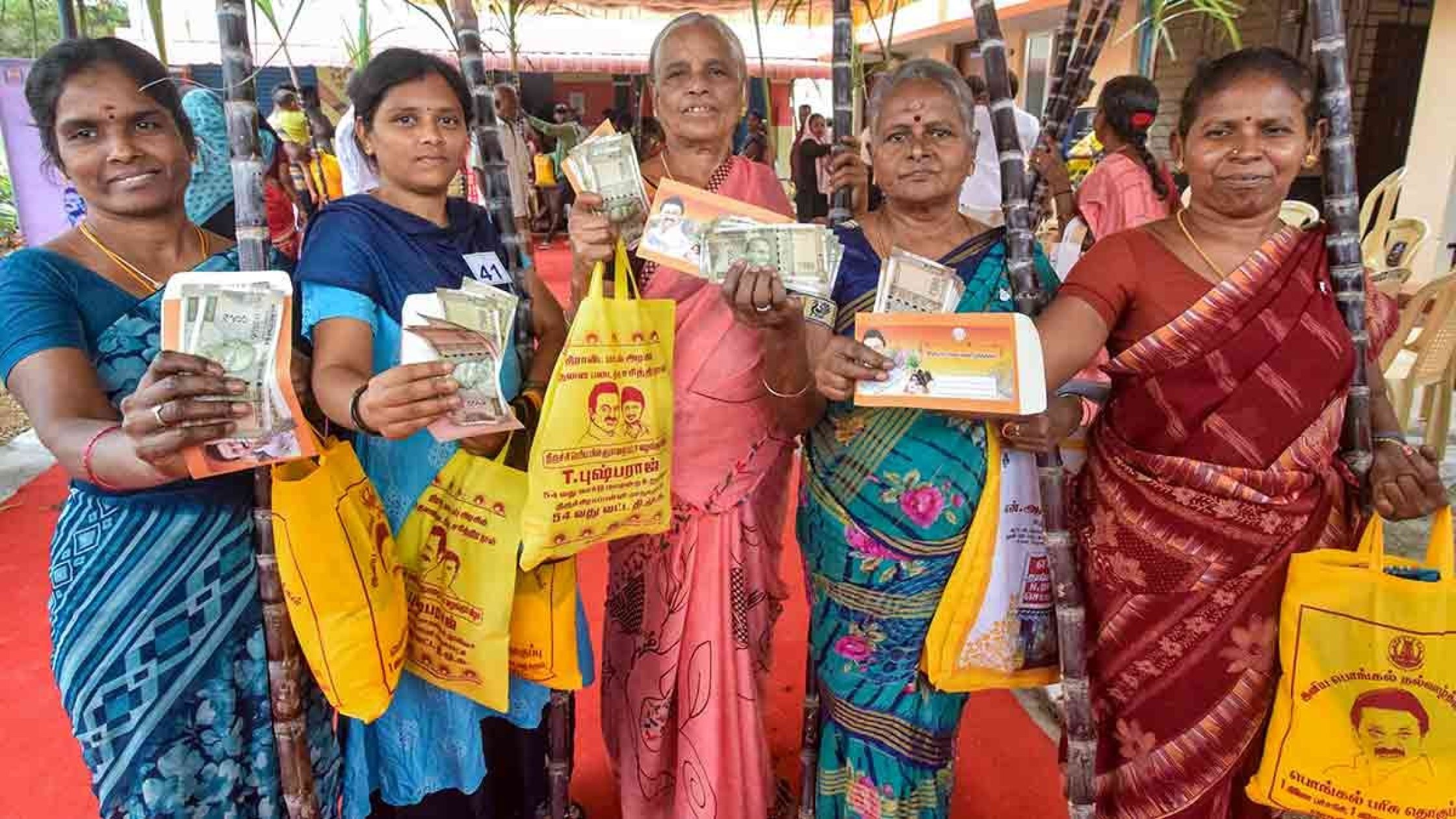
This has turned elections into competitive bidding wars between rival parties, who constantly try to outdo one another by promising free electricity, cash transfers, or household goods to win votes. Pioneer states created welfare models that national parties were eventually forced to copy just to stay competitive.
To someone struggling to pay for food, education or healthcare, such support need not be an abstract economic proposition. It can be a difference between getting by in a month and finding greater financial stress.
In a country grappling with deep structural inequality, these targeted subsidies are not mere political bargaining chips; they are vital, lifesaving lifelines. Dismissing them entirely as 'populist freebies' risks ignoring the harsh reality of systemic poverty, where immediate state aid is the only shield families have against economic devastation.
The problem arises when governments start treating perpetual giveaways as a substitute for economic development.
While these quick cash payouts and freebies provide instant proof that the government is working, they create a major problem for the country's future. When a state spends all its money on immediate subsidies, it runs out of funds to build schools, roads, and hospitals.
The ultimate danger in Indian governance is not welfare itself, which people need, but rather that short-term giveaway spending is completely replacing the long-term investment needed for real development.
Across the country, the practice of pre-poll announcements has expanded significantly beyond subsidized food or small household goods into large-scale, ongoing fiscal commitments.
From bicycles to cash; the rising cost of India’s poll promises are indeed a matter of concern. Blurring the fine line between welfare economics and pre-poll populism, freebies are powering election victories in India. But the biggest poser is: Can its states afford them?
According to the BBC, “The intersection of competitive electoral politics and state fiscal health has sparked a critical national debate in India. While political parties defend targeted giveaways as crucial social security nets for a welfare state, financial regulators and the judiciary warn that the exponential rise of these promises compromises capital spending and structural development.”
True progress relies on empowering citizens through economic capacity, rather than sustaining them solely through state aid.
However, over the years, freebie culture and elections have become synonymous in India! Just as lavish as political parties have been with their promises, citizens too have come to expect nothing less from them.
It somehow feels more like the appeasement of the common man by political leaders and aspirants seeking to continue undisturbed in their positions of authority. This quinquennial descent from their high pedestals is a defining moment in Indian electoral politics when the power dynamics briefly shifts back to the voters.
This, then, is the truth at the heart of the democratic process.
When political leaders and aspirants make their regular, five-yearly return to the grassroots, it often resembles a grand piece of political theatre rather than an exercise in true public service. This cyclical humility functions as a mechanism of preservation.
By temporarily stepping down from their elevated positions of authority to solicit votes, flatter the public, and distribute promises, leaders essentially pay a brief tax to the electorate.
The primary motive behind this elaborate ritual is not a sudden awakening of civic duty, but a strategic calculation designed to secure five more years of uninterrupted power and systemic comfort.
Consequently, this brief window creates a highly charged atmosphere where the traditional hierarchy is momentarily inverted. For a few weeks, the common man, who is usually marginalized by bureaucratic and political machinery, becomes the most important entity in the nation.
The electorate holds the ultimate tool of accountability, forcing even the most entrenched politicians to bow, listen, and appease. However, the tragedy of this defining moment lies in its transience. While the power dynamics undeniably shifts back to the voters during the campaign trail, this shift is often an illusion of empowerment.
Once the ballots are cast and the positions of authority are consolidated, the high pedestals are quickly rebuilt, and the newly elected elite return to their undisturbed governance until the next cycle demands another performance of humility.
The masses, meanwhile, relish this brief moment of attention before quietly resigning themselves to another five years of anonymity.