SUNDEEP NAYAK
In April last year, the International Maritime Organization approved the draft IMO Net Zero Framework -- the first global carbon-pricing mechanism for international shipping coming up for adoption later this year. Vessels exceeding 5,000 gross tonnes on international voyages will face binding emissions-intensity targets, with ships exceeding thresholds required to purchase remedial units or contribute to an IMO Net-Zero Fund. The proposed levy begins at $100 per tonne of CO2 and is projected to rise to $380 per tonne. When adopted, it may enter into force in 2027, with implementation from 2028. For a State whose economic heartbeat is the sea, this is not a distant diplomatic development. It is an imminent business reality, arriving at Mormugao Port with the next tide.
Goa's maritime economy
and carbon exposure
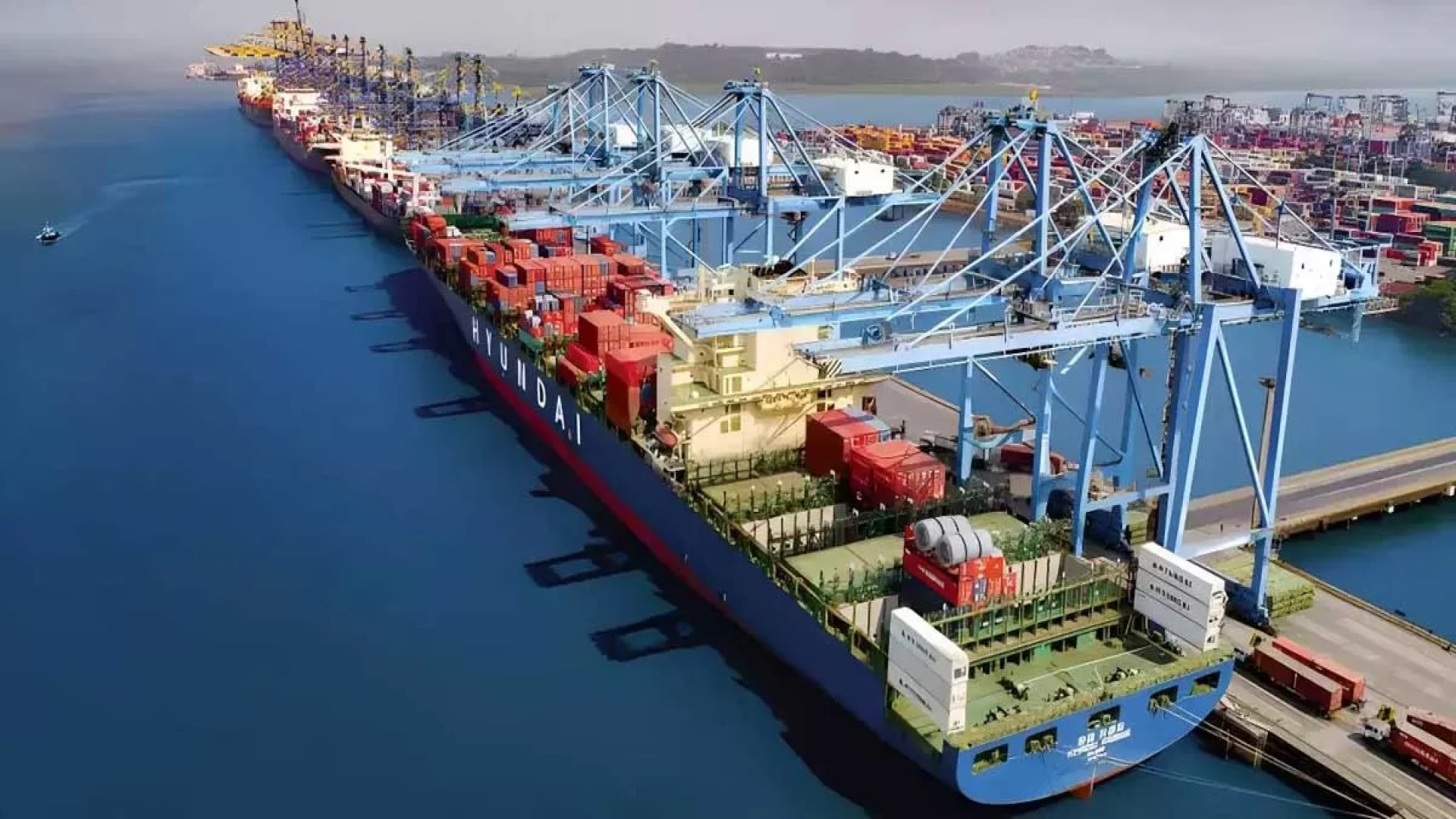
Goa's relationship with the sea runs deep. Goan seafarers have served across global fleets for over a century. Goa Shipyard Limited (GSL) builds defence vessels with 130,000 DWT capacity. At the centre sits Mormugao Port Authority, handling approximately 14.7 million tonnes of cargo annually, with nearly 11% growth recorded in mid-2025. But coal imports constitute roughly 64% of the port's volume -- JSW alone imports approximately 6.6 million tonnes of coking coal annually through Mormugao for its Vijayanagar and Dolvi steel plants. This coal-dominated cargo profile is precisely the IMO framework's target. Every large bulk carrier calling at Mormugao faces a new carbon cost. At $100 per tonne of CO2 above the base threshold, compliance costs per voyage could run into hundreds of thousands of dollars -- costs that will flow through freight rates, port charges, and commodity prices, reshaping the economics of Goa-linked trade.
India endorsed the IMO framework and the Directorate General of Shipping issued a guidance note in April 2025. Yet, as a recent Economic & Political Weekly analysis notes, domestic enabling legislation -- covering FEMA compliance, constitutional classification, and DTAA treatment -- remains incomplete. This regulatory uncertainty lands precisely when Mormugao's port users, shippers, and concession holders need to plan fleet renewal and bunkering investment.
Blue economy
research edge
Goa has an asset most maritime economies in India lack: IIT Goa's GOAT (Goa-Atlantic) partnership with leading French institutions, funded by CEFIPRA, the joint Indo-French Centre for Promotion of Advanced Scientific Research. This author has extensively interacted with Manell Zakharia of NIOT and Dr Sharad Sinha of IIT Goa on the GOAT partnership, which brings together Ecole Navale, Universite de Bretagne Occidentale, ENSTA Bretagne, Brest Technopole, and the technology firm Exail. Naval Group has already partnered with IIT Goa on underwater sensor systems. A joint Master's in Marine Science and Technology is under development. When India and France elevated their ties to a Special Global Strategic Partnership in February 2026 at RUSH 2026 in New Delhi -- where this author participated -- the collaboration gained fresh institutional momentum. Green hydrogen as marine fuel, alternative propulsion, ocean data systems, and circular maritime supply chains are all areas where GOAT research can translate directly into commercial and policy applications for Mormugao and Goa's wider blue economy.
Where Goa must act
India's eight-pillar maritime decarbonisation roadmap has designated Deendayal, Paradip, and Tuticorin as green bunkering hubs. Mormugao is not on that list. A port that today imports coking coal to feed a steel plant could -- with the right policy and investment architecture -- become a hub for green methanol or green ammonia bunkering on Arabian Sea and Indian Ocean trade corridors. The window to position for this is open now, but not indefinitely.
Recommendations
For the Government of India: Expedite enabling legislation for the IMO NZF and include Mormugao in the next phase of green bunkering hub designations. Formally recognise IIT Goa's GOAT partnership as a node of India's blue economy research infrastructure with dedicated funding from DST and the Ministry of Ports.
For the Government of Goa: Commission an immediate carbon exposure assessment of Mormugao Port's cargo profile. Develop a Goa Maritime Green Transition Roadmap -- with MPA, GSL, IIT Goa, and the logistics sector -- targeting green bunkering infrastructure and low-carbon port operations by 2030. Expand maritime training to include nautical science and green shipping competencies.
For commerce and industry associations: Convene a Goa Maritime Carbon Compact of JSW, port users, shipping agents, and fuel suppliers to plan collectively for IMO compliance. Commission a feasibility study on green methanol and ammonia bunkering at Mormugao. Support a Maritime Blue Economy Incubator at IIT Goa linking entrepreneurs with green shipping challenges.
The carbon levy will arrive at Mormugao whether Goa is ready or not. The question is whether Goa greets it as a disruption or as the catalyst for a maritime economy that is cleaner, smarter, and more resilient. The ingredients -- the port, the shipyard, the seafarers, the researchers, the Indo-French partnerships, and the proximity to global shipping lanes -- are all present. What is needed now is urgency, coordination, and the strategic imagination to turn a global regulatory shift into Goa's next maritime moment.