There is something almost theatrical about Indian infrastructure politics. For years, citizens are expected to tolerate dust, diversions, potholes, barricades, excavations, traffic snarls and the occasional administrative shrug. Then, once the concrete has cured and the photographers have been summoned, the same stretch suddenly becomes an object of political affection.
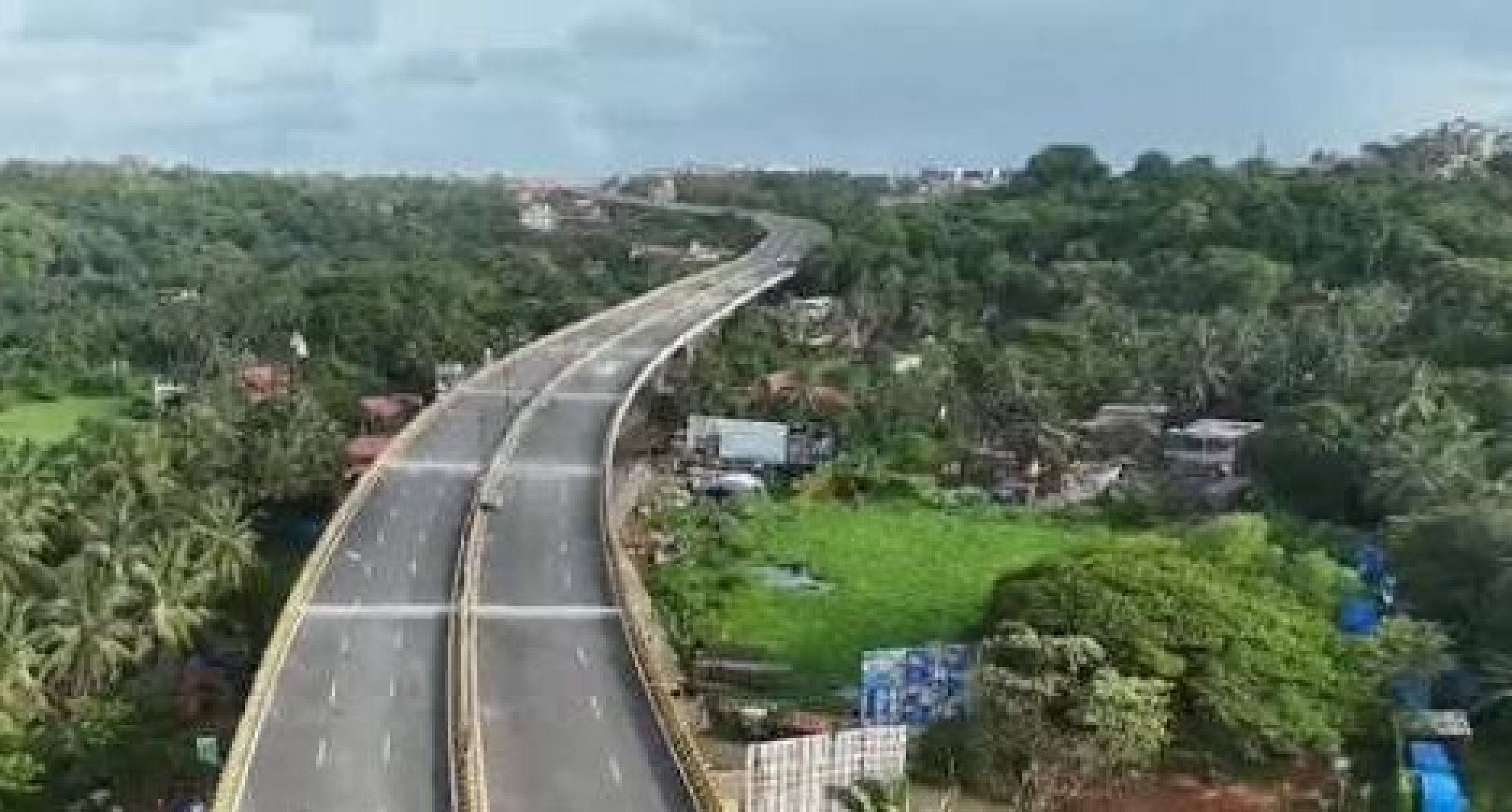
The Porvorim elevated corridor is now approaching precisely that ceremonial transformation.
The 5.5-km corridor is proposed to be inaugurated on September 9 and opened to traffic on September 11. One must admire the punctuality of political enthusiasm. It may struggle to arrive while motorists are negotiating construction hazards, but it seldom misses a ribbon-cutting.
Road became court record
The inconvenient part of the celebration is that the Porvorim corridor possesses a memory.
Long before it became an inaugural stage, conditions surrounding its construction became the subject of PILWP No. 2656 of 2024 (Filing) before the High Court of Bombay at Goa. The official High Court cause list records the PILWP as having been placed before the Division Bench as early as October 24, 2024.
The litigation was not founded upon opposition to infrastructure. Its concern was considerably more elementary: Whether infrastructure could be built while those already using the highway were kept reasonably safe. That is the forgotten biography of the bridge.
Perhaps the most uncomfortable document in this entire history is the Farad Order dated: 18 December, 2024.
As subsequently recorded in published commentary on the continuing PIL, the High Court required that adjoining service roads be properly hot-mixed before further work proceeded, that traffic signage and illumination be provided, that 108 ambulances and motorcycle ambulances be stationed strategically, that emergency numbers be displayed and that traffic marshals assist motorists. Fresh diversions or barricading were also to be preceded by intimation to the Traffic Police.
Apparently, the road user required a High Court proceeding before such mundane necessities became part of an enforceable conversation.
Dust below, development above
The documentary trail did not end there. Later site material recorded dust and gravel affecting traction, poor barricading, inadequate lighting, exposed slopes vulnerable during the monsoon and insufficient traffic regulation. Another submission identified the need for dust suppression and air-quality control alongside barricading, reflective signage, marshals, temporary surface improvement and safer corridors for pedestrians and two-wheelers.
One particularly serious inspection concerned the alleged lifting and transportation of structural components around live traffic. The report recorded civilians and vehicles moving close to lifting operations and the absence of a road safety audit.
Infrastructure also has an amusing habit of outliving political loyalties. Politicians change parties, portfolios and ideological vocabulary considerably faster than reinforced concrete changes alignment. Men who once inhabited one political camp may eventually discover that their convictions are more comfortable elsewhere. Opposition can mature mysteriously into accommodation, and accommodation may, by sheer coincidence, develop into ministerial responsibility.
The present PWD Minister now stands at the governmental front of the corridor's opening. That entitles the office he occupies to participate in its completion. It does not rewrite the project's chronology, nor does any minister acquire retrospective authorship merely by appearing near the finished product.
Porvorim’s gymnasium
of pragmatism
Porvorim itself has not been deprived of political theatre. The MLA of Porvorim Constituency has travelled an interesting ideological road of his own. Political realignment is, of course, perfectly lawful where the law permits it. Yet voters remain entitled to observe that some politicians appear capable of developing extraordinary flexibility precisely when power changes location.
Perhaps Porvorim has produced a new branch of political science: muscular pragmatism.
The electorate supplies the mandate. Political gravity supplies the direction.
And once the representative reaches the larger table of government, every movement is explained in the sacred language of “development”.
Development, one notices, has a curious preference for travelling with ministerial accommodation.
Questions concerning road widening, drainage, access and acquisition also deserve to survive the inauguration.
Where a massive corridor alters a settled highway environment, engineering accomplishment should not terminate scrutiny of how adjoining lands, approaches, storm-water movement and service-road arrangements were handled.
Any wider conclusion about legality of particular acquisitions, however, must depend upon the acquisition notifications, awards, right-of-way plans and corresponding judicial record. Those questions should therefore be investigated rather than casually pronounced upon.
Then there is the Minister of Road Transport & Highways, Government of India, descending upon Goa for the great moment when the public road becomes a political stage.
There is nothing objectionable about a Union Minister inaugurating a national highway project. That is part of public office.
What becomes objectionable is the transformation of public infrastructure into political theatre, particularly when the construction period itself generated repeated complaints about road safety, dust, traffic management and risk.
A corridor cannot be permitted to possess two histories: One miserable history endured by commuters and another glorious history narrated from the inaugural dais.
The first history does not disappear merely because the second comes with garlands.
Electorate should remember
Goans should welcome a safer and faster NH-66. They should also resist the extraordinary proposition that public infrastructure becomes a personal gift from whichever politician happens to be holding the scissors.
The corridor has been financed through public institutions, endured by the travelling public and subjected to judicial scrutiny because public safety concerns persisted during its construction. Even in April 2026, a consolidated submission to the PWD recorded safety concerns concerning warning systems, debris, visibility and heavy-vehicle movement, followed by a scheduled joint meeting with officials.
Thus, when the chairs are arranged, the speeches delivered and the inaugural convoy rolls smoothly over virgin asphalt, a different question should also be asked.
Where was this abundance of political tenderness when the commuter was underneath it? In 2027, the electorate need not oppose development to demand an answer. It need only possess a memory.