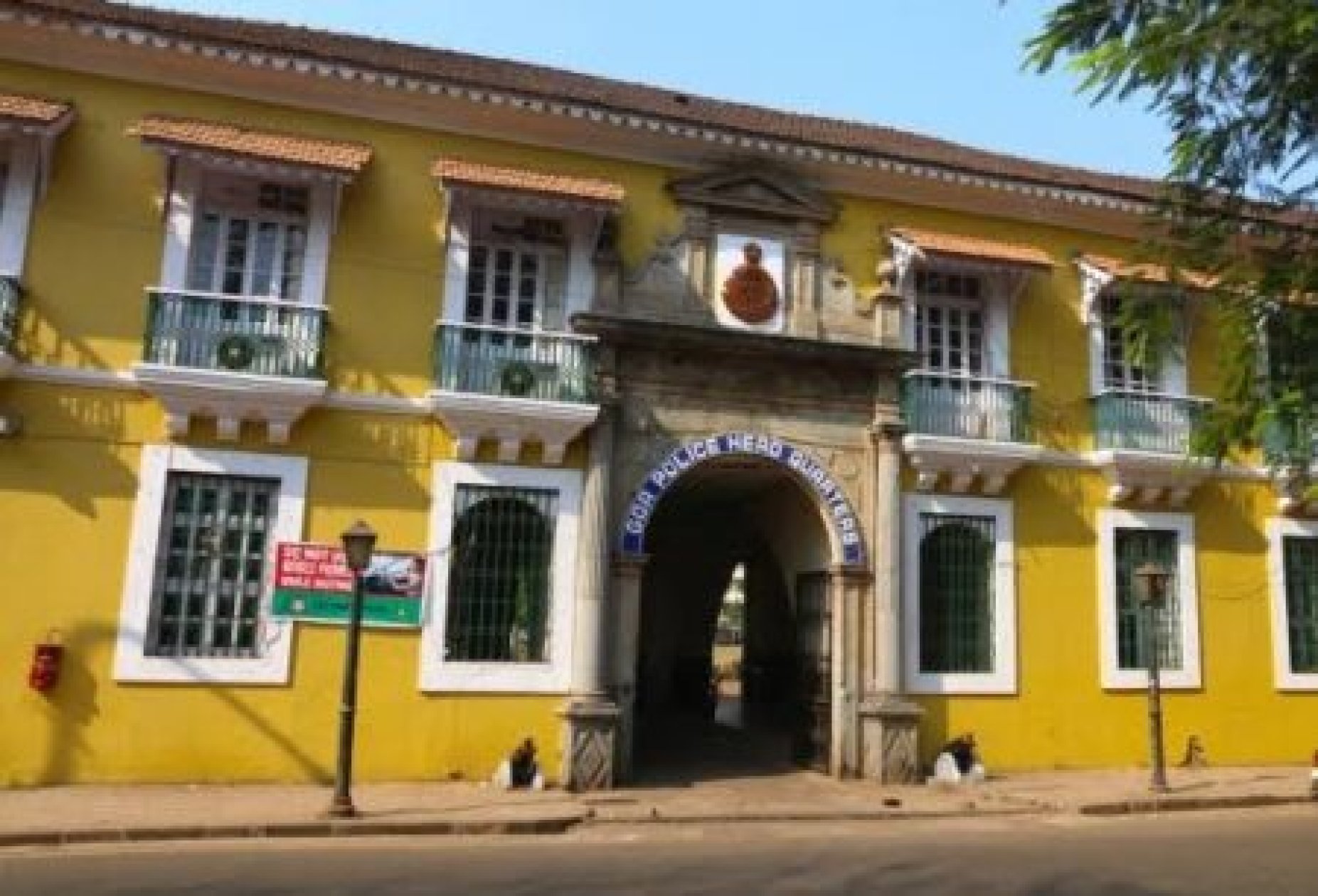
The severe reprimand of the Goa Police by the High Court of Bombay at Goa over the delay in registering an FIR for the Borim temple incident highlights critical flaws in police accountability and response times, pointing more directly to institutional inertia and administrative failure.
Opinions on policing in Goa are mixed. Official state data however confirms Goa maintains a high police crime detection rate ranging between 86% and 94% across recent annual evaluations, often cited as among the highest in India.
In contrast though, the overall judicial conviction rate remains low at roughly 20% to 33%, reflecting a wide gap between solving cases, filing charges, and securing court convictions.
Are ‘procedural lapses’ the cause for this alarming disparity between detecting crimes and gaining conviction!
In fact, poor coordination between police and public prosecutors creates weak cases, delayed trials, and lower conviction rates in the criminal justice system. When these two agencies fail to communicate effectively during investigations, vital evidence gets lost and accountability suffers.
While they are major contributors to the widening chasm between high crime detection/registration and low conviction rates in the criminal justice system, they are part of a larger, multi-layered systemic crisis rather than the sole root cause.
A procedural lapse refers to a deviation, omission, or irregularity in following the prescribed legal procedure during arrest, search, or investigation. These errors can weaken a criminal case, lead to evidence being thrown out, or result in the accused person being set free.
While there is no rigid statutory time limit to lodge an FIR for most cognizable offences, a delay impacts the credibility of the prosecution’s case and is heavily scrutinized by courts.
It is alleged that the relationship between the Goa Police and procedural lapses often appears complementary because systemic pressures, high tourist influx, and resource limits directly feed into recurring investigative mistakes, which in turn routinely result in court acquittals rather than successful prosecutions.
Systemic pressures and field realities shape police investigations by creating heavy workloads, political interference, and resource limits. These factors force officers to make difficult choices under stress. They directly impact how evidence is gathered and cases unfold on the ground.
Tourism thrives along the coastal belts of the state. Along with it comes the perils of a sector that has been eroded by the malaises of illegal drug trade and related criminal activities.
Evaluating procedural lapses by the Goa Police in high-traffic coastal zones requires factoring in complex event-policing challenges, such as managing massive tourist crowds, illegal beach parties, traffic bottlenecks, and acute seasonal congestions along narrow coastal stretches.
With police stations facing perennial shortage of staff, authorities rely on temporary deployments of specialized units, reserve battalions, and proposed auxiliary safety frameworks to bridge the manpower gap during peak seasons.
Chronic fatigue from long hours and heavy workloads compromises field performance in law enforcement, frequently resulting in bypassed safety and procedural steps during high-pressure operations.
Within the Goa Police force, administrative strains, staffing shortfall, and intensive public-order duties amplify these operational risks.
High-visibility environments mean routine cases face intense public and media spotlight, occasionally leading to rushed paperwork or reactive measures that can lead to error.
Excessive public and media scrutiny over policing methods generally hinders investigations by compromising evidence integrity, inducing tunnel vision, and straining community trust.
While public oversight ensures accountability, intense media pressure often forces premature conclusions, intimidates witnesses, and distracts law enforcement with public relations.
High-profile cases draw massive media attention, creating intense public scrutiny that forces police to fast-track investigations, deploy senior officers, and hold frequent press briefings.
However, this pressure can also lead to rushed evidence gathering, compromise case integrity, and sensationalized ‘media-trials’ that sway public opinion before a court trial begins.
It is well-known that legal systems require verifiable evidence to establish facts and prove a case beyond reasonable doubt. Courts rely on rules of evidence rather than assumptions or unverified claims to render decisions.
In an era where criminals have managed to stay a step ahead of criminal investigative agencies, gathering evidence has become an onerous task for the police today because digital data moves fast, technology is complex, privacy laws are strict, and public trust is low.
It is no secret that modern crimes use hidden tools, making old ways of investigation slow and difficult.
One has to admit though that police departments often lack the modern tools and funding needed to fight tech crime. However, while resource gaps historically hindered local investigations, Goa Police are reported to have actively upgraded their tech infrastructure.
Nevertheless, concerns regarding the effectiveness of criminal investigations by the Goa Police stem are less from a complete absence of modern tools and more from persistent operational and systemic gaps.
Trust in law enforcement is generally viewed by criminologists and public administration experts as something that must be earned through consistent transparency, procedural fairness, and accountability, rather than simply expected or taught.
As elsewhere in the country, political interference in police work in Goa remains a central issue of concern, with critics, opposition leaders, and civil society groups arguing that unwarranted political influence from ruling legislators and ministers compromises independent investigations, demoralizes honest officers, and damages public trust.
Political control often turns police into tools for ruling parties rather than impartial defenders of the public. Police must move away from the grip of politicians to stop partisan abuse of law enforcement, ensure fair investigations, protect human rights, and restore public trust.
However, holistic structural police reforms in India, notably insulating the police from political control, remain elusive due to deep-seated executive resistance, federal dynamics, and the reluctance of state governments to surrender administrative and disciplinary authority over the force despite clear Supreme Court directives. Effective policing urgently calls for systemic changes to accountability and working conditions.