MAPUSA
For a prison, the most important barrier is the one that separates the outside world from the people inside.
At Central Jail in Colvale, that barrier appears to have been breached repeatedly.
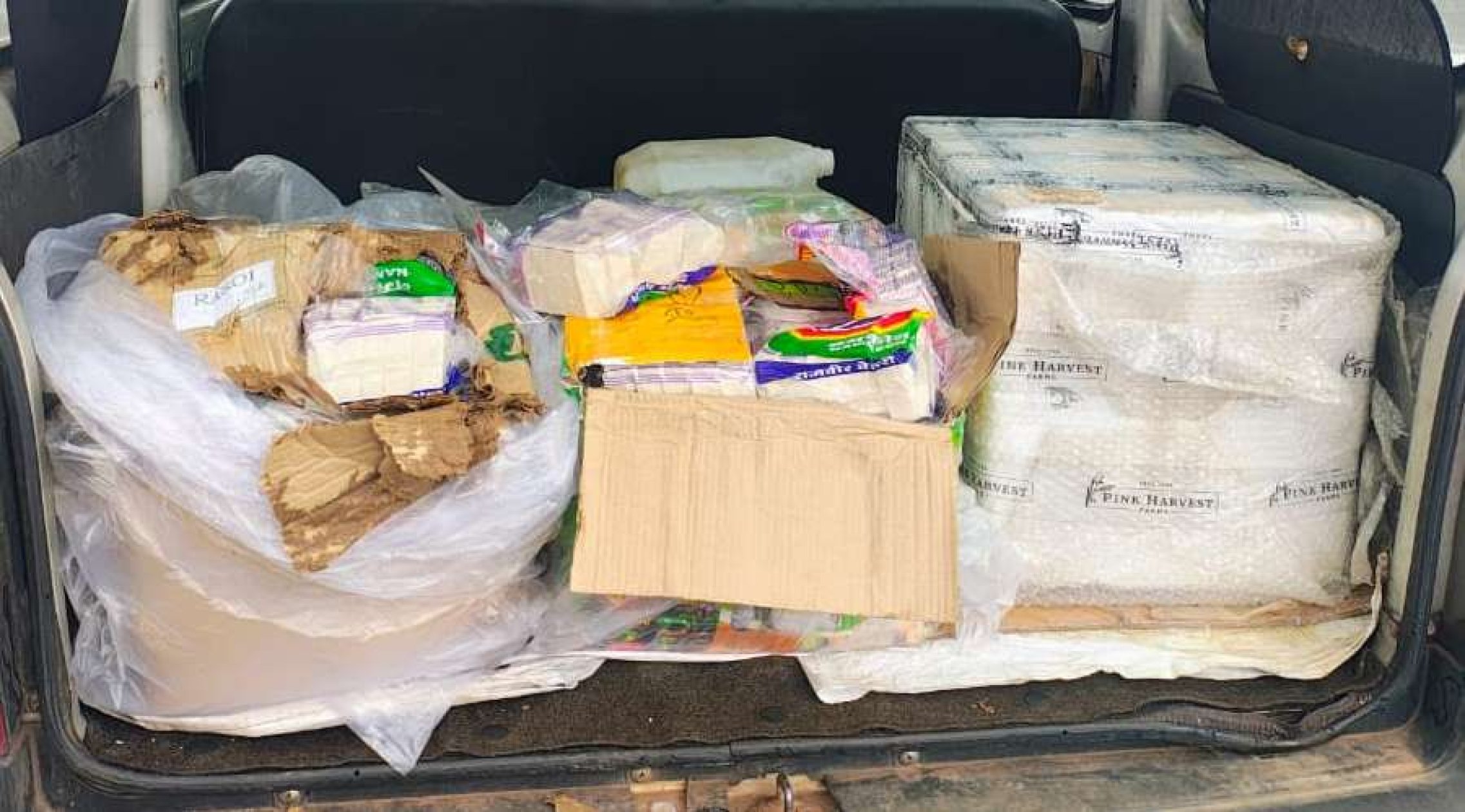
The latest alleged attempt to smuggle suspected ganja and charas into the prison by a woman security guard has once again turned the spotlight on a problem that has persisted for years – how does contraband continue to find its way into one of Goa’s most restricted establishments despite repeated seizures, staff suspensions and successive security measures?
What makes the latest incident more than another isolated seizure is the trail that precedes it.
Over the years, Colvale jail has seen drugs, tobacco, mobile phones, SIM cards, chargers, power banks and other electronic gadgets being recovered from inmates. There have also been cases in which prison personnel and police personnel were allegedly caught attempting to carry prohibited substances into the premises.
And now, a recent Crime Branch investigation has allegedly uncovered something more disturbing – a narcotics network in which an inmate was allegedly using a mobile phone to coordinate activities outside the prison.
The picture that emerges is therefore not simply one of prisoners possessing contraband. It raises questions about how prohibited articles cross multiple layers of security and whether the problem is rooted in individual lapses or a deeper weakness in the prison's internal intelligence and surveillance system.
Repeated breaches despite tight security
In April 2025, the government disclosed that five instances of prison staff allegedly attempting to push narcotics into Colvale jail had been detected over a seven-year period. The substances involved included cocaine, charas and ganja.
The government disclosure also listed 11 jail staffers who had been suspended over allegations involving smuggling of prohibited articles, including drugs, liquor and tobacco.
The significance of those figures lies in the fact that prison staff are not ordinary visitors. They have authorised access to the premises and are expected to be part of the security mechanism designed to prevent exactly such breaches.
The problem has continued despite efforts to tighten security. In July 2024, 81 IRB personnel deployed for prison security had reportedly been transferred amid concerns over smuggling. Restrictions were also imposed on outside food supplied to inmates.
Yet the prohibited articles continued to surface. In September 2025, a search of the prison resulted in the recovery of eight mobile phones, two grams of ganja and five packets of imported tobacco. The seizure was significant not merely because of the narcotics, but because of the continuing presence of communication devices inside a high-security prison.
When gatekeepers become the weak link
The breach has not been confined to inmates. In April, police arrested constable Sumesh Mandrekar for allegedly attempting to take around 1.65 kg of ganja into the prison. The contraband was reportedly packed into four packets.
In March, two undertrial prisoners were allegedly caught with suspected ganja concealed inside their footwear after returning from medical examinations. In one case, 143 grams of suspected ganja was reportedly recovered from inside flip-flop sandals.
For prison authorities, cases involving personnel are particularly sensitive because they raise the possibility of an insider being used to bypass security procedures. A senior police officer, speaking on the recurring seizures, said the pattern warranted a closer examination of possible internal connivance and intelligence gaps.
“The alleged use of mobile phones and UPI transactions by an inmate to coordinate with an external drug network points to gaps in the prison’s intelligence and surveillance mechanisms. There is an urgent need to strengthen prison security by deploying modern technology and intelligence systems that are readily available today,” the officer said.
The question, then, to be asked is whether security breaches are merely individual acts or whether they point to vulnerabilities within the system itself.
161 phones and counting
The concern becomes sharper when viewed alongside the repeated recovery of mobile phones. Between 2017 and May 2025, the government had disclosed that 161 mobile phones were confiscated from prisoners at Colvale, with 171 prisoners reportedly caught with banned articles during the period.
The recovery of phones is not merely a question of inmates possessing prohibited gadgets. A mobile phone can potentially give an inmate access to the outside world, allow communication with associates and facilitate activities that are difficult for prison authorities to monitor.
In the context of the recent Crime Branch investigation, the presence of such devices assumes an even greater significance. In January this year, another major search reportedly resulted in the seizure of 48 mobile phones, along with chargers, power banks, Bluetooth earphones, ganja, charas and tobacco.
The scale of the mobile-phone recovery raises an obvious question: if such devices are repeatedly being found inside the prison, how are they getting past the security arrangements in the first place?
The list of prohibited gadgets recovered over the years also extends beyond phones to SIM cards, chargers, data cables, earphones and power banks. While not every electronic device is necessarily linked to criminal activity, the continued availability of such equipment creates a potential communication channel between inmates and the outside world.
From concealed ganja to suspected network
The most serious development, however, has been the recent Crime Branch investigation into an alleged drug network linked to an inmate at Colvale. According to police, an accused who had earlier been lodged at Colvale allegedly established contact with convicted NDPS accused Azrudeen Achi alias Asaru, who was allegedly operating a drug distribution network from inside the jail.
Police reportedly used custodial interrogation and technical analysis of mobile-phone data to trace the alleged network. The investigation subsequently led to the identification of alleged associates outside Goa, including persons operating from Delhi.
If established, the allegations would represent a significant escalation from individual inmates possessing small quantities of drugs to the possibility of organised criminal activity being coordinated from behind prison walls.
It also brings the mobile-phone problem into sharper focus. A phone inside a prison is not merely a prohibited possession. It can become a communication channel linking an inmate to people outside, potentially allowing instructions, payments and transactions to be coordinated beyond the reach of ordinary prison supervision.
The alleged use of WhatsApp and UPI in coordinating an external drug network makes the repeated recovery of phones particularly significant. The question is no longer simply how a prisoner acquired a phone. It is whether the phone became a tool to extend criminal operations beyond the prison.
The other side of the prison wall
But there is another side to the issue – one that concerns the manner in which inmates, particularly undertrials, are treated.
Criminal lawyer Adv Vinayak Porob said prison authorities needed to adopt a more nuanced approach towards inmates, particularly those who have not yet been convicted.
While advocating a firm approach towards hardened criminals, Porob said undertrials should not be treated in the same manner as convicted prisoners.
“An undertrial is not a convicted criminal, and that distinction must be kept in mind. Many undertrials remain in prison for three to five years while their cases are pending, which can be extremely frustrating. They should be allowed reasonable and regulated contact with their families. The authorities need to put in place a proper mechanism that enables inmates to stay in touch with their relatives while maintaining necessary security safeguards,” Porob said.
His argument points towards one of the more complicated challenges facing prison administrators – how to prevent unauthorised communication without cutting off legitimate communication between prisoners and their families.
The answer may therefore not simply lie in more restrictions. A more sophisticated system could involve controlled communication facilities, monitored prison telephones, stricter digital surveillance, better screening technology, intelligence gathering within the prison and continuous monitoring of staff and inmate movements.
The objective would be to close the channels that facilitate criminal activity without unnecessarily restricting legitimate contact between undertrials and their families.
Questions Colvale still cannot answer
The prison has seen changes in security personnel, restrictions on outside food, searches and seizures. Yet mobile phones and narcotics continue to surface.
The issue, therefore, may not simply be about the absence of security.
It could be about the effectiveness of the security that is already in place.
A high-security prison does not necessarily become secure merely because more personnel are deployed at its gates. Security also depends on intelligence, internal checks, surveillance, staff integrity, technological monitoring and the ability to identify patterns before prohibited material reaches an inmate.
Every seizure at Colvale prompts the same uncomfortable question:
If the contraband keeps getting caught, how much more is getting through? That is perhaps the central question for Goa's prison authorities.