PANAJI
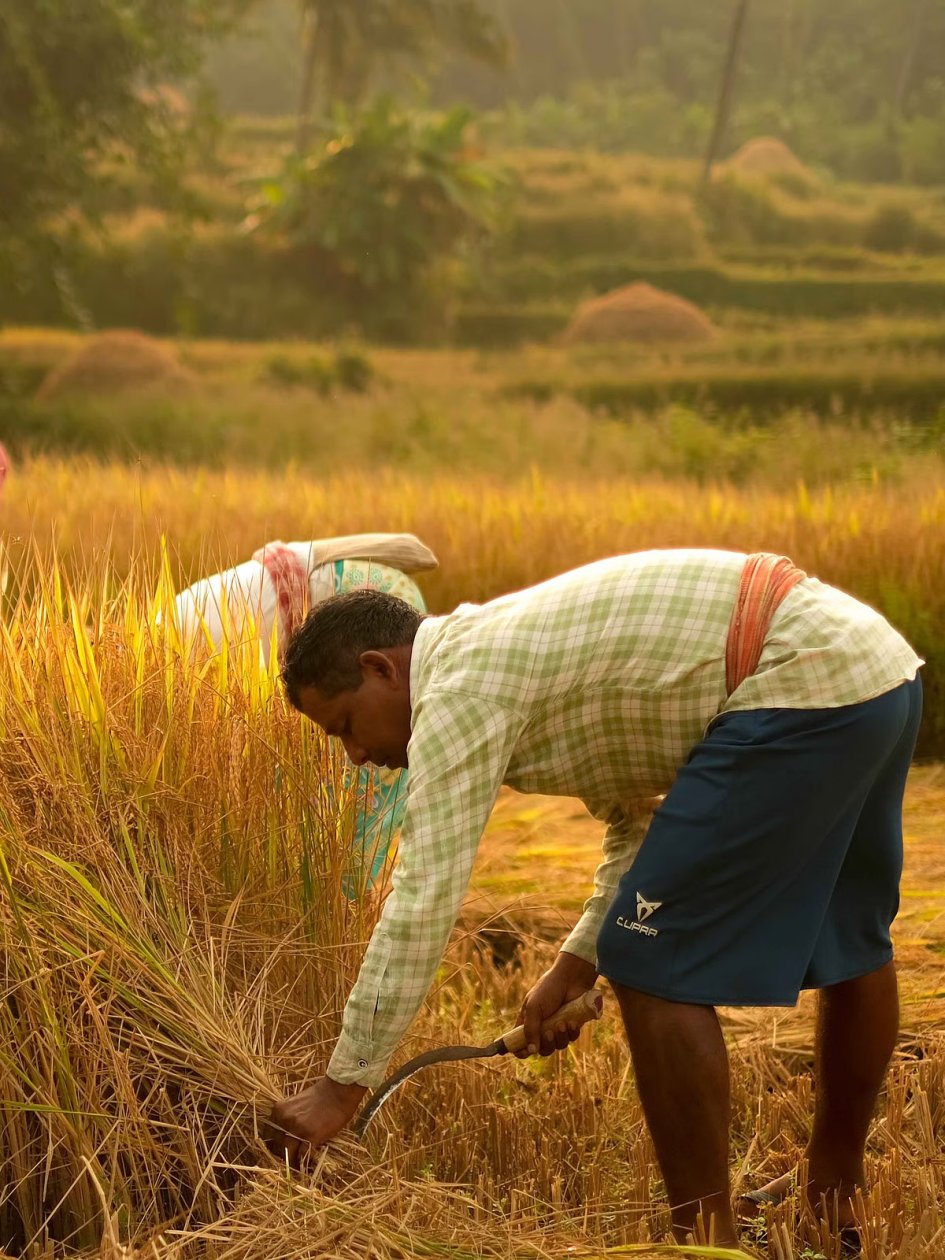
As Goa's paddy fields turn golden and harvest season approaches, farmers are waiting for the final verdict on a monsoon that never quite behaved as expected.
The El Niño year brought a deficient and erratic southwest monsoon. Long dry spells in June, July and parts of August cast a shadow over kharif cultivation. Transplantation schedules went awry and anxiety runs high across Goa's largely rain-fed farming landscape.
But, unlike many had feared, the season doesn't seem to be descending into a disaster.
A timely revival of rains in August may have rescued large stretches of the State's kharif paddy crop.
"Several areas were under stress due to insufficient rainfall, but the showers received later in August helped revive large stretches of paddy fields," a North Goa Zonal Agriculture Officer said, adding however that yields will definitely be lower this year.
The real impact, officials insist, will only become clear once harvesting begins in earnest although ZAOs across the State have begun a survey to assess the forecast.
The department in its preliminary estimates has suggested that about 2,000 hectares may have faced drought damage.
This year's challenge was not merely deficient rainfall. It was rainfall arriving at the wrong time.
"The biggest challenge was the erratic nature and periodicity of the rains and not just the shortfall," an agriculture officer from Salcete said.
"Some areas received enough rainfall in a short period, while others went through prolonged dry spells during critical stages of crop growth," he added.
The uncertainty forced many farmers into difficult decisions. Seedlings were ready. Fields were not.
In several villages, transplantation had to be delayed because standing water was unavailable. Some farmers even pumped water from wells into their fields to save their nurseries. In Benaulim, a viral social media video showed water being pumped into church-owned paddy fields to facilitate transplantation.
For a crop that depends heavily on timing, such delays can carry hidden costs. Shortened growing periods often affect grain formation and final yields.
That is why agriculture officials remain cautious despite the healthy appearance of many standing fields.
"We do not expect a complete crop loss because rainfall improved during the latter half of the season," Agriculture Director Chandrahas Naik Desai said. "However, yields may vary significantly from village to village."
Veteran agriculturist Miguel Braganza believes the crop has largely held up so far. But he warns that paddy needs adequate moisture during grain filling. Otherwise, farmers may see more "poll" or chaffy ear-heads, where grains fail to develop properly.
Others are more optimistic. Farmer mentor Santan Rodrigues of Curtorim credits Goa's traditional water management systems for cushioning the impact.
"Our ancestors planned the watershed with vision," Rodrigues said. "Water is still being retained and community efforts are helping sustain cultivation through traditional methods."
The season has also exposed a larger reality.
Climate change is no longer a distant theory discussed in seminars and policy papers. It is now influencing decisions in the field. Last year, excessive rain damaged crops at harvest. This year, farmers worried about too little rain during cultivation.
"The experience of this season shows why climate-resilient agriculture is becoming so important," an agriculture extension officer at the department's Ella, Old Goa centre said.
As of now, Goa's paddy fields appear to have survived an unforgiving monsoon. But appearances can deceive and only the actual harvest, when farmers thresh their grain and count their bags will Goa know the true story and the real cost of a monsoon shaped by El Niño.