PANAJI
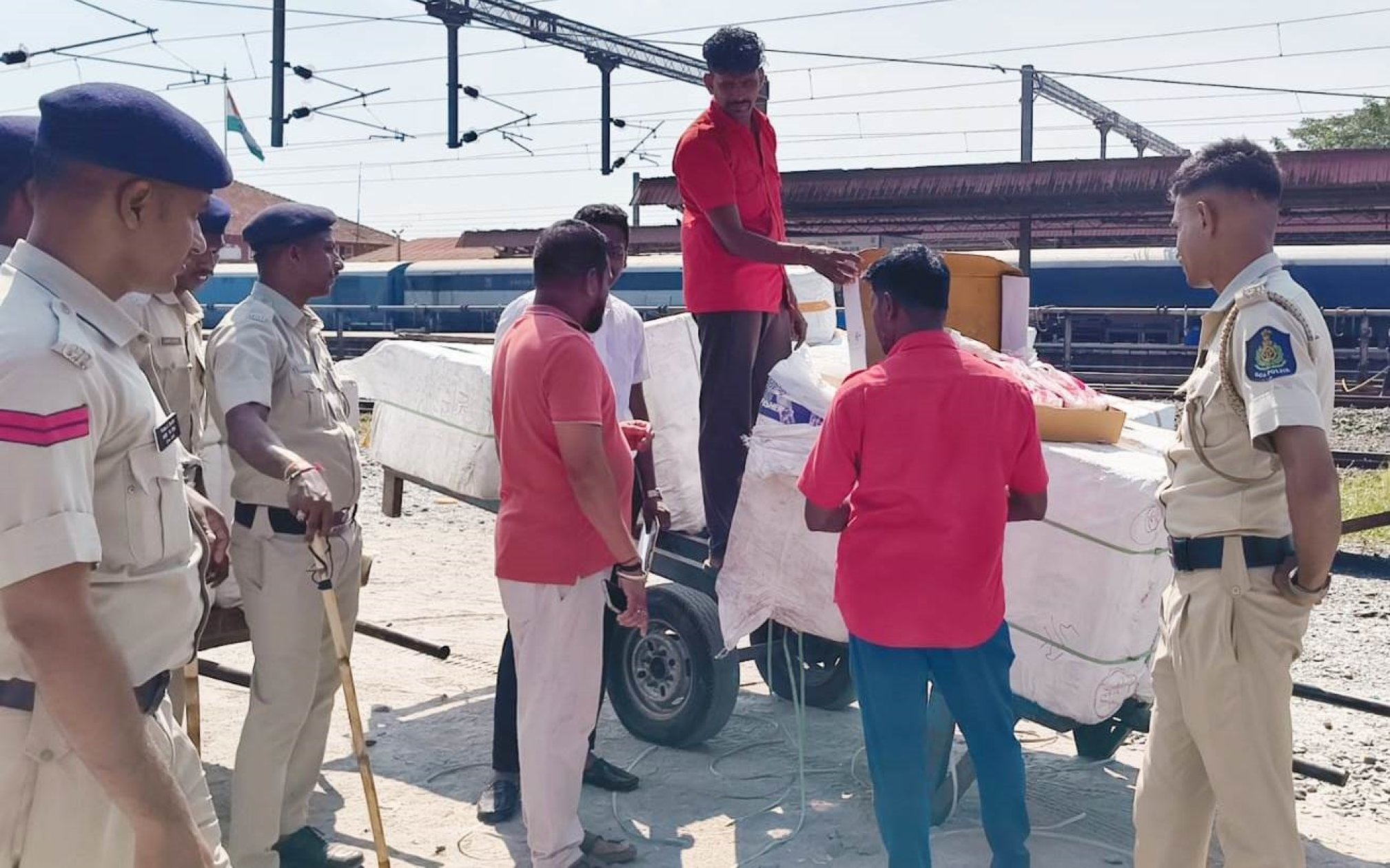
When Health Minister Vishwajit Rane announced that the Food and Drugs Administration (FDA) had seized and ordered the destruction of over 6,000 kilograms of raw chicken deemed unfit for human consumption, it sent shockwaves in the State.
For many, the bigger question was not the action of seizing such a large quantity of raw chicken but everything about what was not seized, sold and consumed.
Where does the chicken sold in Goa actually come from? How much of it is imported? How closely is it monitored? And if thousands of kilograms could slip through the net before being caught, is Goa's food safety machinery equipped to deal with a supply chain of this magnitude?
The recent crackdown has naturally brought these uncomfortable questions into sharp focus.
Goa runs on imported chicken
Goa cannot meet the requirements of its population and tourism industry through local poultry production alone. According to trade representatives and poultry operators, local production meets barely 10 per cent of the State's requirement, with the remaining 90 per cent sourced from outside.
Industry estimates place Goa's daily demand at anywhere between 80,000 and one lakh birds. This demand rises sharply during the tourism season. Sources in the local poultry trade said Karnataka and Maharashtra are the main suppliers of live birds, while Kerala and Tamil Nadu also contribute significantly. Processed and frozen chicken consignments increasingly arrive from more distant markets, including Delhi and other regions of central and northern India.
Officials from the Animal Husbandry and Veterinary Services Department explained that two supply chains operate side by side. One involves live birds transported in specialised poultry vehicles from neighbouring States and slaughtered locally. The other involves dressed, chilled or frozen chicken transported over long distances and distributed directly to wholesalers, retailers, hotels and restaurants.
How supply chains can go wrong
It is this second category that has become the focus of recent FDA action. A chicken consignment arriving in Goa often passes through multiple hands before reaching consumers. Birds or processed meat leave farms, slaughterhouses or cold storage units in another State and are transported by road, rail or a combination of both. They then move through wholesalers, cold storage facilities and distributors before reaching restaurants, meat shops and supermarkets.
Veterinary officials said every consignment should ideally be supported by health certification, source details and transport documents. Chilled and frozen meat must also remain within prescribed temperature ranges throughout its journey. However, physically verifying every consignment is impractical.
The weaknesses in this supply chain were highlighted by the seizures at Margao railway station and Verna. At Margao, FDA officials found chicken allegedly transported from Delhi in thermocol boxes without the prescribed cold-chain maintenance. The meat had spent nearly 36 hours in transit. In the second case, several thousand kilograms of chicken stored at a cold storage facility in Verna lacked proper labelling and supporting documentation.
Neither case sounds dramatic, but to food safety experts, a break in temperature control can turn otherwise safe food into a serious public health hazard.
Why does FDA often look reactive?
This is perhaps the most common criticism aimed at food safety regulators: Why are authorities always seizing chicken after it arrives rather than preventing it from entering the market in the first place?
A senior FDA official said the department constantly monitors transport hubs, check-posts, storage facilities and markets. FDA Director Shweta Dessai said consignments entering Goa are tracked through major border entry points, including Patradevi and Pollem. "Surveillance has escalated significantly over the past year or so," Dessai said.
Nonetheless, the perception remains that enforcement is only reactive, and the reason lies solely in the sheer scale of the chicken trade. With dozens of vehicles entering Goa every day carrying poultry and meat products, regulators clearly face a logistical challenge.
A consignment can enter through one route, be unloaded at another location and then distributed across multiple geographical regions of the State within hours. A food inspector, who did not want to be identified because he is not authorised to speak to the media, said that unlike drugs or packaged foods, fresh meat moves quickly. "We therefore rely on intelligence, sampling, document verification and surprise inspections rather than continuous, 24x7 monitoring of the movement of consignments," he said.
A senior veterinary official, speaking on condition of anonymity, admitted that no State can possibly inspect every kilogram of meat entering its borders physically.
"The objective, instead, is to create a surveillance threshold that becomes a deterrent and discourages violations," the veterinarian said.
Can ‘Mundhe-style’ crackdown be pulled off?
Following the recent seizures in Goa, many feel a tougher and more visible enforcement model, on the lines associated with Maharashtra bureaucrat Tukaram Mundhe, needs to be implemented.
Frequent surprise raids, strict penalties, accountability and high-visibility enforcement create immediate pressure on offenders. Nobody wants to be the next transporter or trader caught with an illegal consignment.
Rane, meanwhile, has signalled a more aggressive approach, warning that suppliers, distributors and even restaurants sourcing meat from unauthorised operators could face action. However, Goa's FDA is not a large organisation. The department is not confined to monitoring just meat and poultry. While this crackdown can create headlines and raise some degree of awareness, maintaining this level of compliance will require an expansion of the system.
What really needs to be done?
Government officials as well as representatives of the poultry industry, broadly agree on a few priorities, including digital mapping and periodic regulatory audits of every transporter, wholesaler, cold storage unit and distributor dealing in poultry. Temperature-controlled transportation can no longer be treated as optional, an official said.
The FDA's recent actions have indeed sent a message, but the real test now is whether Goa can move beyond these headline-grabbing seizures and instead create a system where unsafe meat is intercepted before it enters the market and eventually reaches a consumer's plate.