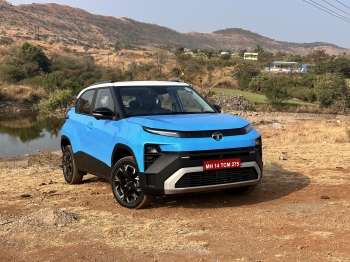
The Tata Punch has carved a unique space for itself in India’s crowded sub-Rs 10 lakh market by blending compact dimensions with SUV-like toughness and class-leading safety. Since its launch, the Punch has appealed to buyers who want something sturdier than a hatchback but easier to live with than a full-fledged SUV. However, as rivals became more feature-rich and powerful, the Punch began to feel due for a proper update. The 2026 facelift answers that call with meaningful mechanical upgrades, refreshed styling and a smarter feature mix. After spending time behind the wheel, it’s clear this isn’t just a cosmetic refresh”it’s a strategic evolution.
Exteriors
Tata has chosen refinement over reinvention when it comes to the Punch’s design. The upright stance and squared-off proportions remain intact, preserving the car’s bold road presence. What’s new is the detailing. The earlier oversized halogen headlamps have been replaced by sleeker, vertically stacked LED units that immediately modernise the front end. Slim DRLs give the nose a cleaner look, while the redesigned bumper with black and silver accents adds visual contrast.
Around the back, the connected LED tail-lamp strip is a welcome update and helps the Punch feel more premium than before. The new 16-inch alloy wheel designs also add freshness. That said, the extensive black body cladding continues, which reinforces the rugged appeal but slightly dulls the overall elegance. Still, for buyers who like their cars looking tough and purposeful, the Punch facelift delivers.
Interiors
Inside, the Punch facelift feels familiar but improved in the areas that matter most. The dashboard layout hasn’t changed dramatically and can still feel a bit busy, especially compared to newer rivals. Hard plastics dominate, and the lack of soft-touch materials on the doors and upper dashboard is noticeable. However, Tata has focused on usability and comfort rather than outright luxury.
The new denim-fabric upholstery looks contemporary and gives the cabin a fresher vibe. More importantly, the seats have been reworked with better contouring and improved under-thigh support, making long drives far more comfortable than before. Space remains best suited for four adults, with decent headroom and excellent outward visibility thanks to the tall seating position. Boot space is generous at 366 litres in petrol versions, though it drops to 210 litres in CNG variants due to the twin-cylinder layout.
Tech and safety
One area where the Punch facelift really shines is feature availability. Tata has ensured that convenience and tech are spread sensibly across variants and powertrains. The standout addition is the new 10.25-inch touchscreen infotainment system, which supports wireless Android Auto and Apple CarPlay and feels responsive in daily use. Higher trims also get a sunroof, wireless phone charging, a Harman-tuned sound system and a 360-degree camera”features rarely seen together at this price point.
Safety continues to be the Punch’s strongest card. With a 5-star Bharat NCAP rating, the car offers peace of mind that few rivals can match. Standard safety equipment includes ABS, electronic stability control and multiple airbags, reinforcing Tata’s focus on structural integrity and occupant protection.
Engine and specs
The biggest headline change is under the hood. The Punch now gets a 1.2-litre turbocharged petrol engine borrowed from the Nexon. Producing 120 horsepower and 170 Nm of torque, it instantly transforms the Punch into one of the quickest cars in its segment. This engine is paired exclusively with a 6-speed manual gearbox.
The familiar 1.2-litre naturally aspirated petrol engine continues, producing 88 horsepower on petrol and 73 horsepower in CNG form. Transmission options here include a 5-speed manual and a 5-speed AMT. Tata also offers a factory-fitted CNG option, making the Punch one of the most versatile choices in the micro-SUV space.
Drive
On the road, the turbo-petrol Punch feels genuinely lively. There is a hint of turbo lag at low revs, but once the needle crosses 2,000 rpm, the engine pulls strongly and delivers confident acceleration. Overtakes are effortless, and highway cruising feels relaxed, with triple-digit speeds achieved without stress. However, push the engine hard and some vibrations creep into the cabin, reminding you of its three-cylinder nature. The gearbox feels slightly notchy, and the long clutch travel can become tiring in bumper-to-bumper traffic.
The naturally aspirated engine, especially in CNG-AMT form, is more relaxed and efficiency-focused. Surprisingly, the inclusion of paddle shifters actually improves usability, allowing better control during overtakes. Ride quality remains class-leading, soaking up broken roads with ease. The suspension setup inspires confidence, while the 190 mm ground clearance and compact footprint make the Punch feel at home on rough terrain.
Verdict
The 2026 Tata Punch facelift successfully addresses the gaps of the outgoing model. It looks fresher, drives better and offers more features without losing its core strengths. While rivals may edge ahead in fuel efficiency or interior finesse, the Punch counters with exceptional ride comfort, a wide choice of powertrains and unmatched safety credentials. If you’re looking for a compact, tough and well-rounded car under Rs 10.5 lakh, the updated Punch makes a compelling and confident case.