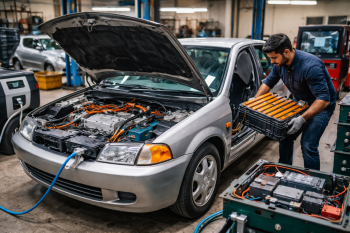
Electric vehicles are often discussed as the future of mobility. However, buying a brand-new electric car is still expensive for many people. This is where EV retrofitting comes in. EV retrofitting is the process of converting an existing petrol or diesel vehicle into an electric vehicle by replacing its internal combustion engine with an electric power system.
The idea has gained fresh attention after Delhi introduced policy support for EV retrofitting as part of its push for cleaner transport. By recognising retrofitting in its electric vehicle policy framework and proposing incentives for such conversions, the Delhi government has highlighted retrofitting as a practical alternative to scrapping older vehicles. Instead of forcing owners to buy new EVs, retrofitting allows existing vehicles to be reused and powered by electricity, helping cut pollution while keeping costs in check.
How EV retrofitting works
The retrofitting process starts by removing parts that are no longer needed. This includes the engine, fuel tank, exhaust system, and related components. These are replaced with an electric motor, a battery pack, a motor controller, and a charging system.

The electric motor provides power to the wheels, while the battery stores electricity. The controller manages how power flows from the battery to the motor. A charging port is added so the vehicle can be charged from a standard or fast charging point, depending on the system installed.
Once converted, the vehicle runs entirely on electricity and produces no exhaust emissions.
Types of vehicles that can be retrofitted
Most commonly, small cars, hatchbacks, taxis, delivery vans, and three-wheelers are retrofitted. These vehicles are often used daily and cover short to medium distances, making them suitable for electric conversion.
Heavier vehicles such as buses and trucks can also be retrofitted, but the process is more complex and costly due to higher battery and power requirements. Not all vehicles are suitable for retrofitting, as structural strength, weight capacity, and space for batteries are important factors.
Benefits of EV retrofitting
One of the biggest advantages of EV retrofitting is cost savings in the long run. Electricity is cheaper than petrol or diesel, and electric vehicles have fewer moving parts. This means lower maintenance costs, as there is no engine oil, clutch, or exhaust system to repair or replace.
Another key benefit is reduced pollution. Retrofitted EVs produce zero tailpipe emissions, which helps improve air quality, especially in cities. This is important in areas with heavy traffic and rising pollution levels.
EV retrofitting also supports sustainability. Manufacturing a new vehicle requires large amounts of energy and raw materials. By converting an existing vehicle, resources are saved and waste is reduced. It extends the useful life of a vehicle that might otherwise be discarded.
Legal and safety aspects
EV retrofitting is regulated in many countries to ensure safety. Converted vehicles must meet approved technical standards and pass inspection tests before they can be registered for road use. These checks ensure that the battery, wiring, braking system, and overall vehicle balance are safe.
Vehicle owners must also update registration documents to reflect the change from petrol or diesel to electric. Insurance providers usually need to be informed as well.
Using authorised retrofit kits and certified workshops is important. Poor-quality conversions can be unsafe and may not be legally approved.
Cost of EV retrofitting
The cost of EV retrofitting depends on several factors, including vehicle type, battery size, driving range, and quality of components used. Small cars usually cost less to convert, while larger vehicles require bigger batteries and stronger motors.
Although the upfront cost may seem high, many owners recover this through fuel savings and lower maintenance expenses over time. For commercial vehicles such as taxis and delivery vans, the savings can be significant because of daily usage.
Delhi’s policy push on EV retrofitting
The idea of EV retrofitting has received a policy boost in Delhi. Under the city’s proposed electric vehicle policy framework, the government has recognised retrofitting as a tool to reduce pollution and accelerate the shift to cleaner transport. The draft policy proposes financial incentives for vehicle owners who convert their petrol or diesel vehicles into electric ones using approved retrofit kits.
The aim is to encourage people to convert existing vehicles instead of scrapping them, especially in a city where air pollution is a serious concern. Delhi already has a regulatory process in place for approving retrofitted vehicles, including safety certification and registration updates. If implemented fully, this policy could make EV retrofitting more affordable and widely accepted.
Limitations and challenges
Despite its advantages, EV retrofitting has limitations. The driving range of a retrofitted vehicle is often lower than that of factory-made EVs. Charging infrastructure may also be limited in some areas.
Battery replacement after several years can be expensive, although battery technology is improving steadily. There is also limited awareness about EV retrofitting, which slows adoption.
Is EV retrofitting important?
EV retrofitting offers a practical bridge between traditional vehicles and fully electric mobility. It makes electric transport more accessible and affordable, especially in countries where millions of petrol and diesel vehicles are already on the road.
By reducing emissions, saving resources, and lowering running costs, EV retrofitting plays an important role in cleaner and more sustainable transport. As technology improves and awareness grows, it has the potential to become a mainstream solution rather than a niche option.
In essence, EV retrofitting is not just about changing how a vehicle runs. It is about rethinking how mobility can be cleaner, smarter, and more responsible without replacing everything we already own.