ADV SAVIO CORREIA
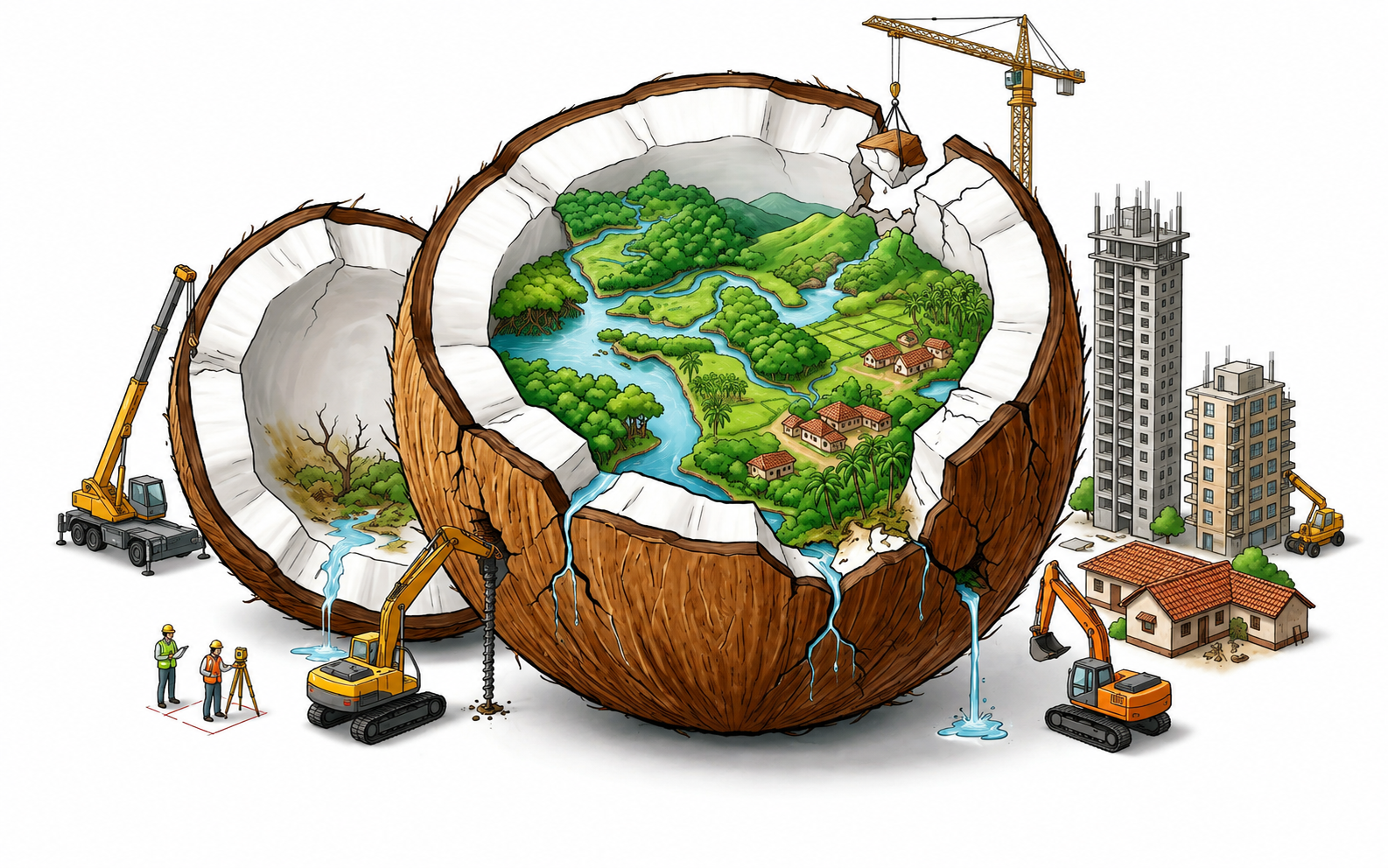
Goa's true wealth is not its real estate. It is the land: the scenic beaches and sand dunes, the green hills and plateaus, the khazans, mangroves, springs and rivers, and the dense village biodiversity that make Goa unlike anywhere else in India.  This ecology is its USP. Visitors come for the landscape that concrete is steadily replacing and, increasingly, for the peace, tranquillity and social harmony that are drawing people from across India in droves to settle here as an abode, if not a second home. Once a hillside is cut, a paddy field buried, or an aquifer overdrawn, it never returns. Protecting it is not sentiment; it is self-interest.
This is why carrying capacity cannot be reduced to roads, pipes and power lines alone. A village has two limits, not one. The first is ecological: how much construction the land, water table, natural drainage and ecosystems can absorb before the environment itself degrades. The second is infrastructural: whether the existing road network, power, water and waste systems can bear the added load. A genuine assessment must test both. Approving a mega-project that the grid or the roads can somehow serve, but which destroys a sensitive ecosystem, is no success at all.
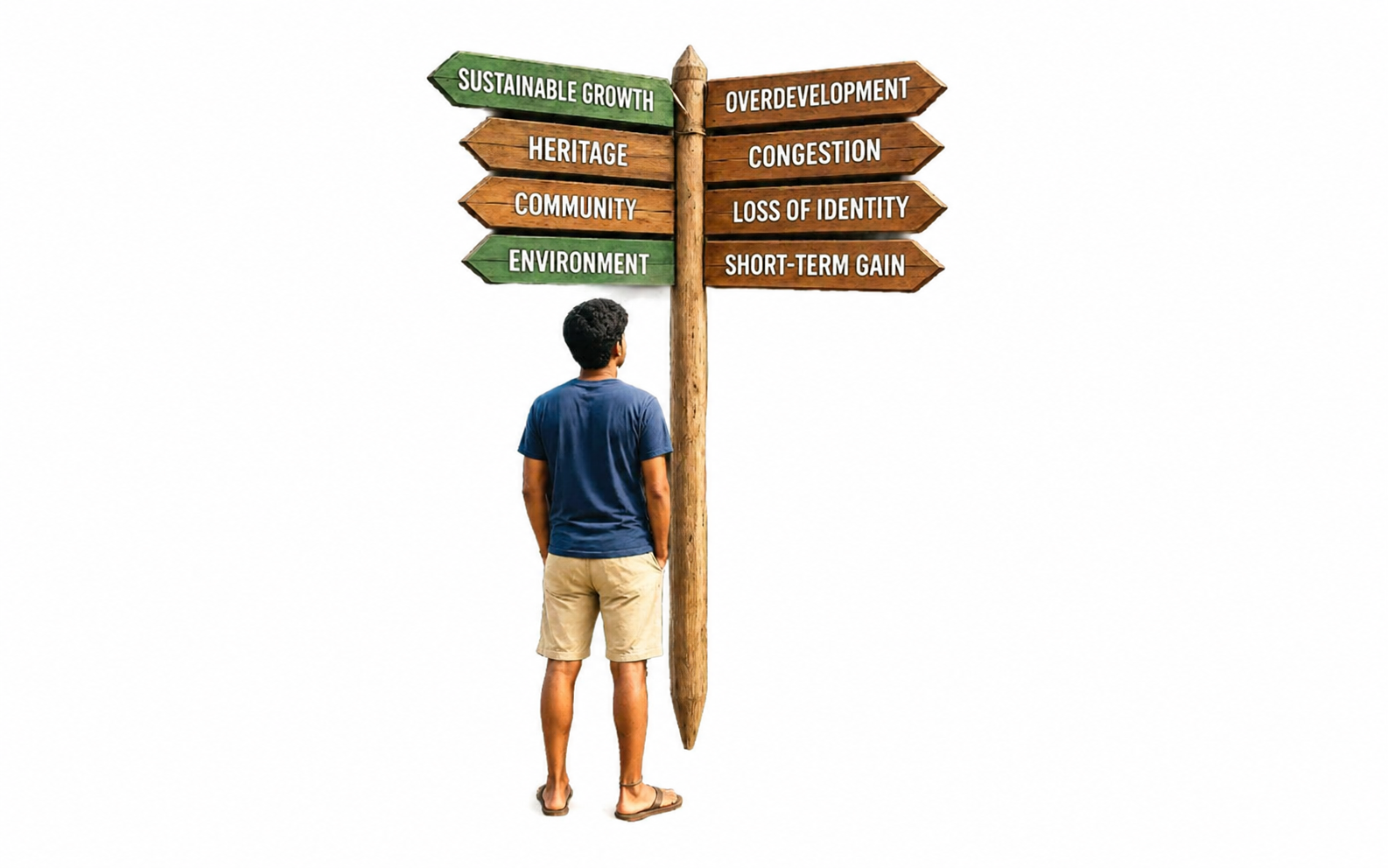
As mega-housing projects proliferate across Goa's villages, this twin question remains unasked: how much development can our land and infrastructure sustain? The answer, grounded in decades of research, is troubling and largely absent from our approval processes.
Our licensing authorities greenlight large-scale developments without asking whether the surrounding ecology or the existing electricity, water, and waste infrastructure can absorb the load. That evidence should determine whether permission is granted. Left unchecked, this is how local systems quietly fail.
The science we're ignoring
Carrying capacity began as an ecological idea: the load an ecosystem can bear without degrading. Only later was it applied to human settlements. Urban Carrying Capacity (UCC) assessment is now the dominant global framework for evaluating infrastructure limits. It weighs land, water, energy and waste capacity together to set sustainable thresholds (Sejati et al., 2023). The research even provides working numbers of per capita water demand and electricity use.
Anang Sejati and colleagues studied Labuan Bajo, Indonesia, a tourism-driven settlement much like Goa. They projected deficits in electricity, water and waste capacity by 2042 on current trends. Stress of this kind builds quietly, long before it shows.
The Goan reality
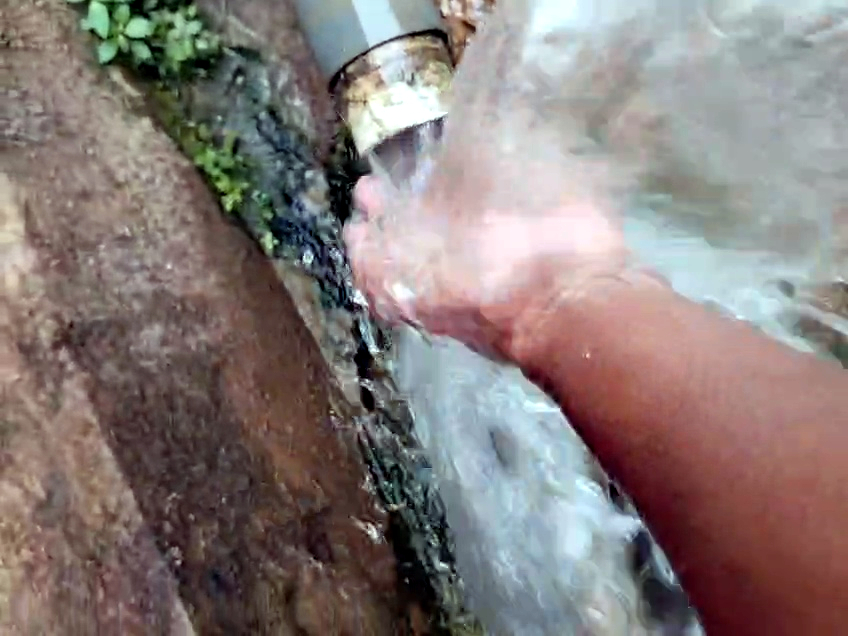
Walk through any fast-growing Goan village, and the signs are unmistakable: taps that run for about an hour a day, lights that dim at peak load, septic tanks that overflow, roads that choke, and fields that vanish. None of this is a teething trouble. Each is an early warning of land and infrastructure pushed past design capacity.
The numbers bear it out. Electricity transmission and distribution losses in Goa hover around 12% (GED's 5-Year Business Plan) and climb to 15-30% where the network is strained, effectively halving usable capacity. On drinking water, Minister Subhash Phal Dessai recently put the State's shortfall at around 21 MLD, with nearly 42% lost as non-revenue water, and conceded the supply system is under stress (The Goan, January 14, 2026).
Waste management is the most worrying of all. Most Goan villages still rely on septic systems; fine at low densities, but they fail once development outruns the soil's capacity to absorb. Official figures (SIDCGL) show barely 16% of Goa has an underground sewer network; the rest depends on septic tanks or direct discharge into drains and water bodies. The consequences for the environment and public health are predictable and severe.
The approval process gap
Current approvals only look at the plot: setbacks, floor-space ratios, and building heights. They ignore the cumulative effect on the surrounding ecology and on local infrastructure. A project can satisfy every individual parameter and still push the whole system towards failure.
There is a better way, and it is already in practice. Ravin Tailor and colleagues' 2024 framework for Surat builds infrastructure adequacy into the permission itself. El-Desouky and Dawood's 2019 study of Egypt's new towns proposes carrying capacity assessment as a key step before approval; decisions rest on evidence rather than intuition or political pressure.
Goa need not look only abroad. TERI is already assessing the carrying capacity of Benaulim village, building a Carrying Capacity Index across environmental, infrastructural and socio-economic dimensions to flag the zones where demand outstrips sustainable limits.
At bottom, this is about who carries the burden of proof. An applicant should demonstrate that the ecology and infrastructure can sustainably serve the population the project will bring. That puts the onus where it belongs: on those who profit from development, not on the citizens left to live with its consequences.
The path forward
Goa urgently needs a mandatory carrying capacity assessment before any large permission is granted. Two steps would get us there.
First, set standardised indicators and thresholds suited to Goan villages and towns, not only for road network capacity, electricity reliability, water continuity and waste management, but also for groundwater recharge, slope and hill protection, and green cover.
Second, write the carrying capacity assessment into law. Amend the Goa Land Development and Building Construction Regulations to require carrying capacity studies for projects above a defined size, much as EIA already works. Permission should then be granted on the basis of proven ecological and infrastructure adequacy or on augmentation funded by the developer.
The stakes
A collapse here will not occur as a single dramatic failure. It creeps in: more power cuts, longer water shortages, contaminated wells, lost fields, and gridlocked roads. By the time the breakdown is undeniable, fixing it is far costlier, and sometimes no longer possible.
So Goa faces a simple choice: keep approving development on hope and political pressure, or demand evidence of sustainability before the first foundation is dug. The research, methods and frameworks already exist. What is missing is the will to make carrying capacity assessment mandatory and protect Goa's USP before it is too late. For many villages, the breaking point is already here.
(The writer is a construction engineer-turned-lawyer, Director Goa-IDC, former Expert Member, GCZMA, and currently pursuing a PhD at IIULER Goa)