TEAM AUTO I THE GOAN
The arrival of the monsoon brings welcome relief from the summer heat, but it also creates conditions that can quietly damage your car. Constant exposure to rainwater, muddy roads and high humidity increases the risk of rust, particularly if moisture remains trapped in hidden areas of the vehicle. While modern cars are built with better corrosion protection than ever before, they are not immune to rust if neglected.
Rust does not develop overnight. It begins when moisture and oxygen react with exposed metal, gradually weakening the surface. If left unchecked, it can spread to structural components, affect the vehicle’s appearance and reduce its resale value. Fortunately, a few simple maintenance habits can go a long way in protecting your car throughout the rainy season.
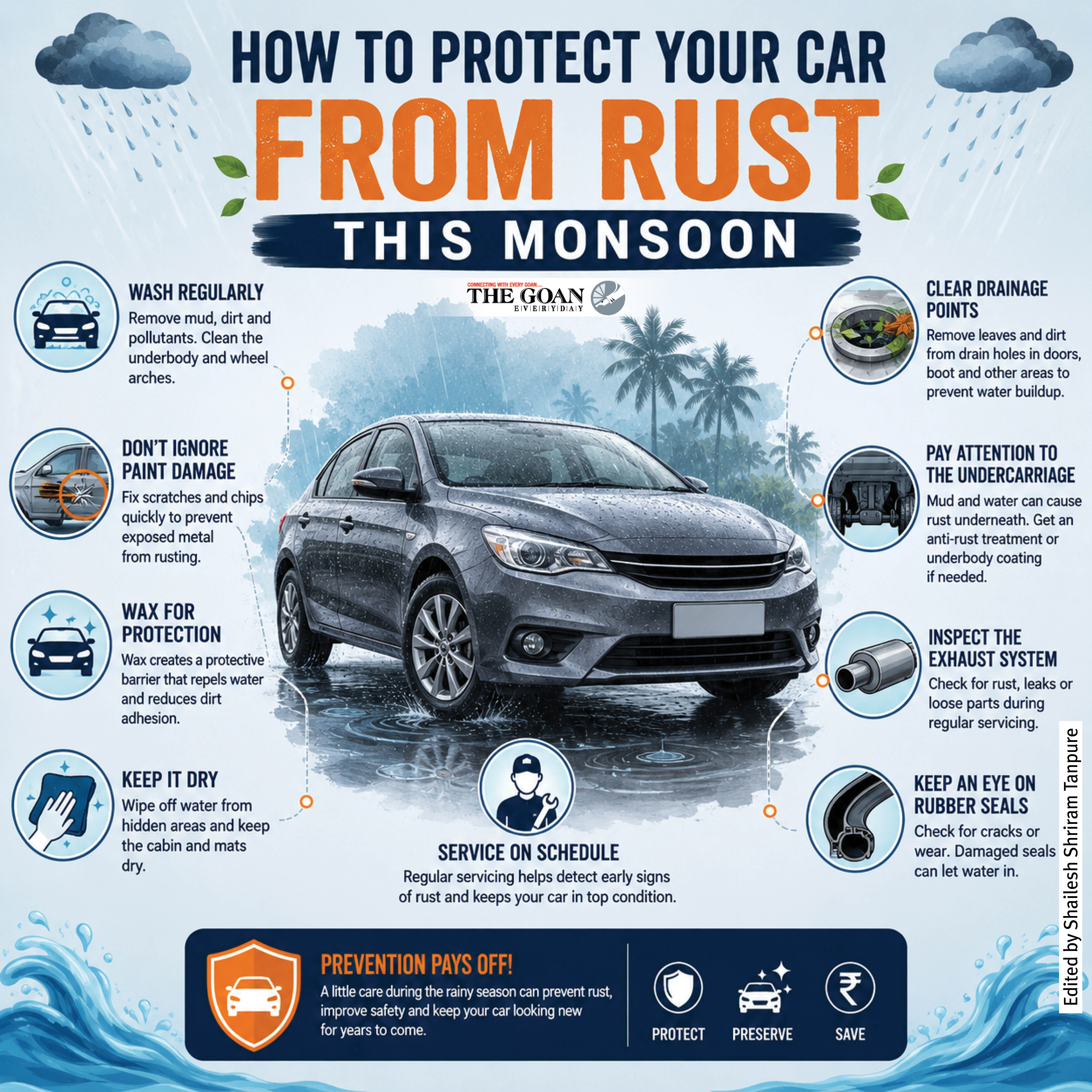
Wash Regularly
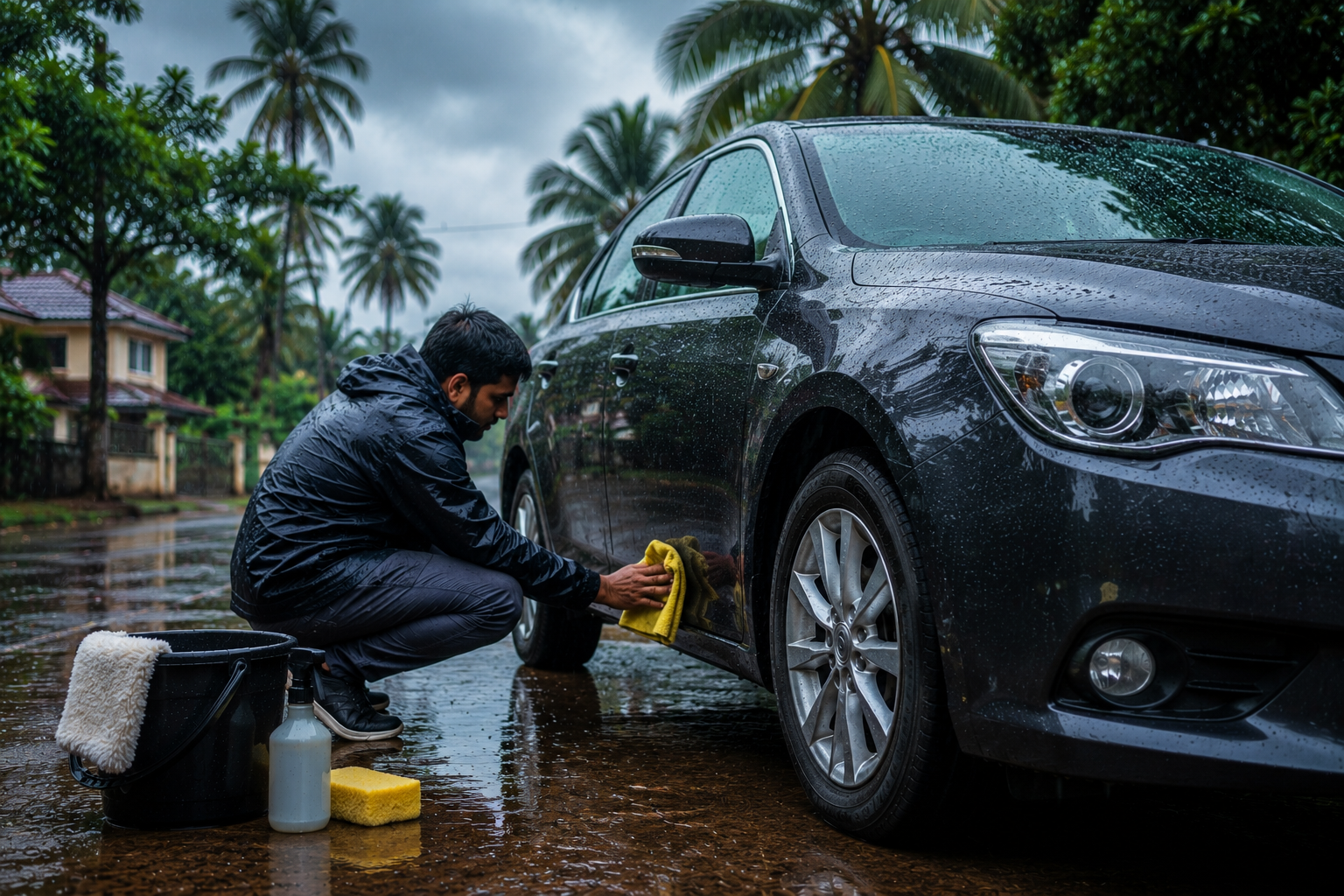
One of the biggest misconceptions is that rainwater keeps a car clean. In reality, rain mixes with dust, mud and pollutants that stick to the vehicle’s surface. These contaminants retain moisture and can accelerate corrosion, especially in hard-to-reach areas.
Wash your car regularly during the monsoon, paying particular attention to the wheel arches, underbody and lower sections of the doors where mud tends to accumulate. If you frequently drive on flooded or muddy roads, cleaning the underbody becomes even more important as it removes dirt that can trap moisture against metal surfaces.
Don’t Ignore Paint Damage
Your car’s paint is more than just a cosmetic finish—it acts as a protective barrier against moisture. Even small scratches, stone chips or peeling paint expose bare metal to water and air, creating ideal conditions for rust to develop. Inspect your vehicle regularly for minor paint damage and have it repaired as soon as possible. Touch-up paint is sufficient for small chips, while larger damaged areas should be professionally refinished before corrosion spreads beneath the paintwork.
Wax for Protection
Applying a quality wax before or during the monsoon provides an additional protective layer over the paint. Wax helps water bead off the surface instead of remaining in contact with the paint, while also reducing the adhesion of dirt and road grime.
Although waxing does not prevent rust on exposed metal, it protects painted surfaces and makes the car easier to clean. Depending on the product used and driving conditions, reapplying wax every few months during the rainy season can help maintain this protective barrier.
Keep It Dry
Water often collects in places that are easy to overlook, including door jambs, the boot, bonnet edges and around rubber seals. After washing your car or driving in heavy rain, wipe away any standing water using a clean microfibre cloth.
The cabin also deserves attention. Wet floor mats, damp carpets and moisture trapped inside the vehicle create an unpleasant environment and may eventually contribute to corrosion of hidden metal components beneath the flooring. Remove wet mats whenever possible and allow them to dry completely before placing them back in the car.
Clear Drainage Points
Modern vehicles are designed with drainage holes that allow water to escape from doors, the boot and other enclosed sections. Leaves, mud and debris can block these drains, causing water to remain trapped inside the vehicle.
Check these drainage points periodically during the monsoon and clear any visible obstructions. Keeping the drains open helps prevent hidden moisture from accumulating, reducing the chances of rust forming in areas that are difficult to inspect.
Pay Attention to the Undercarriage
The underbody of a car is constantly exposed to water, mud, gravel and road debris, making it one of the first places where rust can develop. While most manufacturers apply protective coatings, these can wear away over time due to normal driving conditions.
If your vehicle is several years old or regularly travels on rough roads, ask your service centre to inspect the underbody during routine maintenance. If necessary, they can recommend an anti-rust treatment or underbody coating suitable for your vehicle. It is important to remember that such treatments work best on clean, rust-free surfaces rather than as a solution for existing corrosion.
Inspect the Exhaust System
The exhaust system experiences repeated heating and cooling, making it particularly vulnerable to corrosion when exposed to moisture. Surface rust is common and usually not a cause for concern, but severe corrosion can eventually lead to leaks or component failure.
During regular servicing, ask your mechanic to inspect the exhaust for excessive rust, loose mounts or damaged heat shields. Identifying problems early can help avoid more expensive repairs later.
Keep an Eye on Rubber Seals
Rubber seals around the doors, windows and boot are designed to keep water out of the vehicle. Over time, these seals can become cracked, worn or loose, allowing rainwater to enter.
Inspect the seals periodically for visible damage and ensure they fit snugly. Cleaning them with a damp cloth helps remove dirt that may interfere with their effectiveness, while replacing damaged seals promptly prevents water from reaching areas where corrosion could begin.
Service on Schedule
Routine servicing is one of the most effective ways to detect early signs of rust before they become serious. Mechanics can inspect hidden areas that owners may not easily notice, including the suspension, brake lines and chassis components.
If you notice bubbling paint, unusual stains, persistent dampness inside the cabin or reddish-brown patches on metal surfaces, have the vehicle inspected without delay. Addressing minor corrosion early is significantly less expensive than repairing extensive rust damage later.
Prevention Pays Off
Rust may seem like a cosmetic issue at first, but it can gradually compromise the strength, safety and value of a vehicle if ignored. Fortunately, preventing corrosion does not require expensive products or complicated procedures. Regular washing, prompt attention to paint damage, proper drying, routine inspections and timely servicing are often enough to keep rust at bay.
With a little extra care during the rainy season, your car can remain in good condition for years to come, retaining both its appearance and long-term reliability regardless of the weather.